Who Is Responsible for Injuries in an Accident With a Delivery Driver?

b2ap3_thumbnail_chrisss.JPGBy: Attorney Chris Strohbehn and Paralegal Ruth Campos

If it seems like there are increasing numbers of delivery vehicles on the roads, that is likely due to increased demand for services that transport products or food directly to people’s doors. In addition to package delivery vehicles operated by UPS, FedEx, Amazon, or other companies, many people also deliver food or groceries for services such as DoorDash, Uber Eats, Postmates, or Instacart. This is in addition to pizza delivery drivers and others who deliver meals for restaurants. With more of these drivers on the road at any given time, car accidents with delivery vehicles have become more common.

If you have been in a collision with a delivery driver, you might be wondering who is responsible. That is, if the driver was at fault, you may be unsure if they, their insurance company, or the company they were working for can be held liable for your injuries. The answer depends on several factors, including whether the driver was working at the time of the accident. By working with a personal injury attorney, you can determine your options for pursuing compensation for your injuries.

Delivery Drivers and Liability

In general, when a person causes an accident or injury while working for an employer, the employer may be held liable for the person’s actions. This is known as “vicarious liability,” and it may apply in situations where delivery drivers were responsible for accidents. Thus, a person who was injured may be able to take legal action against a large corporation that employed a delivery driver and ensure that all damages are paid.

However, many large delivery companies have tried to avoid liability by classifying drivers as independent contractors instead of employees. They may claim that their drivers are self-employed and are providing services on a contract basis rather than working directly for the company. Because of this, a company may claim that it is not liable for the driver’s actions or negligence.

Fortunately, many drivers are covered by insurance, including their private auto insurance policies and policies held by delivery companies. If a driver was performing services for the delivery company at the time of an accident, they will typically be covered. However, if the driver was on their way to pick up items, or if they had just delivered items to a home or business, they may not technically be considered to be working for the company, and the driver working at the time of the accident may only be covered by their personal auto insurance.

Understanding what types of insurance coverage apply and the steps that can be taken to prove that a company is liable for the actions of its drivers can be difficult. People injured in accidents, including drivers, passengers, pedestrians, or bicyclists who were struck by a delivery driver, can protect their rights and interests by working with an attorney who understands the applicable laws. A skilled lawyer will be able to identify the liable parties, negotiate with insurance companies, and ensure that the proper steps are taken to maximize the compensation a victim will be able to receive.

Contact Our Milwaukee, WI Delivery Driver Accident Lawyers

As you can see, there are a number of factors that must be considered when determining who is responsible for injuries in an accident with a delivery driver. If you have been involved in such an accident, an experienced Milwaukee personal injury attorney at GRGB Law can help you navigate these complex legal issues and protect your rights. We will identify all sources of compensation and advocate on your behalf to ensure that you will have the financial resources to make a full recovery. Contact us today at 414-271-1440 to set up a consultation and learn more about how we can help you.

Source:

https://www.forbes.com/advisor/legal/personal-injury/vicarious-liability/


Read More

Who Is Liable When a Person Is Hit by a Car in Front of a Store?

b2ap3_thumbnail_chrisss.JPGBy: Attorney Chris Strohbehn

While people are aware that many car accidents occur every day, one type of accident that people may not realize is common involves vehicles crashing into buildings. These are known as storefront crashes, and they occur when drivers lose control of their vehicles and collide with the entrances of buildings such as gas stations, convenience stores, or grocery stores. In some cases, storefront crashes are committed intentionally in an attempt to rob a store or because a person experiencing road rage wishes to cause damage. Because these locations have high levels of foot traffic, storefront crashes are likely to result in dangerous pedestrian accidents. People injured in these types of accidents will need to determine who can be held liable for their injuries and damages.

How Common are Storefront Crashes?

A vehicle crashing into the front of a building may seem like a relatively rare event. However, these accidents take place far more often than many people realize. According to research by the Storefront Safety Council, a non-profit organization that works to raise awareness of these accidents and ensure that the proper measures are taken to protect people’s safety, more than 100 storefront crashes occur every day across the United States. 46 percent of these crashes result in injuries, and 8 percent result in fatalities. This adds up to more than 16,000 people being injured every year, as well as 2,600 deaths.

Who Is Liable for Storefront Crashes?

As with most car accidents, the at-fault driver in a storefront crash may be liable for causing injuries to others. That is, a driver who acted negligently and lost control of their vehicle or who purposely collided with a storefront will be responsible for causing injuries to others. However, depending on the circumstances surrounding a collision, the store’s owner may also be liable for failing to protect the safety of those who were injured on their premises.

Property owners have a duty of care to protect the safety of people who are authorized to visit their property, and this duty extends to customers who enter a store. Because storefront crashes are a known safety issue, stores should take steps to minimize the risk of injury. This can be done by installing bollards in front of a building’s entrances. These sturdy metal or concrete posts should be anchored into the ground, and if they function correctly, they will stop a vehicle before it collides with a building or strikes a person near the entrance of a store. A store that fails to install bollards or make sure they can effectively protect people’s safety may be held liable for the injuries of patrons in storefront crashes.

In one recent case, a man in Chicago who lost both of his legs in a storefront crash at a 7-Eleven store received a $91 million settlement from the company. During the case, records from 7-Eleven were uncovered showing that more than 6,000 storefront crashes took place at the company’s stores over the past 15 years. Because this is an ongoing concern that continues to affect people’s safety, the store should have taken the proper measures to protect customers. Due to its failure to do so at the location in question, the company was responsible for compensating the victim for his damages.

Contact Our Milwaukee Pedestrian Accident Lawyers

When pedestrian accidents occur, there are a variety of factors that may determine who was responsible for a victim’s injuries and who can be held liable for their damages. At GRGB Law, we provide representation for people injured in these types of accidents, helping them identify all potential sources of compensation and ensuring they take the correct steps to recover the compensation they deserve. To learn more about how we can help with these cases, contact our Milwaukee, WI pedestrian accident attorneys at 414-271-1440.

Sources:

Statistics

https://www.nbcchicago.com/news/local/7-eleven-to-pay-91m-to-suburban-chicago-man-who-lost-both-legs-in-storefront-crash/3067888/


Read More

How Can Employers Avoid Accusations of Wrongful Termination?

b2ap3_thumbnail_attn-jaclyn_20220817-202310_1.jpgBy: Attorney Jaclyn Kallie

Wrongful termination is a serious accusation that can have potentially devastating consequences for employers. If a former employee or an outside agency believes that an employee has been wrongfully terminated, the employer can face an investigation, fines, and other penalties. It is important for employers to understand the legal implications of wrongful termination, and they should take steps to ensure they are not accused of such wrongdoing. With the help of an employment law attorney, an employer can make sure they are protected against potential wrongful termination claims.

Understanding the Rights That Apply to Employers

It is important for employers to understand their rights when it comes to dismissing employees. In Wisconsin, employment is considered “at-will,” meaning an employer can terminate an employee at any time, with or without cause. However, there are exceptions to this rule; for instance, employers cannot terminate employees based on their race, gender, religious affiliation, or other protected characteristics. They are also prohibited from firing employees who have reported workplace safety issues or violations of laws or regulations by a company or its personnel. In addition, employees cannot be terminated for filing workers’ compensation claims, reporting sexual harassment, or taking leave under the Family Medical Leave Act. By understanding their rights—and what they can and cannot do when it comes to terminating someone—employers can make sure they take the correct steps to avoid wrongful termination claims.

Document Everything

One of the best ways for employers to protect themselves against wrongful termination claims is by thoroughly documenting all interactions with employees who are being disciplined or dismissed. Keeping detailed records of conversations with staff members regarding performance issues or disciplinary matters can help prevent misunderstandings about why someone was fired. This can also provide evidence to show that an employee was terminated for legally valid reasons if the employer is accused of wrongful termination. Furthermore, keeping accurate records also makes it easier for any third-party agencies investigating the case to determine whether a wrongful termination occurred.

Ensure Fair Treatment of Employees

Employers should make sure they treat all employees fairly and consistently. If one employee is treated differently than another due to factors such as race, gender, or disability, there could potentially be grounds for a discrimination lawsuit. To prevent these types of accusations from being made in the first place, employers should always strive to maintain a level playing field by following consistent policies and procedures for hiring, promotions, discipline, or other issues that affect employees.

Be Transparent With Employees

Whenever possible, employers should make sure employees understand why they are being disciplined or terminated and what will happen next. This includes explaining any relevant policies regarding severance pay or the continuation of benefits. Being transparent with employees about the reasons for a dismissal helps create trust between the employer and employee, and it will reduce the chances of an employee filing a wrongful termination claim.

Contact Our Milwaukee, WI Employment Lawyers for Wrongful Termination

Wrongful termination claims can be damaging for employers, and it is important for employers to understand how to avoid such accusations. It is crucial to follow all applicable local, state, and federal employment laws, and employers will also need to determine the best ways to respond if they are accused of wrongful termination. At GRGB Law, our Milwaukee employment law attorneys can help employers understand the best ways to handle these situations, and we can provide legal representation and work to resolve these cases with minimal disruption to a company’s operations. To set up a consultation, contact us today at 414-271-1440.

Sources:

https://docs.legis.wisconsin.gov/document/statutes/111.322

https://dwd.wisconsin.gov/er/laborstandards/retaliation.htm

Read More

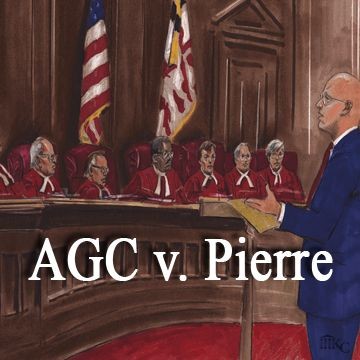
Ethics Questions for Ethics Official

Raising questions “about the appearance of impropriety” on the part of its top ethics official, the Supreme Court of Maryland asked whether Bar Counsel used her official position “to undermine … a candidate in a Judicial election.”

In Attorney Grievance Comm’n v. Marylin Pierre, Bar Counsel pressed charges against a grassroots challenger for a seat on the Circuit Court for Montgomery County. Within an hour of receiving campaign literature from incumbent judges seeking to defeat their rival, Bar Counsel opened an official state investigation and worked with the Sitting Judges campaign to compile evidence against Ms. Pierre.

Worried “that Judiciary resources are being used to intervene in this sitting judges election campaign,” Justice Shirley Watts expressed concern over an “appearance of impropriety” in favoring one campaign over another:

JUSTICE WATTS: So in addition to a question about a broad conflict in the use of Judiciary resources and potentially intervening or being perceived as intervening in the sitting judge’s election, I have a question about professional conflict of interest where you as Bar Counsel are concerned.
You receive the email as a member of the Montgomery County Bar Association in that capacity. It was not a complaint to your office. How would a reasonable member of the public know whether in initiating this investigation you were acting in your capacity as Bar Counsel or as a member of the Montgomery County Bar Association with an interest in helping the campaign as requested?

MS. LAWLESS: Your Honor, it’s because I was acting in my official capacity as Bar Counsel. All correspondence sent and received were in my official capacity as Bar Counsel.

JUSTICE WATTS: So the answer is basically we would take your word for it?

This was the very same case that the Court had to stay when Ms. Lawless refused to respond to discovery propounded by Ms. Pierre’s defense counsel.

Charged with multiple violations of the Maryland Attorneys’ Rules of Professional Conduct, many of the allegations against her involve comments attributed to Ms. Pierre which were critical of Montgomery County’s circuit court bench. Fighting these charges, defense counsel argued that statements made in the course of a heated campaign are subject to the highest level of First Amendment protection and should not be censored by a state official intervening in an ongoing election.

Four days after this Supreme Court hearing, Ms. Lawless announced her resignation. See Lee O. Sanderlin, Before Resigning, Top Md. Grievance Lawyer Faced Questioning on Ethics, The Baltimore Sun (February 11, 2023).

Argued: February 2, 2023.

Circumstantial vs. Direct Evidence in Wisconsin Criminal Cases

b2ap3_thumbnail_rr.JPGBy: Attorney Nicole Masnica and Paralegal Rachel Sweet

Originally published: August 10, 2018 — Updated: February 17, 2023

Update: In addition to understanding the types of circumstantial evidence that may play a role in a criminal trial, those who are accused of committing crimes will need to understand the ways that this evidence may be challenged. An experienced criminal defense attorney can cast doubt on the validity of certain types of evidence or witness testimony, or they can challenge the narrative proposed by prosecutors. Some methods that may be used to respond to evidence presented in a trial include:

  • Questioning eyewitness testimony – Many criminal cases rely on the identification of suspects by eyewitnesses. However, people’s memories can be notoriously unreliable. In some cases, witnesses may be influenced by law enforcement officials who are looking to confirm their suspicions about a suspect. In others, people who had been arrested in connection with the crime in question or for other offenses may testify against someone in return for leniency. By closely examining witnesses, looking for inconsistencies in their statements, and demonstrating that they may be uncertain about what they saw, a defense attorney can poke holes in prosecutors’ arguments.

  • Challenging the opinions of experts – Many criminal cases rely on so-called experts who can supposedly reconstruct the circumstances of a crime. However, these experts often use methods that have been found to be unreliable. A skilled attorney can question the validity of the methods used, and they may be able to show that evidence such as bite marks, blood splatter patterns, or even fingerprints may not necessarily prove that a defendant committed the offense in question.

  • Challenging the timeline presented by prosecutors – The case against a defendant may rely on claims that a series of events took place that put them near the scene of the crime and indicated that they committed the alleged offense. However, disputing certain elements of this timeline may show that the events could not have occurred as suspected. For example, if a defense attorney can show that the defendant was in a different location than the prosecutor claimed, the entire narrative may not make sense.

In addition to providing representation during a criminal trial and ensuring that all evidence against a defendant is addressed correctly, the attorneys of GRGB Law, LLP can assist with appeals that address the improper use of evidence during a trial. In some cases, we may be able to appeal a conviction on the grounds that evidence presented during a trial should have been inadmissible because it was obtained through an illegal search. We will work with our clients to explore every possible avenue for defense and build successful strategies during criminal cases or appeals. To learn more about how we can assist with these matters, contact our Milwaukee criminal defense lawyers at 414-271-1440.


Being arrested and charged with a crime can be a frightening prospect. A criminal conviction has serious consequences to a person’s life, finances, career, and freedom. However, those who are facing criminal charges may not understand the laws involved in their case, the processes followed during an investigation, or their options for defense.

One aspect of criminal prosecutions that can often cause confusion is the different types of evidence that can be used to show a person’s guilt. During a Wisconsin criminal case, it is important to understand the difference between direct evidence and circumstantial evidence. 

Direct Evidence

Evidence that clearly demonstrates a defendant committed a crime is known as direct evidence. Factual evidence that incontrovertibly shows a person committed the alleged offense may be used to meet the standards for proving guilt beyond all reasonable doubt. Examples of direct evidence include:

  • Security camera footage showing a person breaking into a store and stealing items;
  • An audio recording of a person admitting to committing a crime;
  • Ballistics tests that show a bullet was fired by a specific firearm;
  • Eyewitness testimony that a person saw the defendant commit a crime;
  • The defendant’s fingerprints on a weapon used to commit murder; and
  • Computer records showing a person illegally used someone else’s credit card.

Circumstantial Evidence

In many cases, direct evidence of a crime does not exist and prosecutors must use evidence that implies the defendant committed the alleged offense. This is known as circumstantial evidence, and examples of this type of evidence include:

  • Eyewitness testimony that a person was seen fleeing from the scene of a crime;
  • A person’s fingerprints found at the scene of the crime alongside other people’s fingerprints;
  • An audio recording of the defendant stating his or her intent to commit a crime before the alleged crime actually occurred;
  • Harassing emails or text messages a defendant sent to a person who was later assaulted; and
  • A person’s browser history showing how he or she searched for information about the tools used to commit the crime of which he or she is accused.

While a single piece of circumstantial evidence may not be enough to demonstrate a person’s guilt, multiple pieces of evidence may be used together, and the prosecutor may ask the jury to “connect the dots” to determine that the defendant committed the alleged offense.

Contact a Milwaukee Criminal Defense Attorney 

When you are facing criminal charges, it is important to understand the evidence that could be used by the prosecution to demonstrate your guilt. To secure a conviction, prosecutors must convince a jury that you committed the alleged offense beyond all reasonable doubt. 

At GRGB Law our skilled attorneys can help you understand your options for defense, including finding gaps or inconsistencies in the evidence or showing that the prosecution has not met the reasonable doubt standard. To schedule a consultation with a Milwaukee, WI criminal defense lawyer, call our office at 414-271-1440.

Sources:

Circumstantial Evidence

http://wilawlibrary.gov/topics/justice/evidence.php

https://legal-dictionary.thefreedictionary.com/circumstantial+evidence

Read More

Should I Move Out of My Home During My Divorce?

milwaukee divorce lawyerBy: Attorney Megan Drury

Going through a divorce can be a difficult process for all members of a family. When your marriage has broken down, it may seem impossible to continue living in your home alongside your spouse. You may be ready to leave the situation and begin taking steps to move forward with your life. However, it is important to understand how moving out may affect the divorce process and how it may impact your rights and your financial situation. By understanding how Wisconsin’s divorce laws apply in these situations, you can take the correct steps to protect yourself, avoid unexpected complications, and get through the divorce process successfully.

Can Either Spouse Be Required to Move During Divorce?

If you and your spouse are both currently living in your home, you will likely be able to continue to do so during the divorce process. As co-owners of the home, you will both have the right to maintain possession of the property. While there may be some situations where one party may believe that the other party should move out, the court usually will not force them to do so unless there are safety issues that would require these types of arrangements.

If a spouse has been accused of committing domestic violence or engaging in verbal abuse, the other spouse may ask the court to grant them exclusive possession of the marital residence. In some cases, they may do so by seeking an order of protection, and if this type of order is granted, the other spouse may be restricted from entering the home and required to find other living arrangements. However, these issues are not a concern in most divorce cases, and both spouses will typically be able to continue living in the home until decisions about ownership of the home and living arrangements are made in their divorce.

Financial Considerations When Moving Out of the Marital Home

If you are thinking about moving out of your home during your divorce, it is important to consider how this could affect you financially. Since you will still be considered the co-owner of your marital home, you may be obligated to contribute to ongoing household expenses, including utilities and rent or mortgage payments. Covering these types of expenses while also paying for the costs related to your new residence may not be possible. In addition, moving out of the home may indicate that you no longer have an interest in retaining possession of the home or other items, such as household furniture. Because of this, your choice to move out could impact decisions about the division of marital property.

To avoid financial problems, it may be best to wait to move out until you and your spouse have made decisions about how marital property will be divided and addressed other financial issues in your divorce. This will help you avoid any surprises about the types of expenses you may be required to pay, and it can ensure that you will have the financial resources you need to establish new living arrangements after finalizing your divorce.

Addressing Family Dynamics Related to Child Custody

If you and your spouse have children together, it is also important to understand how moving out could affect decisions about child custody. A sudden change in living arrangements could cause disruption in your children’s lives, and it may affect your ongoing relationship with them. If you move out before putting arrangements in place that detail when you will see and spend time with your children, this could affect decisions about child custody and physical placement during the divorce process.

Ultimately, it is best to avoid making drastic changes without considering how this might affect your children emotionally. To ensure that your parental rights will not be negatively affected, and to make sure your children’s best interests will be protected, you will want to establish child custody arrangements in court before making the decision to move to a new home.

Contact Our Milwaukee Divorce Lawyers

Decisions about whether you and your spouse will continue living in your home during your divorce can be complicated. By consulting with an experienced attorney, you can make sure that your rights and financial interests will be protected throughout your case, and you can make decisions that will provide for the best interests of your children. At GRGB Law, LLP, our Milwaukee, WI divorce attorneys can provide you with guidance and legal representation to ensure that these matters will be addressed correctly. Contact us at 414-271-1440 to arrange a free consultation and learn how we can help with your case.

Sources:

https://docs.legis.wisconsin.gov/statutes/statutes/767/vii/61

https://www.wicourts.gov/formdisplay/FA-4100V_instructions.pdf?formNumber=FA-4100V&formType=Instructions&formatId=2&language=en


Read More

Who Can Be Held Liable for Winter Truck Accidents?

milwaukee truck accident injury lawyerEvery winter, the risk of truck accidents increases across the United States. This can be an especially serious issue in Wisconsin, since our state often experiences harsh winters, cold temperatures, and conditions that make roads more dangerous. From icy roads to poor visibility caused by falling snow or freezing rain, truck drivers face a wide range of challenges when operating their vehicles in winter weather. Ultimately, these conditions can lead to dangerous truck accidents that result in serious injuries and even death.

When it comes to winter truck accidents, liability can be a complex issue. It can sometimes be difficult to identify the party or parties who were responsible, as the conditions directly impacting an accident are often variable and unpredictable. By working with an attorney who understands the laws and regulations surrounding liability for winter truck accidents, victims can take the correct steps to pursue compensation, ensuring that they will be able to address their expenses and move forward with their lives.

Common Causes of Winter Truck Accidents

People who are injured in truck accidents may be able to take legal action against the responsible parties. By understanding the specific causes of an accident, a victim can determine who may be held liable. Some common reasons that winter truck accidents may occur include:

  • Driver error – Driving on snowy or icy roads or during winter storms can be difficult for any driver. However, commercial truck drivers need to take extra care to ensure that they can avoid accidents. Driving too fast during winter conditions, failing to allow extra time to slow down and stop on slippery roads, or other mistakes made by truck drivers can lead to dangerous collisions. In these situations, a victim may be able to hold a truck driver responsible for negligent driving, and a trucking company may also be liable for its failure to ensure that drivers were properly trained on how to operate vehicles safely during winter weather.

  • Mechanical failures – When trucking companies fail to properly maintain their vehicles, this can affect drivers’ ability to operate trucks safely during the winter. If a truck’s brakes were not serviced correctly, this may have prevented a truck driver from being able to control their speed on snowy or icy roads. Failure to inspect and replace worn tires may lead to a loss of traction, causing a truck driver to lose control in winter weather conditions. Truck owners and trucking companies may be liable for failing to ensure that trucks were safe to drive in the winter.

  • Road conditions – Inclement winter weather can cause a truck driver to lose control of their vehicle, even with proper training and vehicle maintenance, and in some cases, accidents may occur because a road is unreasonably dangerous. If icy roads or other dangerous road conditions contributed to an accident, a victim could potentially pursue compensation from local or state governments if they failed to plow roads properly, did not use salt to improve traction on roads, or failed to properly repair damaged roads or bridges.

Contact Our Milwaukee, WI Truck Accident Lawyers

Winter truck accidents can be complex, and determining who was responsible is not always easy. It is important for victims of truck accidents to understand the various factors that may have contributed to an accident, such as driver error, mechanical failures, or road conditions. By working with the experienced Milwaukee truck accident attorneys of GRGB Law, LLP, injured individuals can determine the best steps to take to pursue compensation from all liable parties. Contact us today at 414-271-1440 to learn more about how we can help you address the injuries you have suffered in a truck accident and ensure that you will be able to move forward with your life.

Sources:

https://wisconsindot.gov/Pages/safety/education/winter-drv/default.aspx

https://ops.fhwa.dot.gov/weather/weather_events/snow_ice.htm

https://schneiderjobs.com/blog/winter-driving-tips-for-truck-drivers


Read More

When Can Bribery Lead to Criminal Charges in Wisconsin?

milwaukee criminal chargesThere are a number of different types of offenses that are classified as white collar crimes. These offenses are usually committed in a professional or business setting, and they will typically involve illegal exchanges of money. Bribery is one example of behavior that could potentially lead to criminal charges, and in some cases, people may also face criminal charges due to alleged campaign finance violations. Understanding how the laws in Wisconsin address these issues can help anyone who has been accused of bribery or campaign finance violations ensure that they will be able to defend against criminal charges with the help of an attorney.

What Is Bribery?

Bribery generally involves giving or offering something of value to a public official or politician with the intent to influence their decision-making. Wisconsin law recognizes the offense of bribery of public officers and employees, which involves the attempt to influence people such as police officers, lawmakers, or other government officials into acting in violation of their lawful duty.

If a person transfers property to an official in an attempt to influence them or otherwise grants them an advantage they are not authorized to receive, they may face criminal charges. That is, a person could face criminal charges if they give something of value—such as money, property, contracts, favors, services, or other benefits—in exchange for favorable treatment from a public official. It is also illegal for any public official to solicit or accept anything of value in exchange for influencing decisions related to their office. This offense is a Class H felony, and a conviction can result in a sentence of up to six years in prison and a maximum fine of $10,000.

Wisconsin law also recognizes the offense of election bribery, which occurs when someone offers something of value to a person in an attempt to influence them into voting or not voting. These cases may involve inducing a person to vote for or against a particular elected official or referendum, as well as attempts to cause someone to refrain from voting altogether. Election bribery is a Class I felony, and a conviction can result in a sentence of up to 3.5 years in prison and a maximum fine of $10,000.

Violations of Wisconsin’s Campaign Finance Laws

In Wisconsin, there are several laws governing how campaigns may be funded and organized, and violating them can result in criminal charges being brought against an alleged offender. Some common examples include failing to report contributions or expenditures accurately on disclosure statements or violating contribution limits set forth by state law. Unlawful political contributions may include instances in which someone makes a contribution other than money or property that belongs to them. For example, if a person or organization attempts to donate money in excess of what is allowed by transferring money to someone else and having them make the donation, they may be charged with violations of campaign finance laws. Other violations may involve unlawful political disbursements in which a person or organization makes donations to a candidate for their personal use or for other purposes that are not permitted by law.

Campaign finance violations may be punishable by fines and/or jail time in Wisconsin. Intentional violations of registration or reporting requirements or unlawful political contributions may result in Class I felony charges. Making unlawful political disbursements is also a Class I felony if a disbursement of at least $100 is made. For cases involving disbursements of less than $100, a person may face a prison sentence of up to six months and a maximum fine of $1,000. Campaign finance violations may also result in civil penalties, which typically involve a fine of $500 for each violation.

Contact Our Milwaukee Bribery Defense Lawyers

If you have been accused of bribery or a campaign finance violation in Wisconsin, it is important for you to seek legal counsel right away. You should never underestimate the seriousness of such matters, as prosecutors will often pursue maximum penalties for white collar crimes. At GRGB Law, LLP, our Milwaukee, WI white collar crime defense attorneys can help you determine your options for defending against these charges, and we will work with you to resolve your case successfully. Contact us at 414-271-1440 to learn more about how we can help you.

Sources:

https://docs.legis.wisconsin.gov/statutes/statutes/946/ii/10

https://docs.legis.wisconsin.gov/statutes/statutes/12/11

https://docs.legis.wisconsin.gov/document/statutes/11.1401


Read More

What Are the Options for Dividing Business Interests in a Divorce?

milwaukee divorce lawyer By: Attorney Megan Drury and Paralegal Ali Jaeger

Going through a divorce is one of the most difficult experiences that anyone can endure. There are a variety of issues that will need to be addressed by divorcing spouses, and conflicts can often arise as a couple determines how to handle ownership of their marital property. Dividing assets is rarely easy, but it can become even more complex when one or both spouses own a business. There are several different approaches to splitting up business interests between divorcing spouses, and with the help of an experienced divorce attorney, a spouse can understand their options and make an informed decision about the best way to proceed.

Valuing the Business Interests

The first step in deciding how to divide business interests in a divorce is to determine their value. To do this, spouses may need to hire a professional appraiser who specializes in business valuation. The appraiser will look at everything from total assets and liabilities to cash flow and financial documents such as contracts, customer lists, inventory, etc. This will help them come up with an accurate valuation of business interests. Depending on the size of the business and the complexity of its finances, this process could take anywhere from several weeks to several months. Once the appraisal is complete, spouses can begin discussing division options.

Options for Division of Business Assets

Once the value of the business has been determined, there are three primary methods of dividing it between divorcing spouses: a buyout agreement, the sale of the business, or ongoing co-ownership. With a buyout agreement, one spouse will purchase the other’s interest in the business. This means that one spouse will pay the other spouse an agreed-upon sum of money or make other arrangements that will allow for sole ownership of the business.

With ongoing co-ownership, each spouse will keep a share of the business, and they will agree on a “management split” that will detail their individual responsibilities within the company. This allows both spouses to remain involved in running the company, earn income through the business, and share any profits earned. Each spouse will maintain a separate ownership stake in the business, and they may establish options that would allow one party to buy out the other party’s stake in the future.

If continued ownership of the business will not work for either party, then selling the business may be the best option. In these cases, a couple may research the market value of the business by comparing it to other similar companies that were recently sold. After selling the business to a new owner for a fair price, the couple can determine how to divide the profits earned along with other marital assets.

Contact Our Milwaukee, WI Marital Asset Division Lawyers

Divorcing couples have many options when it comes to dividing business interests as part of a divorce settlement agreement. It is important for each party to understand these various options before making any decisions about how assets will be divided. Ultimately, the choice of how to proceed will depend on a person’s individual circumstances and preferences. Consulting with experienced professionals throughout this process can help ensure that a couple can reach a fair outcome to their divorce. At GRGB Law, LLP, our Milwaukee property division attorneys can assist with business valuation, business asset division, and other divorce-related issues. To set up a free consultation, contact our office at 414-271-1440.

Sources:

https://docs.legis.wisconsin.gov/statutes/statutes/767/vii/61

https://www.nfib.com/content/resources/legal/a-small-business-owners-guide-to-divorce/

https://www.americanbar.org/groups/real_property_trust_estate/publications/probate-property-magazine/2019/march-april/three-options-a-private-business-a-divorce/


Read More