Gambling as a Jack-of-All-Trades

Q. Jack Has a General Practice.
Without Expertise, He’ll Take What He’ll Please,
On Everything under the Sun.
Should Jack Forgo Fees, Adopt Specialties,
Or Limit His Focus to One?

A. In Lincoln’s day, just about everyone was a Jack-of-All-Trades.

Riding the circuit from one courthouse to the next, the finest antebellum barristers handled everything from contracts to criminal defense with equal aplomb. Their saddlebags overflowed with a variety of civil and criminal cases, together with wills, promissory notes and other instruments which they scribbled out by hand during breaks in the action.

Times have certainly changed. The industrial and digital revolutions were not fought on horseback. Machines move much faster. In 150 years, we have experienced greater technological “progress” than at any point in the history of mankind. The speed and complexity of business have increased exponentially – and so have our legal problems.

Equestrian skills won’t help us navigate a body of law that would overwhelm any individual lawyer. Law firms seeking to provide a “full service” to their clients have grown to the size of the corporations they serve – each with specialized departments devoted to the maze of regulatory issues they face every day.

The Jack-of-All-Trades has given way to “specialists” who spend their careers on thinner slices of a much more intricate world.

In an increasingly complex field, should Jack shutter his shingle and settle on a single specialty?

For many, this seems like a safer bet. Oddsmakers may say that, if Jack narrows his niche, he’ll be more likely to master it and less likely to err.

But they don’t know Jack.

Jack thrives on variety, hates monotony, and loves the challenge of novel cases. He also loves his clients. While specialists may master discrete legal issues, no one knows his clients better than he does. Over the years, they have come to depend upon Jack’s wise counsel and holistic approach to their individual needs.

Jack cares as much for those he serves as he does for the law itself. To feel fulfilled, this lawyer must be able to grow within his profession without losing his personal touch. If the possibility of error leads him to relinquish old relationships and avoid new challenges, Jack runs an even greater risk – that he will lose his enthusiasm for the law, burn out on monotonous matters, and let everything slip.

Jack need not master all trades to represent his clients competently. Commenting on the competence rule, the ABA believes that, “[i]n many instances, the required proficiency is that of a general practitioner.” Rule 1.1 comment  [1]. But to achieve proficiency in unfamiliar areas, Jack must be willing to work for it.

In some cases, Jack may need to devour a new treatise or attend seminars to get up to speed. In others, he may collaborate with more experienced practitioners to serve his clients well. This will let him gain experience without compromising the quality of representation.

Though Jack should continue to explore diverse areas, lawyers who tackle all trades may need to find new ones themselves. Lest we risk our law licenses on unfamiliar cases, we’ve got to know when to hold ’em, when to fold ’em and when to walk away.

Rather than gamble with the lives of his clients, Jack must know his limitations, set reasonable boundaries, and just say “no” to cases which exceed them. Like the family doctor, Jack can then refer his clients to specialists while continuing to monitor their legal health.

If he plays his cards right, Jack’s efforts will pay off in a rewarding career, many grateful clients, and a nice mix of intellectually-stimulating matters. He may even master a few before the dealin’s done.
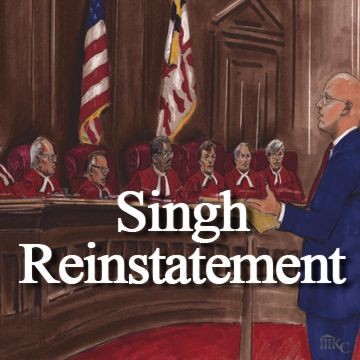
A Long Wait to Reinstate

The Court only suspended him for 60 days. But rather than support a timely reinstatement, Bar Counsel strongly opposed his return to practice after 878 days.

Issue: Sidelined for over two years on what was supposed to be a two-month suspension, should an attorney who exercised good faith in complying with Bar Counsel be reinstated?

Discussion: On Jul 17, 2019, the Court of Appeals imposed a 60-day suspension upon an attorney who represented a married couple in obtaining permanent residency for one of the spouses, but later advised one spouse on bringing criminal charges against the other, failed to advise him of his options in removing conditions on his permanent resident status within sufficient time to do so, settled a fee dispute in return for a release without advising his client to seek independent counsel, and testified under oath that he usually complied with IOLTA rules when, in fact, he did not.

While settlement of a fee dispute was also improper and he did give misleading testimony under oath, the Court rejected Bar Counsel’s call for an indefinite suspension of a lawyer who did not harm his clients, misappropriate any funds or have any history of discipline. Writing for a four-judge majority, Judge Robert McDonald believed that the Court could protect the public “without sidelining for an indefinite period an attorney who has no other record of discipline and who serves a vulnerable class of clients of moderate means.” Bar Counsel nonetheless opposed his reinstatement after sidelining him for 878 days.

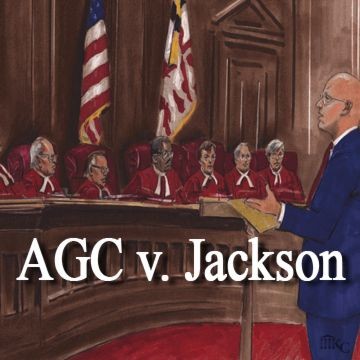
Argued: January 10, 2022

Decision: Reinstatement Granted, January 14, 2022

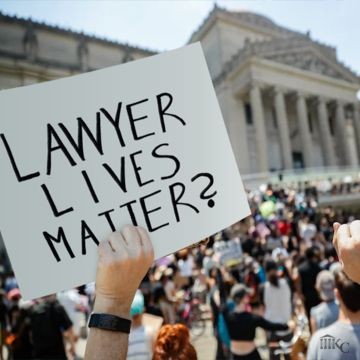
Do Lawyer Lives Matter?

Q. As lawyers, we know that “all persons” should be treated equally under the law. Does that apply to “all lawyers” in the attorney grievance process?

A. Legally speaking, yes. In practice? I’m not so sure.

While concerns over equal protection and eliminating bias prompt us to keep careful statistics on other aspects of our justice system, we pay less attention to the system by which we regulate ourselves.

Many states, including my home state of Maryland, fail to keep – and certainly don’t release – data on the race, gender, national origin or age of the lawyers they discipline. Lacking this sort of transparency, the confidentiality of individual cases makes it virtually impossible to assess the fairness of a process on which our careers may hinge.

Maybe we’re afraid to look.

So far, only one state has dared to do so. In a “First of Its Kind Study on Racial Disparities in Attorney Discipline,” the California Bar examined the likelihood that attorneys of different races, ethnicities and genders may face serious discipline. Looking at more than 100,000 lawyers for whom demographic data was available, the analysis found “statistically significant disparities” among sanctioned lawyers.

The widest gap existed between white male lawyers and their black counterparts. The study showed that black lawyers were three to four times more likely to be disbarred or to face other serious sanctions. Of these, the hardest hit were sole practitioners, who faced discipline more often than those in larger firms.

Without the data to back it up, I can’t speak to other jurisdictions. But I doubt that California is alone.

Assuming that the white guys of Big Law are no more ethical than black solos, what accounts for the inequality?

Racism can’t be ruled out on conjecture alone. But another possibility may be equally troubling for those who believe in equal justice under law. Despite our profession’s continuing plea for greater access to justice, we often punish those who provide it. Returning to their communities to serve the under-served, minority lawyers may learn that no good deed goes unpunished. Forced to manage a high volume of “low bono” work to make less money than their large firm counterparts, these lawyers must juggle more cases with fewer staff and resources than those with a more affluent clientele. When I represent these lawyers, I’m often astonished by how little they charge and how much they do for free.

Yet these lawyers pay a heavy price even when their clients do not. On the front lines of client service, solo and small firm lawyers have little to insulate them from potential discipline. Unlike their colleagues at larger firms, they don’t have a team of CPAs to manage their trust accounts, a cadre of associates and paralegals to catch mistakes, or a hierarchy of senior partners to whom angry clients may air their grievances. For these lawyers, the only real “complaint department” is the attorney grievance board.

Would disbarring them truly protect their clients, or would it thin the herd of the very lawyers who give them access to justice?

Rather than answer this question with data on the background of those we punish, disciplinary boards seem content to publish the raw number of lawyers they sanction from one year to the next.

Raw numbers are easier to ignore than people. Without the data behind these numbers, we may never know whether we are truly protecting the public, or are instead reducing their access to the only lawyers willing to help. If we truly believe that “all persons” should be treated equally, its time to take a closer look at how fairly we treat each other.

Dealing with Burnt Trees After the Dixie Fire

One of the first post-fire issues landowners face is property cleanup. Debris can include homes, vehicles, structures, personal property, chemicals, and toxins.

Debris cleanup also includes burnt trees. How and when to remove damaged trees is one of the most complicated situations an owner will have to deal with post-fire.

How and when to remove and clean up the trees

Burnt trees that are still standing are weakened by the fire and at risk of falling down at any time. They are therefore a hazard to anyone on the property. Therefore, to safely work on cleaning up the other debris on the property, the dangerous trees, often called “hazard trees,” must first come down.

Before felling the trees, owners should document the damage .  Take wide angle photographs that show the tree, the tree’s location on the property, and the damage all in one shot.

Factors to consider in deciding to take down a tree:

Is the tree a hazard to the public?

If the tree poses a threat to a public right of way or property like a road, ultimately the county can force you to remove the tree or allow them to enter your property so that the county can remove it.

Will the tree survive?

Many trees look completely burned, but will recover. Nobody wants to cut down trees that will end up surviving. An arborist can provide an opinion. In general, however, oaks are hardy while pine trees can withstand very little fire damage.

Does the tree pose a risk to your own property?

Keep in mind that there may be large equipment being used on the property during cleanup and rebuilding. Many operators won’t work on properties with trees in danger of falling nearby.

A still-standing tree may appear stable, but with increased winds, rain, and snowfall approaching it may actually pose a risk to someone on your property.

There can be root damage from the fire that hides the damage and the risk of the tree falling.  Again, an arborist can help.

What happens to the wood when the tree is felled?

Will the tree be cut in long enough sections to be worth milling, or “lopped”?

Will the contractor haul away the tree or leave it on your property?

If they leave trees on your property, will they stack and organize them?

If PG&E or the County cut down your trees, what happens?

What kind of damages can PG&E be made to pay for?

The laws in California provide unique avenues for recovery that don’t exist in other states.  It’s important to hire an experienced CA attorney to maximize the recovery in your case.  PG&E can be required to pay for the diminution in value that your property suffers as result of the loss of the tree, the value of the tree using the “trunk formula method” of valuing trees or, in some cases, the cost of replace the tree with one of like kind, size, and species.

We are experienced PG&E wildfire attorneys. If you have standing dead trees on your property after the Dixie Fire, call today and we’ll walk you through what you stand to recover for your trees. You will be connected to one of the attorneys in the firm that have worked closely with expert arborists, foresters, and engineers in past cases and know the complexities of these cases first hand. The laws governing tree damages are complex and date back to the 1800s, hiring an experienced attorney like those at Danko Meredith to guide your case to a resolution is the best thing you can do in your recovery.

Testing Bar Counsel’s Power

As one law professor wrote, this oral “argument delve[d] into the philosophy of attorney regulation and the appropriate role of disciplinary counsel in a way that few cases do.”

Issue: Should the Court sanction a member of the D.C. Bar who followed Bar Counsel’s guidance in maintaining a law office located in Maryland?

Holding: No. Having followed Bar Counsel’s own recommendations on how a D.C. lawyer may maintain an office located in Maryland, the Court did not believe that sanctions were warranted even though current rules prohibit a continuous and systematic presence. Because the lawyer reasonably believed that she could keep her Maryland office, the Court unanimously dismissed all charges against her.

Alleged Violation: Maryland Attorneys’ Rule of Professional Conduct 5.5 (Unauthorized Practice of Law).

Visiting her office on an unrelated matter in 2015, Bar Counsel’s senior assistant knew this lawyer wasn’t licensed to practice in Maryland. Rather than prosecute her for opening a Maryland office, the assistant advised her on how to maintain it. She followed this advice. But three years later, Bar Counsel tried to have her disbarred for staying there.

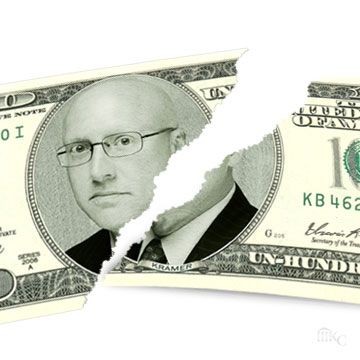
Outraged by the prosecution of an attorney who relied on Bar Counsel’s recommendations, Irwin Kramer urged the Court to dismiss all charges. As Georgetown Legal Ethics Professor Michael Frisch wrote, “the argument delve[d] into the philosophy of attorney regulation and the appropriate role of disciplinary counsel in a way that few cases do.” Like the Court, he “was hard pressed to understand the wisdom of this prosecution.

Argued: September 13, 2021

Dismissed: January 31, 2022

Read Judge Booth’s Opinion

The Ethics of Intimidation

Q. Representing a large manufacturer, I sent a demand letter threatening to sue its competitor and promising a nasty discovery process that would be the “legal equivalent of a proctology exam.” Did I go too far?

A. Perhaps.

You are, after all, a Juris Doctor. But that doesn’t entitle you to conduct proctology exams, or the “legal equivalent” thereof.

When “representing a client,” Rule 4.4 of the Rules of Professional Conduct prohibits us from using “means that have no substantial purpose other than to embarrass, delay, or burden a third person.” Indeed, the preamble to our ethics rules require that we “use the law’s procedures only for legitimate purposes and not to harass or intimidate others.”

But some degree of “intimidation” may serve a legitimate purpose. Assuming that your client has a meritorious claim against its rival, you probably won’t get much attention if you try to kill it with kindness. Worded the right way, there’s nothing wrong with sending a strong demand letter outlining the perils of war, the expense of litigation, and its potential impact on the business of your adversary.

For many, protracted litigation, probing depositions and the prospect of trial may be as distasteful as certain medical procedures. Still, threats to inflict pain, to embarrass or to destroy our adversaries call the legitimacy of our efforts into question. In extreme cases, it may even prompt disciplinary charges for engaging “in conduct that is prejudicial to the administration of justice.”

As lawyers, our most powerful weapons are often our most subtle. Those with a command of the facts and the nuance of language need not sacrifice their professionalism to get the other side’s attention. In our profession, hyperbole, ad hominem attacks, and crude language are signs of weakness. Thus, while your earthy letter may not lead to discipline, you can probably do without the medical imagery.

P.S. – Next time, run the letter by me before you mail it off.

Mile High Profits

Q. I regularly fly to depositions for a client that pays for my time in transit. If I work on another client’s case during the flight, may I bill that time as well?

A. Before researching this issue, I would have said, “why not?” After all, you could choose to watch a movie or read a magazine on the plane and still bill for your travel time. Why not use the time productively and make the flight even more profitable?

Though I see no ethical problem with this practice, the rest of the world seems to disagree. According to the American Bar Association, “A lawyer, who flies for six hours for one client, while working for five hours on behalf of another, has not earned eleven billable hours.” According to the ABA, this is no different than a lawyer double-billing his travel time to a court where three appearances are scheduled for the same afternoon, or a lawyer spending an hour to research an issue that applies to more than one client and billing both for the same effort.

Unlike these situations, you are not planning to bill more than one client for the same effort. Stuck on a plane, you are simply seeking to work harder than you have to, expend additional effort on behalf of another client, and bill for it.

Sadly, my personal opinion won’t get you too far. If you depart from a view unanimously held by the ABA and every other ethics committee that has considered the issue, you’re in for a rough landing. Financially at least, only the client may benefit if you decide to work on the flight. “Rather than looking to profit from the … desire to get work done rather than watch a movie,” the ABA believes that the lawyer “is obliged to pass the benefits of these economies on to the client.”

Despite this uptight and locked position, the ABA stopped short of imposing a duty upon traveling lawyers to work whenever possible. But the extent to which a lawyer may bill for unproductive travel time is still up in the air. While many firms bill it at their usual hourly rates, some courts have cut this rate in half when awarding attorney’s fees, and many corporate clients and insurance companies require that their counsel do the same.

Regardless of your hourly rates, one thing seems clear: You’re not allowed to bill more than one client for one time-slot. So until your state adopts my contrarian view, enjoy the in-flight movie. Just make sure that My Cousin Vinny doesn’t show up on your time sheets.

Fee Splitting

Q. I’ve always heard that referral fees are forbidden. But I know lawyers who routinely refer cases for a share of the profit, even if they’re not licensed where the cases are pending. Isn’t this unethical?

A. Not if you do it right.

Strictly speaking, “referral fees” remain illegal in all but a few states like California and Virginia. Since you can’t give “anything of value” in return for a recommendation or referral, direct payments for either are forbidden in most jurisdictions.

But there are ethical ways to profit from cases that are largely, or even entirely, handled by others. Rescinding older rules that only let you share fees in proportion to the work you actually perform, the Rules of Professional Conduct adopted in most states will let you reap the financial rewards of cases for which you bear financial and ethical responsibility.

In most jurisdictions, lawyers from different firms may split fees if they assume “joint responsibility” for the case, if the client agrees to it in writing, and if the total fee remains reasonable. Many states also require that the agreement disclose the share that each lawyer will receive.

Unless you intend to participate in the litigation itself, there is no requirement that you be admitted as pro hac vice counsel. In fact, there’s no requirement that you work on the case at all as long as you’re willing to take responsibility for it.

At bottom, lawyers cannot profit from a case unless they have “skin in the game,” either through their own service to the client or by bearing joint liability if something goes wrong. Unlike a lawyer who makes a referral and walks away, you’re on the hook if your co-counsel falters. To share in fees, you must assume an ethical duty to ensure that the case is handled competently to protect the client’s interests. If you’re not willing to accept this burden, you’re better off giving clients the names of some reputable attorneys and wishing them well.

If you properly verify the qualifications of your co-counsel, and actively monitor their efforts, you may effectively “broker” a case to a lawyer outside of your firm. This is true even if you’re not licensed where the case is pending. Although most jurisdictions prohibit lawyers from splitting fees with non-lawyers, lawyers from different states may share fees if they follow the rules.

Where jurisdictions were once split on the issue of “fee splitting,” this practice has been accepted across the globe. As “multi-national” practices continue to grow, virtually all jurisdictions that have addressed the issue have given their blessings to fee-sharing arrangements with foreign lawyers who have professional education, training and ethical standards comparable to those of their American counterparts.