$4.25 Million Settlement in Minnesota Drowning Case Involving 5-Year-Old
The Haggard Law Firm’s Michael Haggard and Adam Finkel, along with local co-counsel Alicia Sieben of Schwebel, Goetz & Sieben and Abinasir Abdulahi of AMA Law Group, secured a $4.25 Million settlement in a drowning case.
As per the guidelines of the settlement, the names of the plaintiff(s) and defendant(s) are confidential. In May 2021, a 5-year-old boy was home with his brothers, sisters, and father, when he left his home in Dakota County, Minnesota. Unknown to his family, the boy walked about a half-mile away from his house, eventually arriving at an apartment complex. It was believed that the boy entered the main leasing building, walked to the back of a hallway, and gained access to an adjacent outdoor pool area.
Regardless of how he accessed the pool – whether through the building or by climbing the fence – he was able to gain access to their pool area, take off his clothes, and enter the pool. Unable to swim, the boy drowned. A community resident saw the boy’s body floating in the water and jumped in to rescue him. Although he attempted CPR and paramedics took the boy to the hospital, the child did not survive. He is survived by his siblings and parents.
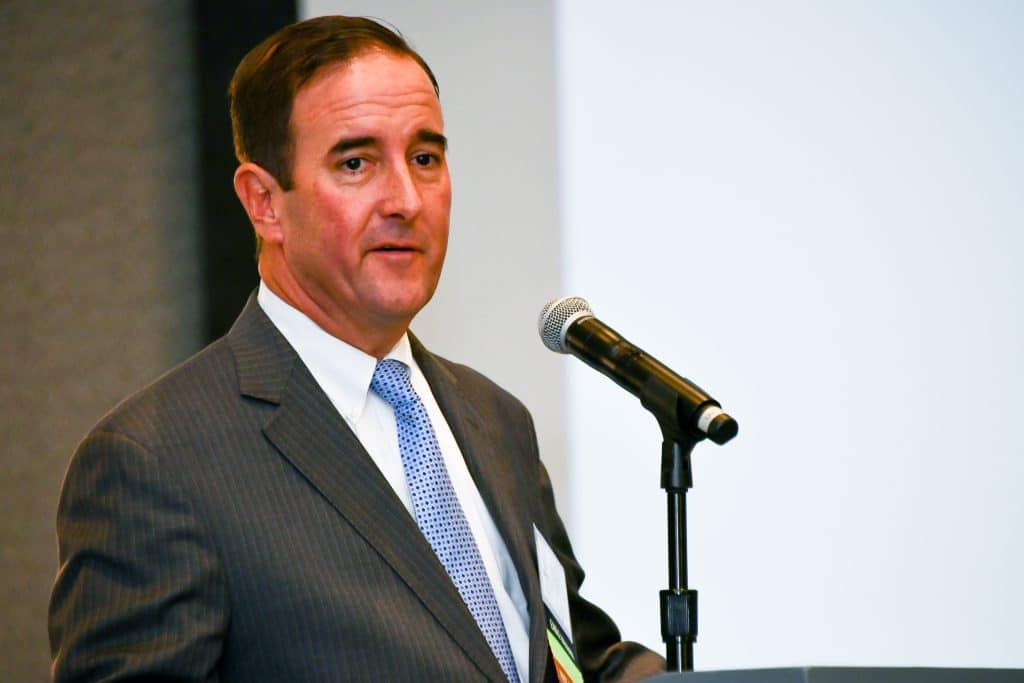
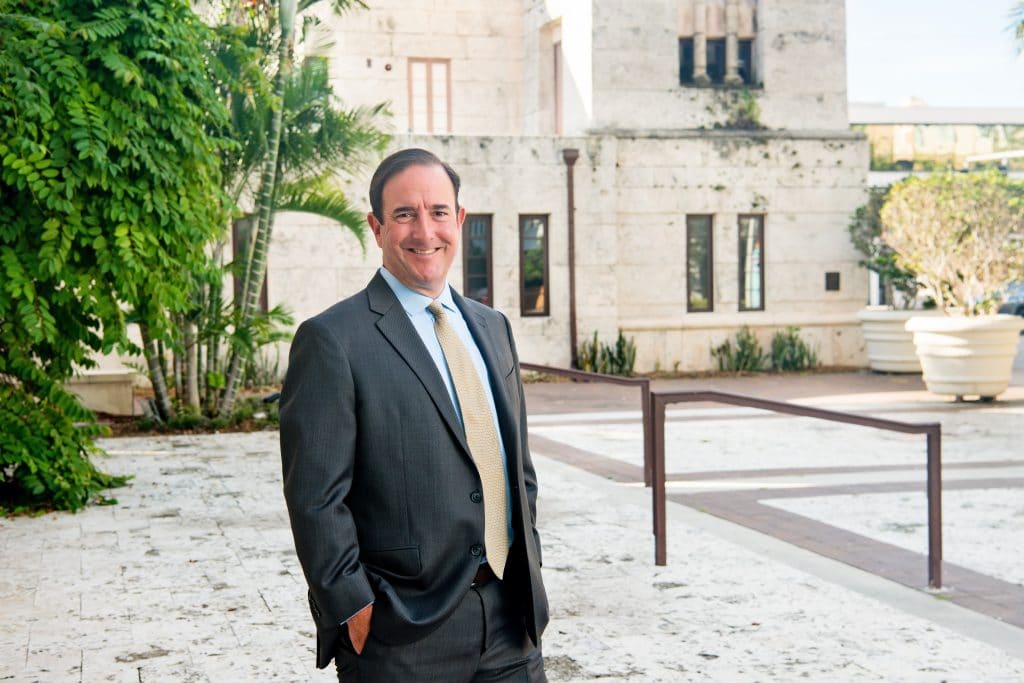
Managing Partner Michael Haggard
A lawsuit was filed in Minnesota, against the management company that operated the apartment complex and pool. The complaint alleged the management company did not operate the pool in conformity with required safety codes, specifically those aimed to prevent childhood access to pools. The Haggard Law Firm and co-counsel argued the management company was liable for the child’s death.
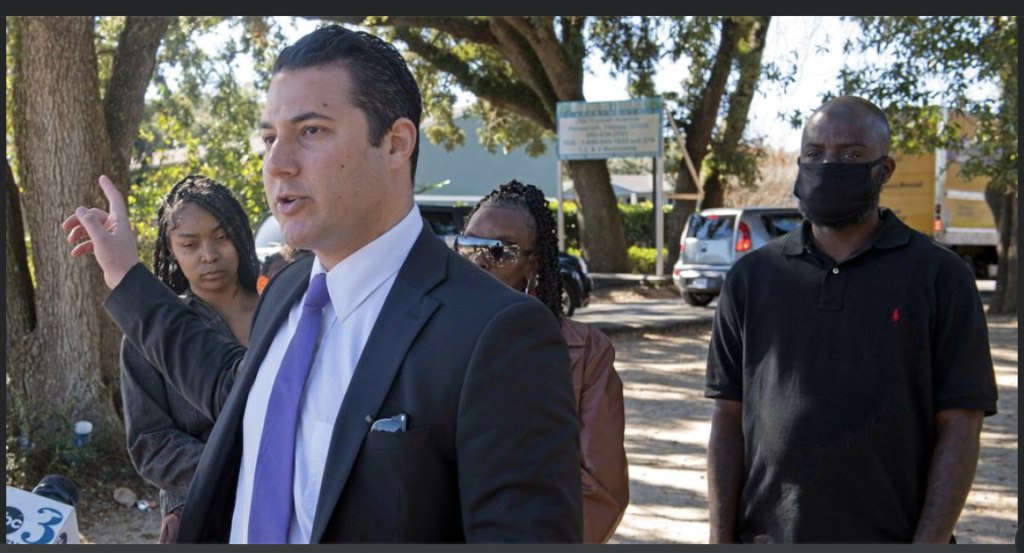
Trial lawyer Adam Finkel
The management company defended that it was unknown how the boy gained access to the pool, and the boy was missing for upwards of 30 minutes before the family even called the police. Highlighting the half-mile walk by the boy before arriving at the complex and the significant time that elapsed, the defense argued that the boy’s family was at fault. Further, the management company believes the boy entered through a “fire door” of the building, which could not be locked.
Ultimately, the matter settled for $4.25 Million Dollars.
The Haggard Law Firm has successfully represented the victims of near drownings and the family members of drowning victims across the country for decades. Our personal injury and wrongful death lawyers are focused on achieving justice for our clients and sparking change to help prevent drownings.
Olivia Oney was in a car crash where she was the restrained back-seated passenger in an Uber. Uber provided underinsured/uninsured motorist coverage through Progressive Insurance Company to Olivia. Progressive was the Defendant in the lawsuit.
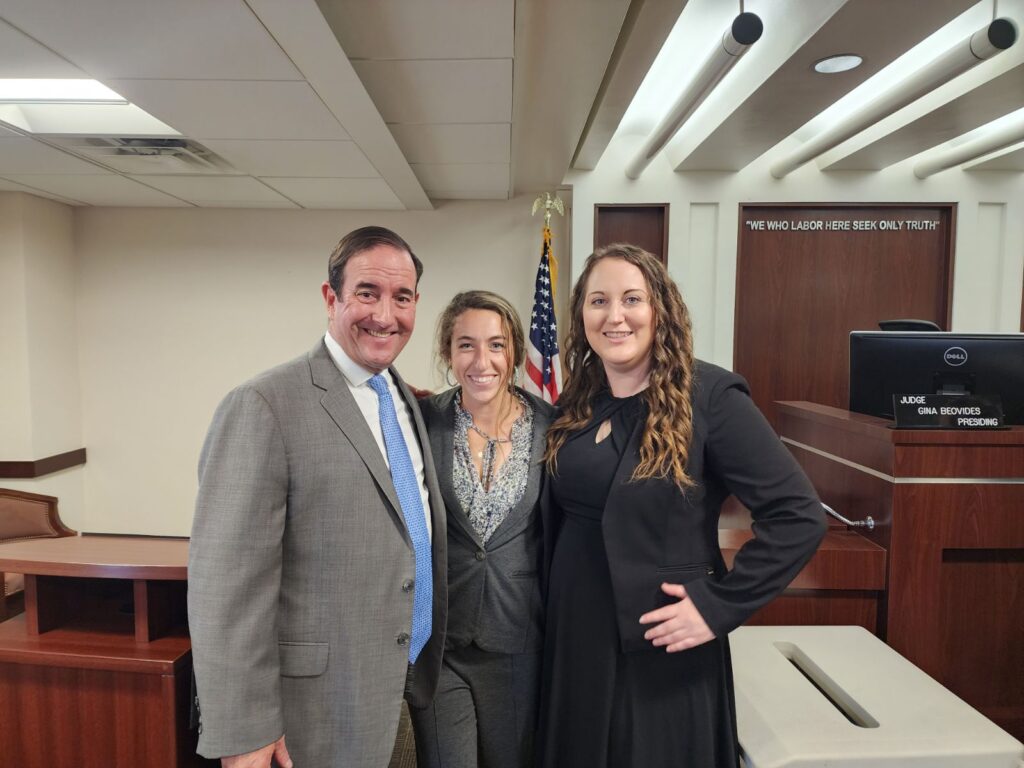
Left to Right” Michael Haggard, Olivia Oney, Kimberly Wald following the $3.5 Million Verdict
As a result of the crash, Olivia sustained serious pelvic and back injuries. Her pelvis was fractured in 5 places and the surgeon performed an L5-S1 fusion surgery including a pelvic fixation on January 24, 2021. On June 2, 2021 Olivia underwent a second surgery where part of the hardware in her back was removed.
She still has hardware at the L5-S1 that will remain for the remainder of her life and will require a possible future fusion surgery as well as a possible c-section should she carry children.
Progress Insurance Company admitted liability and contested damages. Progressive argued that although Olivia was injured, she made a remarkable recovery and the worst pain and suffering was behind her. Prior to this accident, Olivia was a competitive horseback rider, winning national title championships. Progressive presented evidence to the jury that a little over 5 months after the car crash, Olivia was able to compete in horseback riding competitions again and showed the jury videos of Olivia riding and jumping horses after the accident. Progressive also introduced several Facebook photos and posts about her business being successful and booming and showed the jury many medical records from as soon as three weeks after the crash where Olivia reported no pain to her doctors.
Haggard and Wald argued that although Olivia is able to still ride horses, her world was shattered and she will live with chronic pain every day. Ultimately, the jury sided with Olivia and awarded her $3,500,000 compensating her for her past medical expenses and her past and future pain and suffering.
As per the terms of the settlement, the names of the plaintiff and the defendants are confidential.
The victim was shot and killed at a residential community in Lauderhill, Florida. He was coming home for the night when he was confronted outside of his apartment by two armed and masked assailants.
The assailants were inside of the gated community for approximately 20 minutes waiting for the victim to return home. When the victim arrived, the assailants chased him and eventually shot and killed him.
The shooters gained access to the property by tailgating into the premises. This property had one prior instance of a violent crime when someone tailgated through the front gate which led to an aggravated assault. There were also prior disturbances in the community including burglaries and domestic violence. There was a security guard working that morning but it is unknown their whereabouts.
The victim was survived by two minor children, a 10 and 11-year-old son, and daughter.
Two $5 Million Settlements, Two Cases, Two Properties, One City, Same Defendant
The Haggard Law Firm’s Michael Haggard and Adam Finkel secured two settlements totaling $10 Million in two negligent security wrongful death cases against the same defendants. The cases addressed the murders of two young men in Pensacola, Florida. While killed in different apartment complexes, both were owned and operated by The Marquis Group.
Attorney Adam FinkelManaging Partner Michael Haggard
Kuanterion Rivers Case
On June 20, 2020, Kuanterion Rivers was with friends outside within the Oakwood Terrace Apartments. That day, two young men exited a truck and shot and killed Kuanterion. As law enforcement investigations revealed, they were either jealous of Kuanterion’s budding music career or took offense to one of his song’s lyrics. Kaunterion was unarmed. His daughter, Kueen, was born just months earlier.
Oakwood Terrace is formerly known as Truman Arms, but was renamed after The Marquis Group purchased the property. It was clear that the Defendants were aware that the property was known for crime, but The Marquis Group did little to meaningfully improve safety at the complex. For example, it failed to repair the front gates. This is how the shooters were able to drive freely into the complex.
Even further, Oakwood has a guard house designed for a security guard to monitor persons entering the property, but The Marquis Group did not have a guard inside. In this case, The Marquis Group argued that they employed off-duty officers, but it was clear to The Haggard Law Firm that The Marquis Group understood that more security was needed. Nevertheless, Marquis chose to not employ 24/7 guards, including private security.
Filing a lawsuit on behalf of Kuanterion’s estate, The Haggard Law Firm highlighted the history of violence in Oakwood and the failure to reasonably secure the property. The defense argued that The Marquis Group did act reasonably since there were occasional off-duty patrols on duty. They also argued that nothing could have prevented Kuanterion’s death, since the shooters targeted him.
This case ultimately settled with The Marquis Group for $5 Million.
Jeffrey Kennell Case
On December 29, 2020, Jeffrey Kennell, Jr. was walking home to his apartment in the Forest Creek Apartments, when two people followed him through a side entry gate and shot him. His mother, Raquel, heard the noise, ran outside, and found her son dead. As law enforcement discovered, the shooters incorrectly believed that Jeffrey was involved in the killing of another young man, and shot 16-year-old Jeffrey in retaliation.
Jeffrey had nothing to do with the murder the retaliation shooting was based on. The young men that were involved, were later arrested.
Forest Creek is formerly known as Warrington Village but was renamed after The Marquis Group purchased the property. While aware of the property’s criminal history, The Marquis Group did little to meaningfully improve safety at the complex.
For instance, The Marquis Group failed to monitor or repair the broken side gate where Kennell’s killers entered. The Marquis Group understood more security was needed, but failed to make reasonable efforts to employ 24/7 guards, including private security.
Filing a lawsuit on behalf of Jeffrey’s estate, The Haggard Law Firm highlighted the staggering history of violence in Forest Creek and argued that The Marquis Group failed to reasonably secure the property. In depositions of their president and regional manager, it became clear to Finkel and Haggard that neither employee was sufficiently trained to be in charge of operating such a publicly-subsidized housing complex with a history of crime, and they were in over their heads. On the other hand, the defense argued that The Marquis Group did act reasonably since there were occasional off-duty patrols on duty. They also argued that nothing could have prevented Jeffrey’s death, since the shooters targeted him.
Nevertheless, the matter was settled with The Marquis Group for $5 Million Dollars. Jeffrey was survived by his parents.
On the morning of January 8, 2022, Mathew Jousett was playing inside the bedroom of his father’s apartment in the Greenwich Condominiums (1470 NE 123 Street, North Miami, Florida). At some point, one of his father’s girlfriend’s kids saw a window screen fall and immediately told his mother’s boyfriend, Thomas. It was then that Thomas, Mathew’s father, looked outside and saw the unthinkable: his son’s lifeless body on the concrete sidewalk.
The child fell 7 stories. He was rushed to the hospital.
Mathew’s parents, Maria and Thomas, were instructed to say their goodbyes, anticipating the child would not survive through the night. The next morning Mathew’s arms were moving. Having sustained a severe traumatic brain injury, Mathew’s entire life was upended that day. He now requires around-the-clock care. He is unable to speak or walk and barely resembles his former self.
Representing Mathew and his parents, The Haggard Law Firm served several demand letters upon the homeowner’s association and management company in charge of the apartment building and engaged in pre-suit discussions with their attorneys. Highlighting decades of studies detailing that safeguards are needed to prevent these very types of incidents, references to safeguards in applicable codes, and even referencing guidance from other similarly situated management companies that advise that such safeguards are necessary and cost-efficient, The Haggard Law Firm argued that Mathew’s injury was not only entirely foreseeable but preventable.
Managing Partner Michael HaggardTrial lawyer Adam Finkel
While initially contesting whether the HOA and management company had control over the relevant areas of the window and building, and perhaps contesting foreseeability and proximate cause, the HOA, management company and their insurers ultimately tendered the $11 Million policy limits as a pre-suit resolution.
$3.5 Million Settlement in Hotel Pool Drowning Case
The Haggard Law Firm’s Douglas McCarron has obtained a $3.5 Million settlement involving a drowning at a Florida hotel.
Per terms of the settlement, the names of the parties involved are confidential.
In the summer of 2018, the victim’s family chose a Resort for summer vacation close to some of Florida’s most popular tourist attractions. The hotel had a number of amenities targeting family-friendly fun, namely the resort pools. Like every other guest on the premises, the victim’s family assumed that the pool advertised to be enjoyed by families and young children was responsibly maintained and safe. The reasonable assumption was simple: this pool was reasonably safe for enjoyment and use by families with children. Tragically, this reasonable assumption was incorrect.
Surveillance video captured the young victim in the water as he was immediately pushed underneath the water’s surface by the power of the pool’s waterfall feature. Unable to get off the pool floor, the young victim remained submerged and drowned. Although multiple people, including the victim’s father, are within feet of child, the splashing of the waterfall blocks the father’s view of the child struggling below the surface.
The child drowned in silence in just 4 feet of water.
The Pool had a water slide, a waterfall feature, a full bar, and a kitchen. It is, by far, the most used and crowded pool on this resort’s property. As such, the pool has constant activity and was hectic. The pool clearly attracts families with children and was designed for families to remain in the pool area for hours at a time. Unlike some of the fun aquatic features, the waterfall feature poses a hidden danger to children. Cascading into 3 to 3½ feet deep water, next to a slide and stairs, the waterfall entices children to play under the crashing falls or climb on the rock wall behind it. Even adults enjoy having the crashing falls massage the tops of their heads or backs. The difference, of course, is that there is far less likely that an adult will be pushed under the water by the falls, as compared to a child.
Attorney Douglas McCarron
The waterfall feature caused turbidity on the water’s surface which makes it extremely difficult, if not impossible, to see the pool floor. This is an extremely dangerous condition and is something that the defendant(s) needed to be aware of.
Every authority regarding pool maintenance requires that all parts of the pool floor be readily visible to those outside the pool. The reasoning is obvious: lifeguards, water-watchers, parents, and other swimmers or patrons need to be able to see if a swimmer is drowning or struggling on the pool’s floor. If not, a swimmer, likely a child, maybe struggling on the pool’s floor. If no one can see the swimmer, death or severe injury is inevitable.
“The inherent dangers associated with the waterfall feature necessitated the resort implement strict policies and procedures, and adopt emergency protocols,” says McCarron. Qualified and properly trained manpower was required to ensure the safety of guests. Moreover, industry standards required the use of a lifeguard. The Centers for Disease Control (CDC) advocates that public swimming pools must provide qualified lifeguards if certain conditions exist – specifically, public pools with waterslides and waterfall features.
The evidence, in this case, showed a failure to have any of these safeguards and failed to implement a reasonable emergency response plan. Had any of these safety measures been in place, the child would not have drowned.
$1.5 Million Settlement in Gas Station Negligent Security Case – The Haggard Law Firm
The Haggard Law Firm’s Joshua Padron and Todd Michaels have secured a $1.5 Million settlement in a negligent security personal injury case involving a gas station shooting.
On February 25, 2021, Patrick Gustafson stopped at the Marathon gas station ( 1490 SR 84, Fort Lauderdale, FL) to fuel up his vehicle. Patrick was in line to use one of the fuel pumps when a stranger approached and entered Patrick’s vehicle while he was still inside it. The assailant tried robbing Patrick and the two struggled inside the vehicle as Patrick fought off the attacker and ran out of the car. The assailant chased Patrick around the parking lot where the assailant grabbed Patrick again trying to rob him.
Screen shot from the shooting at the Marathon Gas Station in Broward County Florida
Inside the convenience store, employees saw Patrick being robbed and locked their doors.
Eventually, Patrick was able to break free from his attacker and run to the convenience store, only to find out it was locked. Patrick plead with employees inside to unlock the door for him but they refused.
Patrick’s attacker caught up to him, still waiting to be let into the safety of the convenience store, and pushed Patrick to the ground. As he lay helpless on the ground, his attacker shot him in the back of the head, execution style.
The attacker left the property and eventually paramedics arrived and took Patrick to the hospital where they performed life-saving procedures.
$3 Million Negligent Security Wrongful Death Case Involving Apartment Complex Shooting
The Haggard Law Firm’s Pedro Echarte has obtained a $3 Million settlement for the family of a 15-year-old boy murdered at an Orlando apartment complex with a history of crime.
On July 1, 2018, “W.I.”, a 15-year-old boy, was shot and killed at the Boca Club Apartments in Orlando, FL. At the time of the incident the teenager lived at the apartment complex with his father. “W.I.” left behind his devastated parents who were the survivors of his claim.
The Haggard Law Firm brought this action against the apartment complex for failing to have needed security measures to protect residents and guests. Echarte was able to show that the apartment complex had a long history of both violent and non-violent crime. Despite this history of crime, the apartment complex never warned its residents of the crime occurring within the community or invested in the security that could have prevented this and other tragedies.
As a result, neither the 15-year-old or his family knew the extent of the crime in the community or the full extent of the risk that existed there.
Trial Lawyer Pedro Echarte
The Haggard Law Firm was able to show that the apartment complex had few of the necessary security measures. It did not have access control, surveillance cameras, or a sufficient amount of manned security. While the apartment complex did claim it not only had manned security but that it had two security guards on the night of the incident, the defendants were never able to provide any proof that security guards were actually on the property at the time of the incident. No security logs, time sheets, reports, or any other information to substantiate their claim concerning the presence of security guards was ever produced.
Ultimately, the case was resolved leading up to trial.
Trial Lawyers Must Keep Fighting For Crime Victims in Florida
On March 24, 2023, Governor DeSantis signed into law HB 837. Simply put, this new law is a broad sweeping attack on the civil justice system and victims’ rights. While proponents have touted the legislation as “tort reform,” the reality is that its intent is to put up roadblocks to Floridians seeking justice from those that have injured or killed them through acts of negligence. The law is targeted at all types of victims and cases, but the legislature attempted to target no group more than victims of crime.
Under Florida law, those that own and operate businesses and real property have a duty to maintain their premise in a reasonably safe condition. Florida courts have repeatedly recognized that this duty includes the duty to implement reasonable security measures to protect invitees from reasonably foreseeable crime. Accordingly, the more dangerous a property is, the more security it should have. When that duty is breached and someone is harmed during the commission of a criminal act, they can hold the negligent business or property owner responsible for the damages they suffer in a “negligent security” action.
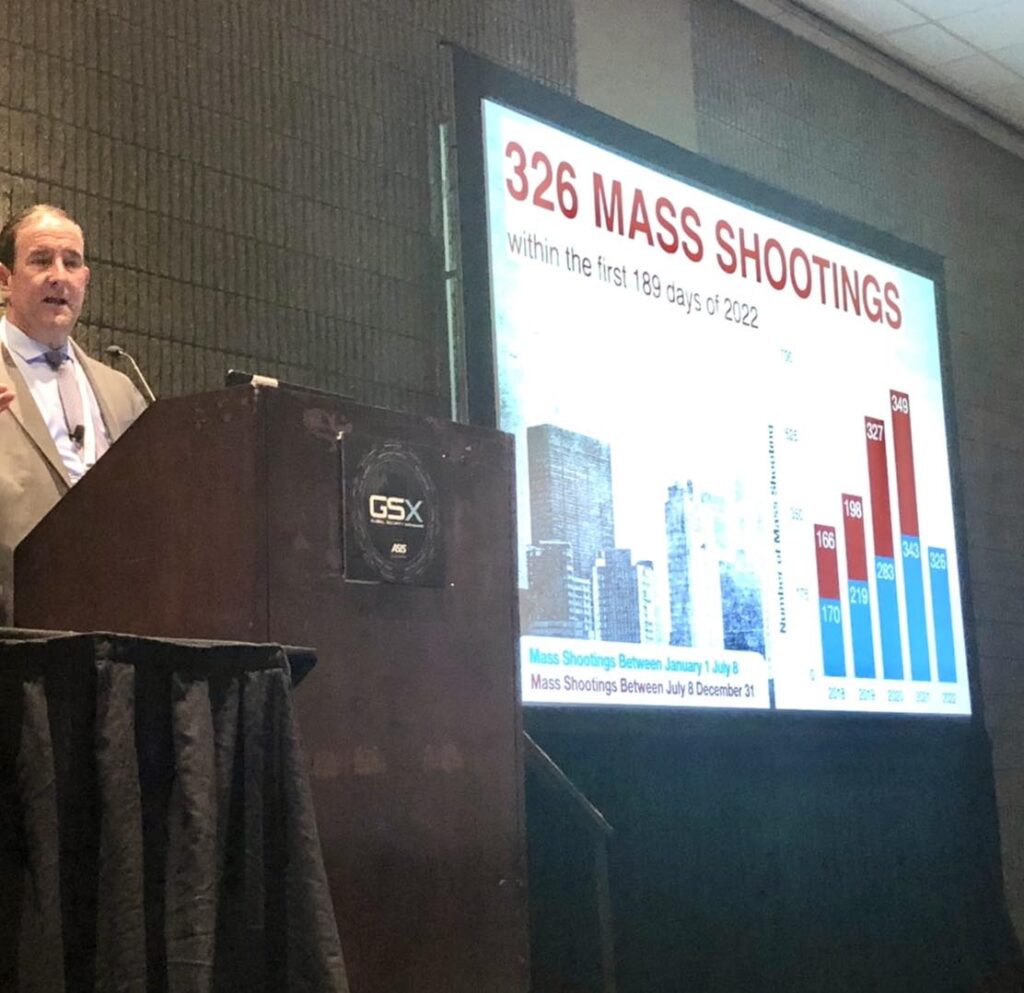
Michael Haggard discussing mass shootings during an international conference of security professionals
This new legislation appears to attempt to attack crime victims’ substantive rights in two ways. However, because the legislation is poorly worded and somewhat ambiguous (clearly a product of it being hastily drafted and rushed through the legislative process to avoid serious debate) the ultimate ramifications remain unknown.
What is known is that the primary impetus behind the bill was to make it more difficult for crime victims to obtain compensation through the civil justice system for the damages they suffer. If the proponents have their way, the ultimate implications for not just crime victims, but for our community would be enormous. The legislation could limit crime victims’ ability to seek justice for what they have suffered. The legislation also could make our communities less safe as there will be little incentive for business and property owners, especially multifamily residential complexes, to implement much-needed security. We will not let either happen.
The first of the two purported changes relates to how a jury can decide negligent security cases and who civil defendants in a negligent security case can blame for the injury causing criminal attack. It has long been the law in Florida that when a crime victim sues a business or property owner in this type of case, the jury cannot apportion fault to the intentional tortfeasor (i.e., the criminal) when reaching their verdict. In 1998, the Florida Supreme Court, in Merrill Crossings Assoc. v. McDonald, 705 So.2d 560 (Fla. 1998), held the same and based its opinion on both statutory construction and public policy. With respect to the public policy, the Court recognized that it would be “irrational” to allow a party who negligently fails to provide security measures to reduce its liability by blaming the criminal that committed the attack because the crime itself was what the civil defendant had a duty to protect against. (This is not a novel concept — in dram shop cases the defendant bar owner who overserves a habitual alcoholic cannot reduce their liability by blaming the habitual alcoholic when he/she harms someone who in turn sues the bar).
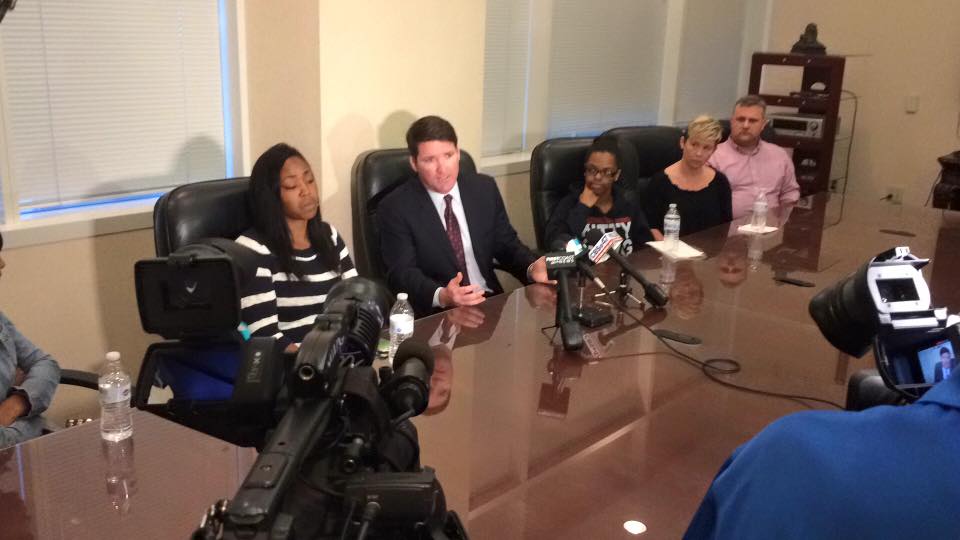
Douglas McCarron with several crime victims and survivors in Jacksonville
By passing HB 237, Florida Statutes, Section 768.0701 was enacted. This new law states that in negligent security cases the jury must consider the fault of “all persons who contributed to the injury.” Although it doesn’t expressly state it, this now appears to permit the civil defendant to reduce the amount of fault a jury places on them by pointing the finger at the criminal instead. The ultimate implications of such apportionment are very questionable (a debate which is beyond the extent of this article), but ultimately this could potentially reduce the ultimate judgment against the negligent business or property owner and reduce the crime victim’s ability to hold them accountable for their negligence. At a minimum, it could serve to confuse the jury when considering the primary issue before them, which is whether a civil defendant breached its duty to implement reasonable security measures and whether those failures caused or contributed to the criminal attack.
The new bill does not stop there. The second change relates to the instructions the jury will receive from the Court in certain negligent security cases. The law now creates a presumption against liability for apartment complexes in negligent security cases if they take just a few very basic measures. These measures include maintaining lighted walkways, a surveillance camera at the entrance/exit of the premises, deadbolt locks, locking windows, peepholes, and fences around pools (which isn’t even a security measure, but rather long-standing code requirement to prevent child drownings). If an apartment complex implements just some of these measures, the jury will be given an instruction that the complex is presumed to not be negligent in a negligent security case.
From both a security and a general policy perspective, the legislation makes little sense. As drafted, apartment complexes will get the presumption no matter how many incidents of crime occur at their premises. And, there are no provisions in the statute requiring that apartment complexes implement additional security measures (e.g., access control, manned security, additional cameras, etc.) if crime continues to occur on the property to maintain the presumption.
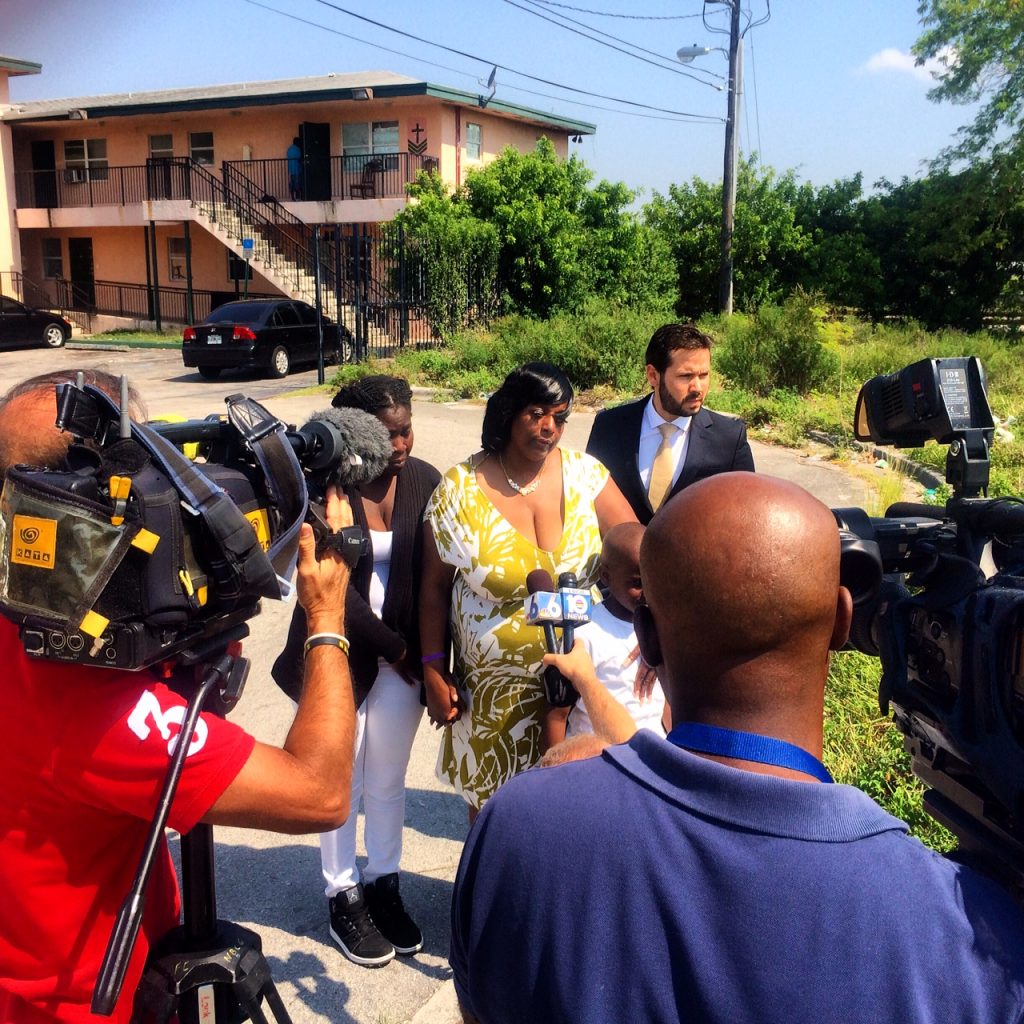
Pedro Echarte with crime victim survivors in Miami
One very real example demonstrates the potential absurdity of this new legislation. A few years ago we represented parents of Dwight Higgins who was shot and killed in an attempted armed robbery while visiting a friend at the Lauderhill Point apartment complex in Lauderhill, Florida. The apartment complex had been the location of countless prior incidents of both violent and non-violent crime, including three separate shootings in the three short months leading up to our clients’ son’s murder. In addition to the repeated crime occurring at the complex, the assailants who shot and killed our clients’ innocent son did not live at the complex, but were known to management because they were always at the property and always causing problems there. Despite the substantial crime risk that existed and despite the known problems with the assailants, the complex did absolutely nothing to attempt to address those risks. It had no manned security, its access control gates were broken, it only had a few working surveillance cameras throughout the complex, and it did nothing to try and stop the assailants from terrorizing those that lived and visited the apartment complex.
While we were able to get justice for Dwight’s parents, their rights and ability to recover would be significantly diminished should the proponents of this new legislation have their way. Under this new law, that apartment complex may get to argue to the jury that they should not be held accountable for their own security failures because it was the assailants (again, who were known to the complex) who actually shot our clients’ son, and therefore the assailants should receive all of the blame. Further, because all of the apartment units presumably had deadbolts, peepholes, and some lights the apartment complex could get a presumption against liability even though it was clear that their security measures were woefully inadequate.
Our firm has specialized in representing victims of crime for a long time. We have pursued justice for countless crime victims injured or killed in preventable criminal attacks. It is a cause that we, and others like us, have championed and will continue to fight for no matter what roadblocks the insurance industry and big business tries to put in front of us. We will do it both for the crime victims and also for our communities to keep them safe. Unfortunately, as everyone well knows, it is only with the threat of a civil lawsuit that business and property owners will spend the money to implement the requisite security to keep people safe.
It is disheartening to see our elected officials prioritize the profits of insurance companies and negligent businesses over the rights of crime victims and the safety of our communities. Notwithstanding their best efforts to eliminate these cases, claims, and causes, we will fight more now for our clients than ever before. There will be challenges to this legislation and also serious arguments made about its ultimate implications for civil defendants (it may not be what the proponents had anticipated). But, regardless of the ultimate outcome of those challenges and arguments, we will continue to obtain justice for our deserving clients and hold these bad actors responsible for all the damages and suffering their negligence causes. We have no doubt that we will convince juries that the responsible parties in civil cases are those that create the conditions and environments for these crimes to occur and that juries will ultimately place minimal or no fault on the criminal themselves. We also have no doubt that we will overcome the presumption against liability. We will demonstrate to juries, as we have done for decades, that apartment complexes that do nothing to protect residents and guests in the face of significant crime risk are in fact liable for the injuries and death resulting from their security failures. Those that prioritize profits over people will continue to be held accountable for their actions.