Differences Between Mediation vs Arbitration

When conflicts arise, individuals and entities will try to find ways to have it resolved outside of the courtroom by looking into alternative dispute resolution methods, such as mediation and arbitration. While both of these involve a neutral third party, they are vastly different in terms of structure, formality, and outcome. Understanding how these vary from one another will help affected parties choose which approach would be the best to pursue with their particular situation and whether it will help them achieve their goals.

What Is Mediation?

Two people shaking hands while a meditator in the middle is looking satisfied.

Mediation is a voluntary, informal negotiation process facilitated by a neutral third party called a mediator. The mediator does not decide the outcome, but they help both sides communicate more effectively, identify key issues, try to explore solutions, and work toward a mutually acceptable settlement. These sessions are typically non-binding collaborative efforts used to preserve relationships between parties during a legal dispute. For example, in employment disputes, family law matters, or business partnerships.

What is Arbitration?
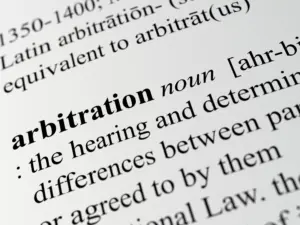
Arbitration is a more formal process in which a neutral arbitrator (or a panel of arbitrators) hears evidence, listens to arguments, and makes a final decision. Unlike mediation, arbitration closely resembles a private trial, where the final decision is binding, meaning whatever the arbitrator decides, that will be the outcome. Arbitrations are frequently used in employment disputes, consumer contracts, insurance and business disputes, and even personal injury claims involving contractual clauses.

What Happens if You Lose in Arbitration?

If you lose in arbitration, the other party will ask the court to enforce the award, which will include confirming it as a court judgement that requires you to pay or take other actions. Most arbitration awards are final and binding. This means that they will carry similar weight as a court case outcome. But, you will have a limited chance to appeal the arbitrator’s decision in court, though the grounds for doing this are rarely successful. If the arbitration process was non-binding, you could still be given the option to reject the decision and proceed to civil litigation.

What Comes First, Mediation or Arbitration?

In most legal disputes, mediation will come first. This allows the disputing parties to attempt a collaborative settlement prior to participating in a more formal process of arbitration. If both parties agree to a solution during mediation, there will be no need for arbitration. With no cooperation, the dispute could lead to the arbitration process, where an arbitrator’s decision or a court ruling will be the binding decision.

What Are the Pros and Cons of Mediation?

A woman researching what kind of lawyer she needs.

Mediation is a form of alternative dispute resolution where a neutral third party helps disputing parties work toward a mutually acceptable solution. The pros include:

  • Faster resolution
  • Lower costs
  • Confidential
  • Solve problems collaboratively

Since a trained mediator works to guide discussion, the process promotes cooperation from all parties involved. The cons are that it is typically non-binding, so if both sides cannot agree to a solution, the dispute will continue into arbitration or court proceedings. In addition, power imbalances may affect the outcome.

What Is the Difference Between Court and Arbitration?

An empty courtroom.

While courts and arbitration handle legal disputes, there are notable differences. A court case is part of civil litigation, done publicly under strict guidelines, and is overseen by a judge. Parties may have rights to discovery, motions, and appeals. But, this can be slow and costly.

Arbitration is more of a private process where an arbitrator reviews evidence, listens to arguments from each side, and forms a binding decision. It is generally a faster approach and more confidential. Arbitrators are picked based on their level of expertise. The arbitration process is highly favored in commercial contracts because of arbitration clauses, which require disputes to be handled outside of court.

Are Mediation Agreements and Arbitration Awards Legally Binding?

Mediation and arbitration differ greatly in terms of legal enforceability. Mediation is generally a non-binding process, meaning that the mediator cannot push a decision on the parties. But, if they reach an agreement during the mediation and put it into writing, that settlement agreement can become a legally enforceable contract. This gives mediation outcomes legal weight once each side has approved and signed the decision, even though this process is voluntary and collaborative.
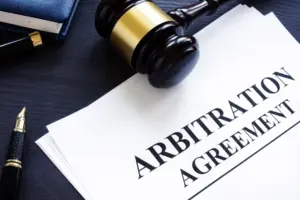
An arbitration agreement paperwork.

On the other hand, arbitration results in a binding final award. Once an arbitrator forms a decision, it will have the same effect as a court judgement. The losing party will be required to comply, and the winning side may ask a court to confirm the award and have it enforced, if necessary, making it a dispute conclusively resolved. While arbitration awards can be appealed in some cases, the grounds to do this are very limited, thus making them far more final than mediation outcomes.

Simply put, mediation agreements can be legally binding after formalization whereas arbitration awards are binding and enforceable, providing two different routes to a resolution depending on each parties goals and cooperativeness to compromise.

Which Side Typically Wins in Mediation vs Arbitration?

In mediation, both parties can be deemed as winners if they reach a mutually acceptable solution. Success will vary depending on willingness to compromise and whether the right mediator is managing the discussion. Who wins in an arbitration will differ based on the case. There is currently conflicting data on whether individuals or corporations reach a successful outcome.

A frustrated man arguing with a woman while a man is trying to calm down the discussion.

A 2022 study by the U.S. Chamber of Commerce Institute for Legal Reform (ILR) discovered that consumers and employees tend to win more often and acquire higher awards in arbitration than in court. But, other organizations, like the Economic Policy Institute (EPI), share the opposite information, where consumers and employees will win less often and receive lower pay in arbitration than they would in court. These studies show that whether arbitration or court is better for consumers and employees is not necessarily clear. Results will depend on the case itself, the arbitrator, and how the matter is handled.

With that said, the arbitration process is typically quicker and less formal in comparison to litigation, which some parties may see as a benefit, particularly when they want to resolve the situation privately to avoid court delays.

How Do Costs and Time Compare Between Mediation and Arbitration?

Mediation will be the most cost-effective approach when compared to an alternative dispute resolution option. It does not involve lengthy civil litigation, minimizes attorney fees, court expenses, and time spent in court proceedings. Arbitration is more costly because of arbitrator fees and formal procedures, such as documentation, hearings, and potential expert testimony. Both of these options allow the parties involved to save time and money compared to litigation. But, mediation is known to be the least expensive route to take, particularly when a collaborative settlement is met early in the mediation process.

When Should You Choose Mediation Over Arbitration?

Mediation and arbitration are both a type of alternative dispute resolution. But, they serve different purposes when it comes to the circumstances surrounding the dispute and the parties involved. Mediation is beneficial for cases where both sides work with one another and look into solutions that are outside of a courtroom setting. It provides flexibility, maintains relationships, and allows each side to control the final decision. But, it is not necessarily the right choice for every occasion.

Two men arguing while a woman in the middle is trying to calm down the situation.

Mediation works best in disputes where all parties are acting in good faith and are determined to have the situation resolved on their own terms. It can be especially convenient in disputes involving business partners or family members, where maintaining a relationship is important and each party values privacy. Since mediation encourages open dialogue and compromise, it can lead to solutions that reflect the needs and priorities of all parties.

Mediation may not be the best approach to take in some cases. When one party holds financial, emotional, or psychological power, the other side may feel pressured into accepting an unfair result. While experienced mediators can try to address these imbalances, serious cases typically require a more formal process, like arbitration or litigation, that provides stronger procedural protection.

When it comes to cases involving domestic violence, psychological abuse, or coercion, mediation is usually not suggested. The presence of fear or intimidation will make it difficult to negotiate freely and voluntarily. And with instances where emotions are at a high or communication is practically non-existent, mediation will not be as effective. Arbitration or court proceedings may be a better option as either one of these can provide a more structured environment to seek resolution.

When Is Arbitration the Better Option?

Arbitration is considered the better option when the disputing parties want a quick, private, and legally binding resolution. Unlike mediation, where a neutral third party helps everyone reach a mutually acceptable solution, arbitration is a more formal process where an arbitrator will listen to each side and present a binding decision. Since an arbitrator can make a final decision, it offers certainty and closure for the disputing parties involved who are interested in resolving conflicts efficiently.

Can Courts Enforce Mediation or Arbitration Decisions?

Courts usually cannot enforce mediation decisions unless the agreement is formalized and signed by all parties involved. However, arbitration awards are legally enforceable. Courts may ensure compliance with the final decision if a party chooses not to follow it. This is one of the reasons why arbitration is preferred when certainty and resolution are essential.

What Are Common Misconceptions About Mediation and Arbitration?

A couple arguing about what kind of lawyer they should hire.

A common misconception about mediation and arbitration is that mediation is a binding decision, when really, it is non-binding unless the parties turn their agreement into a contract. Another misunderstanding is that arbitration is as informal as mediation, when it is really a formal process that is regulated by structured rules and procedures. Some will also believe that courts favor arbitration or mediation outcomes, but in practice, results will vary based on the following:

  • The evidence provided
  • The form of legal strategy used
  • The skills of a trained mediator or arbitrator

Knowing these distinctions are important when deciding what would be the most effective conflict resolution method.

How Confidential Are Mediation and Arbitration Proceedings?

A document with blacked out words and phrases.

Both mediation and arbitration are typically private. Unlike a court case, mediation discussions will be confidential, allowing the parties involved to have a sense of comfort as they communicate openly without worrying about public exposure. Arbitration proceedings may also be private. But, confidentiality will not be automatic. It will be dependent on the parties’ agreement or institutional rules. Since both of these methods keep matters out of the public courtroom and provide a greater degree of privacy, they are favored for sensitive legal disputes.

Do Lawyers Prefer Arbitration or Court?

A man signing a paper with a book case of law books in the background.

Lawyers may prefer either arbitration or court depending on the case they are working on and the client’s needs. Arbitration tends to go by faster, is more private, and gives parties the opportunity to choose the right arbitrator whereas the court will give opportunities to set legal precedents and will include expanded appeal options. Many lawyers and businesses will sway towards arbitration since it is more cost-effective, quicker, and allows parties to have control over the process along with who gets the final say in what the outcome will be.

Involved in a Legal Dispute? West Coast Trial Lawyers Is Here to Help

A row of WCTL attorneys.

If you are in a legal dispute, working with a skilled attorney can help you determine if you should move forward with mediation or arbitration. At West Coast Trial Lawyers, our personal injury attorneys can assist when it comes to reviewing arbitration clauses or preparing for the mediation process.  We can also review any proposed binding decision before it is made final. 

Whether you prioritize a mutually acceptable solution through cooperation with the opposing side or want to resolve legal matters conclusively through arbitration, we will protect your interests and navigate you to the most ideal form of conflict resolution.

To set up a FREE consultation, you can reach out to us by calling (213) 927-3700 or filling out our convenient online contact form.

The post Differences Between Mediation vs Arbitration appeared first on West Coast Trial Lawyers.


The 5 Most Dangerous Intersections in Los Angeles

Los Angeles is one of the most congested and traffic-heavy cities in the United States. With over 3.8 million people traveling throughout the city, millions of drivers, pedestrians, cyclists, tourists, buses, and commercial vehicles are sharing limited space and certain intersections in LA have become notorious hotspots for serious and fatal crashes.

As such, if you were injured at one of these high-risk intersections, it is vital to understand why these areas are so dangerous and what you can do to help strengthen your personal injury claim.

1. S. Vermont Ave & W. Florence Ave (Vermont-Slauson)

Located in the heart of South LA’s Vermont-Slauson neighborhood, this intersection consistently ranks as the most dangerous in Los Angeles, recording 19 injury or fatal crashes within three years. This is due to the fact that there are a lot of buses and pedestrian activity, which creates a lot of potential dangers around. In fact, according to LADOT, just 6% of the city’s street miles account for 70% of pedestrian deaths and severe injuries.

2. W. Manchester Ave & S. Normandie Ave (Manchester Square)

In the Manchester Square community, this intersection saw 18 injury collisions, putting it near the top of the list. This is due to the fact that Manchester Ave serves as a major east-west arterial between Inglewood, South LA, and Westchester, which means traffic is constant throughout the day and increases the likelihood of getting involved in a car accident. 

3. Victory Blvd & Lindley Ave (San Fernando Valley)

One of the few non–South LA intersections in the top five, Victory & Lindley in Reseda recorded 18 serious crashes, making it the Valley’s most dangerous major intersection. Its close proximity to Balboa Park and Reseda High School sets up drivers who are speeding around the outskirts of the park into a dense area of pedestrians and drivers who are waiting to pick up their children. While the Valley is known for wide and fast roads, this intersection is a clear example of how a roadway design can increase crash severity.

4. W. Manchester Ave & S. Vermont Ave (Vermont Knolls)

Just minutes from Manchester & Normandie, this busy junction in Vermont Knolls experienced 18 injury crashes. Because Vermont Ave serves as a backbone corridor through South LA, the intersection experiences heavy use from sunrise well into late-night hours. In addition, its close proximity to local churches and places of worship only increases the amount of traffic throughout the week. 

5. E. Manchester Ave & Avalon Blvd (Florence Area)

Rounding out the list is this bustling intersection in the Florence-Graham area, which also saw 18 injury-producing collisions. This area has historically struggled with safe pedestrian infrastructure, and injury data from the LADOT reflects those vulnerabilities. This is very likely due to the fact that there is a lot of commercial trucking activity and its proximity to the 110 freeway allows more drivers to pass through in an attempt to avoid rush hour. 

What to Do If You’re Injured at a Dangerous LA Intersection

A car accident between two people and a man is on the phone.

If you were hurt in a collision at one of these intersections:

  1. Call 911 immediately and request medical attention.
  2. Collect evidence, including photos of traffic lights, skid marks, debris, and crosswalks.
  3. Get contact information from witnesses, drivers, and nearby businesses.
  4. Look for cameras, including city traffic cameras, business surveillance, and bus cameras.
  5. Seek medical care even if symptoms seem mild.
  6. Avoid giving a recorded statement to insurers until you speak with an attorney.
  7. Contact a Los Angeles car accident lawyer as soon as possible to preserve evidence.

Contact West Coast Trial Lawyers Today!

Neama consulting with two clients.

If you or a loved one have been involved in an accident, West Coast Trial Lawyers is readily available to give you the legal assistance you need. With over 25 years of experience representing clients from all walks of life, our team of experienced attorneys have an established track record of securing compensation and holding negligent parties accountable for their actions. 

Best of all, we operate on a contingency fee basis, meaning you pay no fees unless you win! Call us at (213) 927-3700 or fill out our convenient online contact form for a FREE consultation!

The post The 5 Most Dangerous Intersections in Los Angeles appeared first on West Coast Trial Lawyers.

ByHeart Baby Formula Recall: What Families Need to Know

The discovery that a trusted baby-formula brand may have caused serious illness or death has left parents across the country searching for answers. On November 8th 2025, the Food and Drug Administration and Centers for Disease Control and Prevention announced an investigation into a multistate outbreak of infant botulism linked to ByHeart Whole Nutrition Infant Formula.

As new reports emerged, ByHeart issued a nationwide recall, and hospitals, clinics, and retailers began pulling products from shelves. For families who relied on this formula, the news is heartbreaking and it raises urgent questions about safety, accountability, and next steps.

What the Recall Covers

On November 11, 2025, ByHeart expanded its voluntary recall to include:

  • All ByHeart Whole Nutrition Infant Formula cans
  • All Anywhere Pack single-serve sticks

Parents were urged to stop using the product immediately and request a refund directly from the company. The FDA confirmed that an opened container tested positive for bacteria capable of producing botulinum toxin, the cause of infant botulism.

Read Official the FDA recall announcement →

What Is Infant Botulism

A parent taking care of a sick baby.

Infant botulism is a rare but severe illness caused when Clostridium botulinum spores grow inside the intestines and release toxins that affect the nervous system. It can develop gradually, and early symptoms often go unnoticed until they become life-threatening.

Common signs include:

  • Constipation or reduced bowel movements
  • Weak cry or difficulty sucking
  • Drooling, lethargy, or “floppy” body
  • Difficulty swallowing or breathing

Prompt medical attention is critical. Hospitals typically treat infant botulism with an antitoxin called BabyBIG®, along with intensive supportive care.

Learn more from the CDC →

What Parents Should Do Now About the ByHeart Formula Recall

A mother holding her newborn baby.

1. Stop using immediately

 Stop using all ByHeart formula, regardless of lot code or packaging. Do not donate or share it.

2. Preserve evidence

Keep all cans, packaging, lot numbers, purchase receipts, and medical records. Store products in sealed bags labeled “Do Not Use.”

3. Contact your pediatrician

 If your baby consumed ByHeart formula within the past month, schedule a check-up. Mention the brand name and recall details so your doctor can evaluate for early symptoms.

4. Clean and sanitize surfaces

Wash bottles, scoops, and any utensils or counters that came into contact with the formula.

5. Report illness

Submit a report to the FDA MedWatch portal and your state’s health department if your child experiences symptoms or receives a diagnosis linked to the recalled product.

Why This Recall Matters

An overview shot of an open container of baby formula.

The ByHeart recall has sparked concern not only for affected families but also for hospital and retail supply chains that distributed the product. While ByHeart represents only a small percent of the U.S. infant-formula market, its overrepresentation among reported botulism cases raises questions about manufacturing practices and regulatory oversight.

Consumer advocates and pediatric health experts have criticized the company’s early public statements, calling the company’s initial statements “bizzare”, which only deepened public anxiety.

Investigators are still determining how contamination may have occurred, but the FDA’s decision to extend the recall to all lots reflects the seriousness of the potential threat.

What Are Your Legal Options?

A mother holding her baby.

Families whose children became ill, or worse, after consuming contaminated formula may have rights under product-liability and wrongful-death laws. Potential legal claims may involve:

  • Contamination or defective manufacturing processes
  • Failure to warn about contamination risk
  • Negligent testing or sanitation practices
  • Distribution of unsafe batches to hospitals or retailers

As each situation is unique, but if the product was provided in a hospital setting, the matter may also involve elements of medical malpractice depending on how and when the formula was administered.

WCTL Stands With Families Impacted by the ByHeart Recall

Neama consulting with two clients.

West Coast Trial Lawyers have a long history of holding major corporations accountable when unsafe products harm consumers. Our attorneys have recovered millions for families in catastrophic-injury and defective-product cases across California and the U.S.

We work with medical specialists and product-safety experts to:

  • Trace the contamination source and supply chain
  • Review hospital and autopsy records when applicable
  • Preserve and test remaining formula samples
  • Demand full compensation for medical expenses, pain and suffering, and future care needs

The ByHeart recall is a stark reminder that product safety can never be taken for granted, especially when it involves infants. While the FDA and CDC continue their investigation, parents deserve clear information and access to legal support if their child was affected.

If your baby became sick after using ByHeart formula, or if you have questions about your family’s rights, West Coast Trial Lawyers are here to guide you every step of the way.

Call (213) 927-3700 or fill out our online form to schedule a free, confidential consultation. Our legal team is available 24/7.

The post ByHeart Baby Formula Recall: What Families Need to Know appeared first on West Coast Trial Lawyers.

Can You Sue the Government for Emotional Distress?

When the government makes a serious mistake, whether through negligence, harassment, or abuse of authority—the emotional damage can be just as devastating as any physical injury. Yet suing a public agency is not as straightforward as suing a private individual. Government entities in California enjoy a degree of sovereign immunity, meaning you can’t automatically sue them unless specific legal exceptions apply.

So, when can you actually sue your local government for emotional distress? The answer depends on the circumstances, the type of misconduct involved, and whether you follow the strict filing rules set out under California law.

Understanding Government Liability

A closeup of the definition for the word 'Law'.

Under California’s Government Claims Act (Gov. Code § 810 et seq.), a public agency generally can’t be sued unless the law expressly allows it. This statute gives cities, counties, and state departments limited immunity but also outlines exceptions (circumstances where victims may pursue damages for emotional distress and other losses).

Common examples include:

  • Negligent actions by public employees acting within the scope of their duties (for example, police misconduct or careless emergency response).
  • Wrongful acts by government staff that cause foreseeable mental anguish.
  • Breach of a statutory duty owed to the public (e.g., failure to maintain safe public property).

If your case fits one of these exceptions, you can bring a government tort claim, but only after meeting strict notice deadlines.

What Counts as Emotional Distress Under the Law?

In legal terms, emotional distress means the severe mental suffering or anguish caused by another’s wrongful act. This can include:

A sad woman crying on the couch.

  • Anxiety, depression, humiliation, or post-traumatic stress.
  • Sleep disturbance, fear, or loss of enjoyment of life.
  • Physical symptoms linked to emotional trauma.

California recognizes two main types of claims:

  1. Intentional Infliction of Emotional Distress (IIED) – when a government employee deliberately behaves outrageously or abusively.
  2. Negligent Infliction of Emotional Distress (NIED) – when the distress stems from carelessness or reckless behavior.

Both types are possible against a public entity only if the claim fits within a statutory waiver of immunity.

Suing Your Local Government in California

If a city, county, or state agency causes emotional distress, your first step isn’t court, it’s the Government Claims Program. You must file an administrative claim with the public entity before you’re allowed to sue.

A sad woman sitting on a bench at a park.

According to the California Department of General Services:

  • You must file within six months of the incident for personal-injury or emotional-distress claims.
  • The government has 45 days to accept or reject your claim.
  • If rejected, you have six months from the mailing of the rejection notice to file a lawsuit.

Miss any of these steps, and your claim is likely done for, no matter how severe your suffering.

When Is Emotional Distress Claim Valid Against the Government?

An officer arresting a woman.

To succeed, you need to show both liability and legitimacy of the distress. Courts look for clear evidence that:

  1. The government owed you a duty of care.
  2. That duty was breached by wrongful or negligent conduct.
  3. The breach directly caused severe emotional harm.

Common Situations That Qualify

  • Police Misconduct: Excessive force, wrongful arrest, or harassment by law enforcement officers.
  • Negligent Emergency Response: Delayed medical assistance or careless dispatch errors.
  • Government Negligence: Poor maintenance of public property leading to traumatic injuries.
  • Public Workplace Harassment: Persistent discrimination or retaliation within a government job.

Not every unpleasant encounter qualifies. Courts generally require proof of severe distress, supported by medical records, therapy documentation, or witness testimony.

How Much Can You Recover for Emotional Distress?

A closeup of a blank check with a pen on top of it.

The value of an emotional-distress claim varies widely based on the facts, severity, and impact on your life. Settlements and verdicts may compensate for:

  • Psychological Treatment Costs (therapy, medication, counseling)
  • Lost Wages if you miss work due to mental health issues
  • Loss of Enjoyment of Life or Relationships
  • Pain and Suffering

In California, damages against public entities are limited so punitive damages aren’t available against government agencies. However, compensation for economic and non-economic harm remains possible when negligence or abuse is proven.

Federal Tort Claims Act and Local Parallel Rules

A row of books with the scale of justice in front.

At the federal level, similar rules apply under the Federal Tort Claims Act. It allows citizens to sue the U.S. government for certain torts committed by federal employees acting within their job scope.

The process mirrors California’s: you must first file an administrative claim with the relevant federal agency. If denied, you can then file a civil action in U.S. District Court.

Emotional-distress damages may be awarded if the underlying tort (such as negligence, false imprisonment, or assault) is established.

Why You Need an Experienced Government Liability Attorney

Claims against public entities require in-depth knowledge of administrative law, tort exceptions, and court procedures. An experienced attorney can:

  • Identify the right agency and jurisdiction.
  • File the required government claim on time.
  • Preserve evidence and medical documentation.
  • Calculate emotional-distress value accurately.
  • Negotiate settlements or litigate when the government refuses accountability.

Because of the procedural complexity and overall difficulty, legal guidance often determines whether your case moves forward or gets dismissed on a technicality.

Speak With West Coast Trial Lawyers About Your Claim

Neama consulting with two clients.

If you’ve suffered emotional distress because of negligence, harassment, or misconduct by a city, county, or state agency, you may be entitled to compensation. At West Coast Trial Lawyers, we help victims navigate the California Government Claims Act and pursue justice through both state and federal courts.

Our attorneys handle all filings, evidence collection, and negotiation with the government—so you can focus on healing.

 Call (213) 927-3700 or fill out this confidential contact form to discuss your options today!

The post Can You Sue the Government for Emotional Distress? appeared first on West Coast Trial Lawyers.

Is It Illegal to Drive With Interior Lights On?

We’ve all done it. Hit the interior light to find a dropped fry, check a map, or make sure the kids are buckled in. But every driver has probably heard the same warning: “Turn that light off! It’s illegal to drive with your interior lights on.”

Is that actually true? In California and across most of the U.S., the short answer is oddly… no—it’s not illegal to drive with your interior lights on. But that doesn’t mean it’s always safe or smart to do so.

Let’s clear up the confusion, explore what the California Vehicle Code actually says, and explain when interior lights can still get you a ticket… or worse, cause a crash.

What California Law Says About Driving With Interior Lights

A car's interior lights.

There’s no specific section in the California Vehicle Code that prohibits using your cabin or dome light while driving. However, law enforcement can still stop you if the interior lighting:

  • Impedes your visibility or creates glare on the windshield, or
  • Distracts other drivers or is used in a way that violates another traffic law.

In other words, using an interior light is legal as long as it doesn’t interfere with safe operation of your vehicle under CVC §24409 and CVC §24002 (unsafe vehicle operation).

If the light is too bright, reflects off your windshield, or distracts other motorists, an officer may cite you for unsafe driving or obstruction of view even though the light itself isn’t banned.

Why Interior Lights Can Be Dangerous at Night

A person turning on a car's interior lights at night.

Even though it’s not illegal, driving with interior lights on can be risky. That’s because bright cabin lights reduce your eyes’ ability to adapt to darkness.

Night driving already limits visibility; when you add glare or reflection from inside your car, it can make it harder to spot pedestrians, road signs, or animals crossing.

Common hazards include:

  • Reduced contrast between the road and surroundings.
  • Increased reaction time to objects ahead.
  • Glare from shiny surfaces like the dashboard or mirrors.

That’s why most safety experts like the National Highway Traffic Safety Administration recommend keeping interior lighting off while your vehicle is in motion.

When Driving With Interior Lights Can Get You in Trouble

A person driving at night.

While the light itself isn’t illegal, certain scenarios can still lead to a citation or liability in an accident:

1. Distracting or Impeding Visibility

If an officer believes your interior light made it difficult for you (or other drivers) to see clearly, you can be cited for unsafe driving practices.

2. Police Misinterpretation

Police may pull you over if they suspect the light is being used for illegal reasons (e.g., to conceal drug use or distract other drivers).

3. Causing a Collision

If your interior light contributed to a crash like another driver was blinded by glare, you could share fault for the accident. Insurance adjusters sometimes factor this into comparative negligence evaluations.

4. Distracting Other Drivers

Flashing or colored interior lights, like LED strips visible from outside, can be mistaken for emergency lighting and may lead to a citation under CVC §25268 (unlawful use of colored lighting).

How Do Interior Light Laws Differ by State?

A person driving at night.

While California law doesn’t prohibit interior lights, nearby states have slightly different approaches:

  • Arizona: The state has no statute specifically banning interior lights, but drivers can still be cited for unsafe operation if cabin lights affect visibility under A.R.S. §28-701.
  • Nevada: Similar to California, Nevada doesn’t outlaw dome lights, but law enforcement can issue tickets for distraction or obstruction under NRS §484B.163.
  • Washington State: Interior lighting isn’t illegal, but RCW 46.37.210 prohibits using colored or flashing lights visible from outside the vehicle unless authorized.

The takeaway? Regardless of where you’re driving, keep interior lights dim and off while moving to avoid distraction-related citations or accidents.

Can Driving With Interior Lights Affect an Accident Claim?

If your interior light contributed to a collision, it could complicate your accident claim, because insurance adjusters look for any factor that may show partial fault. If an officer reports that your bright cabin light created glare or distraction, the other party’s insurer might argue you were negligent.

In California, fault is determined by comparative negligence (Civil Code §1714). That means even if another driver was mostly responsible, your compensation can be reduced by the percentage of your own fault. That’s why, after a crash, it’s crucial to speak with a Los Angeles car accident lawyer who understands how subtle details (like interior lighting) can impact your case.

Common Myths About Driving With Interior Lights

A car's interior lights being on.

  • Myth 1: It’s always illegal to have your interior light on while driving.
    False. There’s no law banning it in California, though misuse can lead to other violations.
  • Myth 2: Police can’t stop you if you’re only using your dome light.
    False. Officers can stop you if the light impairs visibility or appears suspicious.
  • Myth 3: Interior lights have no impact on visibility.
    False. Studies show that bright cabin lighting can decrease visual performance by up to 50% at night.
  • Myth 4: LED lights are safer.
    Not always. Bright LED or colored lighting visible outside your vehicle can mimic emergency lighting and get you cited.

Safety Tips When Using Interior Lights

If you must use your dome or map light, keep these simple rules in mind:

  • Use it briefly- Turn it off as soon as you’re done.
  • Dim it- Most modern vehicles have adjustable brightness, so use the lowest setting possible.
  • Avoid colored lights- Stick to soft white or warm tones that don’t reflect harshly.
  • Never use it while moving- If you need to search or read something, safely pull over.

Small precautions like these can prevent distractions and protect your visibility.

Talk to a Car Accident Lawyer at West Coast Trial Lawyers

A row of WCTL attorneys.

In short, it’s not illegal to drive with your interior lights on in California or many other states but that doesn’t mean you should. The law focuses on whether the light makes driving unsafe or distracts others. If your cabin light contributed to a collision or traffic stop, you may still face liability under California’s unsafe driving or negligence statutes, because when accidents happen, even small details matter.

At West Coast Trial Lawyers, our experienced legal team helps drivers across Los Angeles and throughout California understand their rights after a collision. Whether you’re dealing with an insurance dispute, injury claim, or traffic citation, we’re here to guide you every step of the way. We offer free consultations and handle every case on a contingency fee basis, meaning you don’t pay unless we win.

Call (213) 927-3700 or fill out this confidential contact form to schedule your free consultation today.

The post Is It Illegal to Drive With Interior Lights On? appeared first on West Coast Trial Lawyers.

10 Arizona Car Accident Laws You Should Know

Car accidents happen when we least expect them and understanding Arizona’s car accident laws can make the difference between protecting your rights or losing your chance at compensation. Whether you’re driving through downtown Tucson or navigating I-10 near Phoenix, knowing what the law says about fault, insurance, and deadlines can help you act quickly and avoid costly mistakes.

Below are the ten most important Arizona car accident laws every driver should know.

1. Arizona Is a Fault-Based State

A sign of Arizona for cars as they enter the state.

Arizona operates under a fault-based system, meaning the driver who causes the crash is financially responsible for damages. Under this rule, the at-fault driver (or their insurance company) must pay for injuries, vehicle repairs, and other losses.

Unlike no-fault states, Arizona allows victims to pursue compensation directly from the at-fault driver’s insurer or file a lawsuit if negotiations fail. However, proving fault is essential. Police reports, witness statements, and photographic evidence become critical in building your case.

For detailed information on filing accident reports and claims, you can refer to the Arizona Department of Transportation (ADOT).

2. Arizona’s Comparative Negligence Rule

A clipboard with the phrase 'Comparative Negligence' written down.

Arizona follows pure comparative negligence, outlined in A.R.S. §12-2505. This means you can still recover compensation even if you were partially at fault for the accident. Your recovery, however, is reduced by your percentage of fault.

For example, if your total damages equal $50,000 but you’re found 20% at fault, your payout would be $40,000.

This rule ensures that drivers aren’t completely barred from recovery unless they were entirely responsible for the collision. Insurance adjusters often exploit this law to minimize payouts, which is why documenting the scene and obtaining legal representation early can be crucial.

3. Mandatory Auto Insurance Requirements

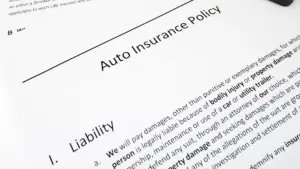
A car insurance policy,

Under A.R.S. §28-4009, all Arizona drivers must carry minimum liability insurance. The required minimums are:

  • $25,000 for bodily injury per person
  • $50,000 for bodily injury per accident
  • $15,000 for property damage

Driving without insurance can result in severe penalties, including license suspension, fines, and vehicle impoundment.

While these are the state’s minimum requirements, they rarely cover serious accidents. Many drivers choose to carry higher coverage limits or additional policies like uninsured/underinsured motorist (UM/UIM) protection.

4. Statute of Limitations for Car Accident Claims

A book titled 'Statute of Limitations'.

Time is critical after a crash. Under A.R.S. §12-542, you generally have two years from the date of the accident to file a personal injury or property damage lawsuit.

If the at-fault vehicle belongs to a city, county, or state agency, you have just 180 days to file a Notice of Claim under A.R.S. §12-821.01, a strict and often misunderstood rule that can end your claim before it begins.

Missing these deadlines means forfeiting your right to compensation, regardless of how strong your evidence is.

5. Reporting an Accident to Authorities

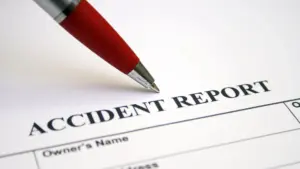
An Accident Report.

Arizona law (A.R.S. §28-667) requires you to report an accident immediately if it results in injury, death, or property damage exceeding $1,000.

If law enforcement responds to the scene, they will complete a crash report for the Arizona Department of Transportation. When police do not respond, you may be required to file your own report through ADOT.

Failing to report can lead to penalties and complications with insurance claims. It’s always safer to document the accident and contact law enforcement even if the damage seems minor.

6. Hit-and-Run (Failure to Stop) Laws

A woman looking at her phone after discovering that her car was hit.

Leaving the scene of an accident is a serious offense in Arizona. Under A.R.S. §28-661, drivers involved in collisions that result in injury or death must:

  • Stop immediately at the scene.
  • Provide identification and insurance information.
  • Render reasonable assistance to anyone injured.

Violating these requirements can result in felony charges, license revocation, and possible imprisonment.

If you’re a hit-and-run victim, report the incident to local police or the Arizona Department of Public Safety (DPS) as soon as possible. Even if the other driver is never found, your uninsured motorist coverage may still provide relief.

7. Uninsured and Underinsured Motorist Coverage

A form for an uninsured driver.

Although Arizona doesn’t require UM/UIM coverage, it’s highly recommended. These optional policies protect you when the at-fault driver lacks sufficient insurance or flees the scene.

Under A.R.S. §20-259.01, insurers must offer UM and UIM coverage when you purchase an auto policy, though you can reject it in writing.

This coverage can be a financial lifesaver, especially in a state where thousands of drivers operate uninsured. Adding UM/UIM protection ensures you won’t be left paying medical bills or repair costs caused by someone else’s negligence.

8. Distracted Driving and Cell Phone Laws

A woman texting while behind the wheel.

Arizona enforces a statewide hands-free law under A.R.S. §28-914, which prohibits drivers from:

  • Holding a cellphone while driving
  • Texting, browsing, or recording video while behind the wheel

First-time violations carry fines up to $149, while repeat offenses can reach $250.

If a driver causes an accident while violating the hands-free law, that evidence can be used to establish negligence. Distracted driving is one of the most common contributors to collisions in Arizona, and courts take it seriously.

9. Driving Under the Influence (DUI)

A person driving a car while holding a beer.

Under A.R.S. §28-1381, it’s illegal to operate a vehicle while impaired by alcohol, drugs, or any substance that affects your ability to drive safely.

The legal blood alcohol concentration (BAC) limit is 0.08%, but for commercial drivers, it drops to 0.04%. Arizona also classifies “Extreme DUI” for BAC levels of 0.15% or higher, which carries mandatory jail time, higher fines, and license suspension.

Drunk or drugged driving that causes an accident exposes the driver to criminal penalties and civil liability. In some cases, victims can pursue punitive damages to punish reckless behavior.

10. Medical Attention and Documentation After a Crash

A woman talking to her doctor.

Even minor collisions can cause delayed injuries like whiplash, concussions, or internal damage. Seeking immediate medical attention is both a health and legal necessity.

Medical records:

  • Provide proof that your injuries were caused by the crash.
  • Help calculate fair compensation for medical expenses and pain and suffering.
  • Prevent insurers from arguing that your injuries were unrelated or pre-existing.

Failing to get prompt treatment can significantly weaken your case. Always keep copies of hospital bills, prescriptions, and follow-up evaluations.

Why Police Reports and Evidence Matter

A person typing on a computer.

Police reports are often key pieces of evidence in Arizona car accident cases. They include objective details like weather, witness names, and officer opinions on fault. While a police report alone doesn’t determine liability, insurers and courts give it considerable weight.

You can request a certified crash report directly through ADOT’s Records Request portal.

At West Coast Trial Lawyers, we also obtain supplemental materials—like 911 recordings, dashcam footage, and surveillance videos—to build the most accurate timeline of events possible.

Protecting Your Rights Under Arizona Car Accident Laws

A row of books with the scale of justice in front.

Navigating Arizona’s car accident laws is challenging without professional help. The at-fault driver’s insurance company may downplay your injuries, delay payment, or blame you for the collision. Having experienced representation ensures your rights are protected from day one.

Our team at West Coast Trial Lawyers understands how Arizona’s legal system operates—from comparative negligence claims to navigating ADOT requirements. We work directly with clients across the state to recover compensation for:

  • Medical expenses and future care
  • Lost wages and reduced earning capacity
  • Pain and emotional distress
  • Property damage and diminished value

You can learn more about our services across Arizona by visiting our Arizona location page.

Let West Coast Trial Lawyers Help You Recover

Neama Rahmani handing his clients a check.

You don’t need to face insurers or legal deadlines alone. If you were injured in a car accident anywhere in Arizona, West Coast Trial Lawyers is ready to help. Our attorneys have recovered millions for accident victims and are committed to ensuring your recovery is fair and full.

We handle all communication, paperwork, and negotiations while you focus on healing. There are no upfront fees, and you pay nothing unless we win your case.

Take the first step toward getting your life back on track: call us today at (213) 927-3700 or use our online contact form for a free consultation.

The post 10 Arizona Car Accident Laws You Should Know appeared first on West Coast Trial Lawyers.
What Is the Difference Between Rape and Sexual Assault?

Sexual violence occurs in many different forms, ranging from unwanted sexual advances and sexual harassment, to more intense crimes as sexual assault and rape. Although the terms are used interchangeably, they are defined differently under California law. These types of crimes affect all genders.

Statistics show that women are heavily impacted, with 1 in 6 female victims in the United States having experienced attempted or completed rape, compared to 1 in 33 men. Additional nationwide data shows that 81% of women and 43% of men reported dealing with some type of sexual harassment and/or assault in their lifetime, with many of them having a first time experience between the ages of 11 and 17. 

Knowing the difference between rape and sexual assault is important for recognizing how the law handles such acts of sexual nature done without a person’s consent. Understanding these distinctions can also help promote awareness in terms of prevention, justice, and survivor support.

What Is the Definition of Rape?

The definition of the word 'rape' in a dictionary.

Under California Penal Code § 261, when a person engages in sexual intercourse with someone else without voluntary consent, that is considered rape. The legal definition of rape refers to any act of non-consensual sexual intercourse done through force, coercion, fear, or when the victim cannot give consent because they are intoxicated, unconscious, or have a physical disability.

What Is Defined as Sexual Assault?

A woman cowering in fear while a person is clenching their fist.

Sexual assault is classified as any form of sexual contact or behavior that happens without an individual’s consent. It involves direct physical contact, from unwanted touching to more severe acts, like rape or sexual penetration by force. The purpose of this law is to protect people against sexual activity that occurs without permission.

What Are the 3 Levels of Sexual Assault? 

Sexual assault can be separated into three levels based on the nature of the act, presence of the force or coercion, and the degree of violation inflicted onto a person’s body.

A man putting his hand on a woman's leg.

The first level consists of unwanted contact or behavior of a sexual nature that does not involve penetration. This can be touching a person’s intimate parts, kissing, groping, or making unwanted advances in a sexual manner without receiving consent. While it is considered the least severe, it is still labeled as a serious violation of one’s bodily autonomy and may result in criminal charges.

Two guys hitting on a woman who is clearly not interested.

Level 2 sexual assault involves sexual contact without consent that is acquired through coercion, threats, or physical force, or when the victim cannot provide consent due to incapacity. This offense is more serious in comparison to Level 1, as it demonstrates a higher degree of intent and harm through the misuse of power. Legal penalties will be more harsh since the law recognizes significant psychological and physical trauma that is inflicted onto victims.

Level three sexual assault is the most serious form of sexual violence, involving rape or forced penetration with an individual who is unable to provide consent because of certain factors, like age, intoxication, incapacitation, or unconsciousness. These acts are often done through physical force, threats, or coercion. Under California law, such offenses may be charged as felonies and lead to lengthy prison sentences, particularly if the victim was a minor or otherwise unable to provide legal consent.

What Is the Difference Between Rape and Sexual Assault?

Rape and sexual assault are closely related crimes, but they do have certain factors that distinguish one from the other.

A man looking stressed while another person is making a fist towards them.

Rape involves non-consensual sexual intercourse or penetration. It happens when a person commits sexual acts with another without receiving consent before doing so. This can be done through force, threats, coercion, or when the victim cannot provide consent due to intoxication, unconsciousness, or incapacity. The specific element that defines rape is penetration, even if it is minimal.

Sexual assault is a more broader term that applies to unwanted sexual contact or behavior without consent. This may consist of groping, fondling, forcing someone to perform sexual acts, or other types of physical sexual content that are short of penetration. 

To sum it up, sexual assault embodies a wider range of offenses, whereas rape is deemed as the most severe form within that given category.

What Are the Sexual Assault Laws in California?

In California, sexual assault laws are made to protect people against unwanted sexual contact or behavior that happens without consent. Under Penal Code § 243.4, sexual battery is one of the main statutes that covers sexual assault. It takes place when a person touches someone else’s intimate parts without getting their consent, for sexual gratification, arousal, or abuse. Even brief or over-the-clothes type of contact can be considered as sexual battery if it is done intentionally with no permission given.

If aggravated factors are involved, like being restrained, institutionalized, or unconscious, the crime can be deemed as a felony. Misdemeanor sexual battery may result in up to six months in county jail, a fine of up to $2,000, or both jail time and a fine. A felony sexual battery will be two, three, four years in state prison and fines of up to $10,000.

What Are the Rape Laws in California?

A row of books with the scale of justice in front.

Rape is defined under Penal Code § 261. This makes it unlawful for people to engage in sexual intercourse with others without receiving consent, through force, threats, intimidation, or when the victim cannot give consent because of them being unconscious or intoxicated. Convictions can result in three to eight years in state prison, with longer sentences included if the victim is seriously harmed or if many affected individuals are involved. 

Other related statues include:

  • Penal Code § 286 defines sodomy as sexual contact between the penis and the anus. While consensual acts between adults are permitted under Lawrence v. Texas (2003), the law criminalizes sodomy involving minors, force, coercion, or individuals who are unable to provide consent. Penalties will vary by age and circumstance, ranging from up to one year in county jail to as much as fourteen years in state prison for aggravated cases that involve young individuals or acts done by force.
  • Penal Code § 287 covers oral copulation by force or fear. This consists of oral contact with another person’s anus or genital area without consent. Similar to rape and sodomy, oral copulation by force will be treated as a violent felony. Penalties may involve three to eight years in prison, and may be harsher if the victim is underage. 
  • Penal Code § 289 restricts sexual penetration by force or foreign object. This applies when an individual uses any object, body part (besides their private part), or instrument to penetrate another person’s genital area or anal opening without consent and through force or intimidation. A conviction involving an adult victim carries a base term of three, six, or eight years in state prison. Penalties with minors 14 and older will be a sentencing of six, eight, or ten years. And if the child is under 14 years of age, the punishment will be eight, ten, or twelve years.

What Type of Treatment Is Recommended for People Who Have Been Sexually Assaulted?

Healing after sexual assault will take time, and it is important for survivors to know that they are not alone in this. The most effective treatment approach would be to focus on physical and emotional care. A healthcare provider can do a confidential exam, provide treatment for potential infections, and give options for collecting evidence. But, this may only be done if the survivor chooses to do so. Every step should be navigated through their comfort and consent.

A distraught woman looking stressed while on the couch.

Organizations, like the Rape, Abuse & Incest Nation Network (RAINN) offer more resources and guidance to those who are seeking help in the aftermath of assault. RAINN has a free, 24/7 confidential hotline (1-800-656-HOPE) and an online chat service where survivors are given access to speak to trained professionals who provide emotional support and local resource referrals. Whether the survivor was sexually abused, raped, or endured other acts of sexual violence, care is essential. These services will provide access to medical attention, guidance on legal options, and personalized recovery plans within a safe and supportive environment. 

Healing after sexual assault is a heavy personal process. But, with help from organizations, like RAINN, in addition to community advocates and trauma-informed professionals, survivors can start regaining a sense of safety and hope for the future. 

West Coast Trial Lawyers Helps Survivors Seek Justice

A row of WCTL attorneys.

Survivors of sexual assault and rape are left with serious emotional and physical trauma that can affect every part of their lives. Recovering while also seeking accountability can be stressful and isolating, but no one should have to go through this alone. At West Coast Trial Lawyers, we provide a safe and supportive space where survivors can share their stories, understand their legal rights, and seek the justice they deserve.

We stand alongside survivors every step of the way, providing guidance and support to help them rebuild and reclaim their lives. If you or someone you know has been affected by sexual violence, we welcome you to reach out to us today for a FREE, confidential consultation by contacting (213) 927-3700 or completing our convenient online contact form. We are readily available to help you take the next step towards recovery and empowerment.

The post What Is the Difference Between Rape and Sexual Assault? appeared first on West Coast Trial Lawyers.

10 California Car Accident Laws You Should Know

California’s traffic system runs on more than lights and signs, it runs on law. From insurance minimums to strict reporting deadlines, every driver in the state is bound by rules that determine fault, compensation, and liability after a crash. Knowing these laws isn’t just trivia; it’s power.

This guide explains the 10 most important California car accident laws that can shape your claim, affect how much you recover, and help you avoid common mistakes after a collision.

1. California’s At-Fault System 

A serious car crash where a red car is upside down and a blue car is wrecked.

California is an at-fault state, meaning the driver who causes the crash must pay for the resulting damages. Under California Vehicle Code § 17150, vehicle owners are responsible for injuries and property damage caused by their negligent driving or by anyone driving their car with permission.

With this law in place, car accident victims would have to file directly against the at-fault driver’s insurer, not their own, because at-fault party’s policy pays for medical costs, repairs, and lost wages up to its limits. As proving fault early shapes your settlement, having a clear liability determination gives insurers less room to delay or underpay.  

2. Comparative Negligence – The 51 Percent Rule  

A clipboard with the phrase 'Comparative Negligence' written down.

California follows pure comparative negligence under Civil Code § 1714. Which means, even if you’re partly at fault, you can still recover damages, but your payout is reduced by your percentage of fault. For example, if you’re 25% at fault in a $100,000 case, you can still collect $75,000.

This rule is very important to be aware of because insurance adjusters use this rule to minimize payments. Evidence like skid marks, signal data, or dashcam video can lower your percentage and raise your recovery. For details on how this works in practice, visit our Comparative Negligence in California Accidents guide.

3. Statute of Limitations 

A book titled 'Statute of Limitations'.

Under California Code of Civil Procedure § 335.1, you generally have:

  • Two years from the accident to file a personal-injury lawsuit
  • Three years for property-damage claims

If a government vehicle or public entity is involved, a special claim must be filed within six months under California Government Code 911.2. If accident victims miss any of the respective deadline, the courts will dismiss your case, no matter how strong the evidence is in your favor.

4. Mandatory Insurance Minimums

A blue toy car and a car key on top of a car insurance policy packet.

Every California driver must carry minimum liability coverage of according to CVC § 16056:

  • $15,000 for injury or death to one person
  • $30,000 for injury or death to more than one person
  • $5,000 for property damage

 These limits are outdated and rarely enough for serious injuries. To protect yourself, add Uninsured/Underinsured Motorist and Medical Payments (MedPay) coverage.

5. Duty to Stop and Render Aid/Hit-and-Run 

A car with a huge indent on the driver door.

California law under CVC §§ 20001–20004 requires all drivers to stop at the scene, exchange information, and render aid if injuries occur. If a driver causes damage and leaves the accident scene, they can be held liable for damages and even criminal charges depending on the severity of the incident. For example: 

  • Injury or Death (§ 20001): Leaving an accident scene after causing injury or death is a felony
  • Property Damage Only (§ 20002): Leaving an accident scene after causing property damage is a misdemeanor

With these things in mind, if you’re the victim, document everything and report immediately through the California Highway Patrol or local police. Visit the CHP Traffic Accident Reporting page for official reporting guidance.

6. Reporting to the DMV 

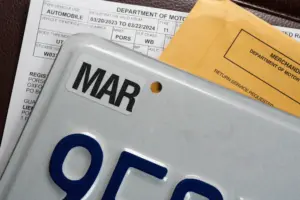
A licenses plate and some forms from the DMV.

Under CVC § 16000 any accident causing injury, death, or over $1,000 in damage must be reported to the California DMV within 10 days using Form SR-1. Failing to file can result in license suspension, even if the other driver was at fault. Insurers sometimes handle this for you, but confirming submission avoids surprises.

7. Distracted Driving and Phone Use  

A woman texting while behind the wheel.

California prohibits drivers from holding a cell phone while driving. Phones must be used hands-free—mounted or voice-activated. Texting, browsing, or video recording while in motion violates CVC § 23123.5. If a crash occurs and phone data shows distraction, insurers and juries will assign fault accordingly. Violations can also support punitive damages if the behavior is egregious.

For statewide data, see the California Office of Traffic Safety campaign on distracted driving at gosafelyca.org.

8. Drunk and Drugged Driving 

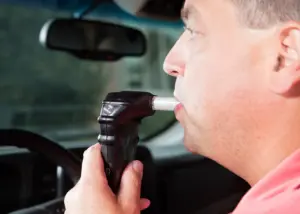
A man doing a breathalyzer test.

Driving under the influence of alcohol or drugs is illegal under CVC § 23152, and causing injury while impaired elevates the charge to § 23153, a felony. A DUI automatically strengthens your civil claim for damages. On top of it all, punitive damages are not capped when the defendant was intoxicated.

For prevention and statistics, reference the NHTSA’s Impaired Driving Resource and California DUI Programs at dmv.ca.gov.

9. Rideshare and Commercial Vehicle Rules

A woman showing her rideshare driver something on her phone.

When Uber, Lyft, or delivery drivers are involved, California’s Assembly Bill 5 and Insurance Code § 5430 govern coverage.

  • App off → Personal policy applies
  • App on (no ride) → Limited contingent coverage
  • Ride accepted → $1 million liability coverage

Due to the nature of rideshare accidents, multiple insurers may share responsibility, which can complicate negotiations. As such, the preservation of driver-app data and telematics is critical. Learn more on our California Rideshare Accident Lawyer page.

10. Damages and Caps on Recovery

A man calculating his bills.

California allows recovery for both economic and non-economic damages, including medical expenses, lost income, and pain and suffering. Punitive damages are available when a defendant acts with malice, oppression, or fraud under Civil Code § 3294.

Unlike some states, California does not cap pain-and-suffering awards in car-accident cases. With that in mind, documenting injuries, wage loss, and emotional impact maximizes recovery. In addition, DUI or reckless-driving cases, punitive exposure increases settlement leverage.

Other Rules That Can Affect Your Claim

  • Seat Belt Law (CVC § 27315): Failure to wear a seat belt can reduce compensation.
  • Move-Over Law (CVC § 21809): Drivers must change lanes or slow when passing emergency vehicles.
  • Speed Limits (CVC § 22350): The basic-speed law prohibits driving faster than is reasonable for conditions.
  • Pedestrian Right-of-Way (CVC § 21950): Drivers must yield to pedestrians in crosswalks.

Knowing these details can prevent citations that undermine your credibility in a claim.

How West Coast Trial Lawyers Can Help

Neama consulting with two clients.

At West Coast Trial Lawyers, we use California’s accident laws to your advantage. Our attorneys handle everything from police reports, medical records, expert evidence, to insurance negotiations and everything in between. With over 25 years of experience, we’ve recovered hundreds of millions for injured Californians, and we never charge upfront fees. 

If you’ve been injured anywhere in the state, contact our California Car Accident Lawyers for a free, confidential consultation today. Call (213) 927-3700 or fill out this confidential contact form.

The post 10 California Car Accident Laws You Should Know appeared first on West Coast Trial Lawyers.

How to Get a Las Vegas Metro Police Accident Report (Step-by-Step Guide)

Getting a car accident report in Las Vegas should not feel like a gamble. If your crash was investigated by the Las Vegas Metropolitan Police Department (LVMPD), there is a straightforward process to obtain your official report once you know where to look and what to bring. This guide walks you through eligibility, identifying the correct agency, timelines, request methods, and how to use the report to support your insurance or injury claim.

Las Vegas is complex: several law-enforcement agencies share jurisdiction, and many collisions involve tourists, rental cars, or rideshare vehicles. That can make paperwork confusing. Follow the steps below and you will save time, avoid missteps, and get the documentation you need.

What an LVMPD Accident Report Is and Why It Matters

A Las Vegas Police Report form.

An LVMPD report is the official written record of your collision. It lists the date and time, exact location, vehicles and drivers involved, insurance information, statements, citations, a diagram, and contributing factors such as speed or failure to yield. Adjusters and attorneys use it to determine fault and damages.

While the report carries weight, it is not the final word. Courts and insurers also consider photographs, medical records, and witness statements. For a full picture of how claims are evaluated in Nevada, review Nevada Car Accident: Navigating Insurance Claims.

Who Can Get a Copy of a Police Report?

LVMPD releases accident reports to people directly involved and their authorized representatives, including:

A police officer writing a report.

  • Drivers, passengers, pedestrians, or cyclists in the crash
  • Registered vehicle owners
  • Parents or guardians of minors
  • Insurance companies and attorneys for involved parties
  • Government agencies with a legitimate interest

To verify eligibility, provide your case or event number plus one or more of the following: a government ID matching a listed party, vehicle registration or insurance for an involved car, or a signed authorization if you represent someone else.

Some personal information is redacted to comply with privacy laws such as the Driver’s Privacy Protection Act.

Step 1: Confirm the Investigating Agency

Requesting from the wrong department is the most common reason for delay.

A person typing on a computer.

  • LVMPD handles most surface-street crashes in Las Vegas and unincorporated Clark County.
  • Nevada State Police (formerly Highway Patrol) manages freeway and state-route collisions on I-15, US-95/I-515, and I-215.
  • Henderson and North Las Vegas Police manage incidents within their city limits.

Check the driver’s exchange slip for the agency logo and case number. If the crash was on a state highway, contact Nevada State Police; otherwise, LVMPD’s Records and Fingerprint Bureau is your destination.

If unsure, call the non-emergency records desk with the date, time, and location to confirm the right jurisdiction.

Step 2: Gather the Required Details

A person taking notes on a notepad.

Having full identifiers helps staff locate your file quickly:

  • LVMPD event or case number
  • Date and time of crash
  • Intersection or block number
  • Names of drivers and passengers
  • Vehicle plates and states, VIN if known
  • Insurance company and policy number
  • Officer name or badge number (if available)

Also bring proof linking you to the incident, things like ID, registration, insurance, or signed authorization.

Step 3: When Your Report Will Be Ready

A smartphone showing a google app, an email app and a phone app.

Reports are reviewed before release. Non-injury cases often post within a few days; multi-vehicle or injury crashes can take up to two weeks. Serious injury or fatal collisions may take longer while investigators analyze evidence. Hit-and-run files can stay open until detectives identify a suspect.

Check again a week after your first download; supplements sometimes add new witness information or corrected insurance details. If an investigation is still open, LVMPD may issue a redacted or partial copy.

Step 4: Choose How to Request

A man leaning on the kitchen counter while on his phone.

Online

The quickest option. Go Through Records and Fingerprint Bureau, choose “Traffic Accident Report,” enter your case information, verify your role, pay the fee, and download the PDF. If “No Record Found” appears, wait a few days or reconfirm the agency.

In Person

Visit the LVMPD Records and Fingerprint Bureau with ID and proof of involvement. Pay on-site and receive a printed or digital copy. In-person requests help if you need clarification or the file has a hold.

By Mail

Ideal for out-of-state drivers, attorneys, and insurers. Send a cover letter, photocopy of ID, proof of involvement or authorization, payment (check or money order), and your return address. Processing is slower but reliable.

Step 5: Pay and Keep Receipts

A woman looking through her receipts.

Expect a base fee plus a small online convenience charge. In-person requests accept cash or card; mail requests require money orders or cashier’s checks. Keep your receipt or portal confirmation in case your insurance company or law firm reimburses you for the paperwork. In addition, keeping receipts can also prove that you have properly acquired a police report in a timely manner, in the event that it gets lost. 

What the Report Includes

A typical LVMPD packet contains: a cover page with party and insurance details, the officer’s narrative, a diagram of lane positions and impact points, and any citations or contributing factors. Witness summaries may appear in attachments.

Photos, traffic-camera stills, or body-worn video are not automatically included and must be requested separately through LVMPD’s public records process. Some material may be redacted to protect privacy under federal and state law.

Fixing Clerical Errors

If a name is misspelled or a policy number is wrong, email or visit Records with proof of the correction. Provide the case number, page, and line where the error appears along with supporting documents. Minor corrections are handled quickly; fault opinions rarely change without new evidence.

Special Situations

  • Hit-and-run: Reports may be delayed while detectives review surveillance footage or plate-reader data.
  • Serious injury or fatal cases: Expect extended timelines while investigators finish their analysis.
  • Minors and privacy: Juvenile information is redacted unless a parent or guardian requests it.
  • Tourists and rental cars: Provide your rental agreement and ID. Out-of-state visitors can request online or by mail.
  • Rideshare collisions: Notify the platform and supply the case number so the company’s claims team can coordinate.

Using Your Report in a Claim

An Accident Report.

Send the complete PDF to your adjuster and your lawyer. Include supplements and any photos you have. Highlight the impact diagram and citation notes when fault is disputed.

Nevada’s comparative negligence statute explains how compensation is divided when multiple drivers share fault, and the Nevada Office of Traffic Safety publishes data showing that Clark County consistently records the highest number of serious crashes in the state.

If you are still handling your claim, see What to Do After a Car Accident in Las Vegas and, if a rideshare was involved, Injured in a Rideshare Accident in Nevada. Knowing legal timelines is also super important, check out Nevada’s Statute of Limitations so you do not miss important deadlines.

Quick Checklist

  • Confirm the correct agency before you submit anything
  • Have your case number, date, time, location, names, plates, and insurance details ready
  • Choose online for speed, in person for questions, mail for remote requests
  • Save receipts and check for supplements later
  • Request a clerical correction if needed and attach proof

Injured in a Las Vegas Crash? West Coast Trial Lawyers Can Help

A row of WCTL attorneys.

If you were hurt anywhere in the valley, our team can handle the entire claim process so you can focus on recovery. We obtain the report and supplements, collect video and witness evidence, document medical care and lost wages, and negotiate for the maximum settlement.

There are no up-front fees and you pay nothing unless we win. Contact West Coast Trial Lawyers today for a free case consultation, call (213) 927-3700 or fill out our easy online contact form

The post How to Get a Las Vegas Metro Police Accident Report (Step-by-Step Guide) appeared first on West Coast Trial Lawyers.