Boeing Slapped on the Wrist for Using Unapproved Parts in 759 Aircraft
Among the most dangerous activities in the aviation industry is the installation on an aircraft of unapproved or bogus parts – parts that have not been properly tested, approved, and certified as safe. The practice has been linked to the crash of both commercial and private aircraft. It is illegal to install uncertified parts on an aircraft and the practice is so dangerous that those who do can end up in jail.
The FAA has now determined that Boeing installed unapproved parts on over 700 of its 737 aircraft. We’re not talking here about parts related to the crash of the two 737 Maxes. These unapproved parts relate to the 737’s navigation system and are an entirely different scandal.
As a result of catching Boeing — once again red-handed – knowingly rolling the dice with the safety of the flying public, the FAA fined Boeing. That’s good. According to FAA administrator Steve Dickson:
Keeping the flying public safe is our primary responsibility. That is not negotiable, and the FAA will hold Boeing and the aviation industry accountable to keep our skies safe.
But the fine was only $17 million. For Boeing, that’s a pittance. It’s likely that by installing the unapproved parts and paying the fine, Boeing is dollars ahead from where it would have been had it stopped production of the aircraft and awaited parts that were properly certified. It’s hard to see how the FAA’s action will deter Boeing from taking future safety shortcuts. In fact, it seems that the FAA is giving Boeing a pass.
737 Max Families Demand that FAA Chief Be Replaced
Families of those lost in the Ethiopian Airlines Boeing 737 Max crash met with Biden’s Transportation Department seeking to get the top FAA official fired for being “too cozy” with Boeing. According to the families, “The FAA has been, and continues to be, more interested in protecting Boeing and the aviation industry than safety.” The families specifically question why the FAA did not ground the Max jets after the crash of the first 737 Max crash in Indonesia.
The problem, however, is not just the FAA leadership. Rather it’s the entire FAA system that needs to be overhauled. It is now a mere shell of what it once was. Indeed, it was 10 years ago that the FAA abdicated to Boeing its certification responsibilities and granted Boeing the power to certify its own products. I questioned then whether that was in the best interests of safety.
Beginning August 31, the FAA will allow Boeing to self-certify its designs. The FAA will not even do the rubber stamping — Boeing employees will do that too. According to the Seattle Times, “the new system increases the authority of the in-house inspectors directly managed by Boeing, allowing them to review new designs, oversee testing to ensure the products meet all applicable standards, and sign off on certification.”
The FAA no longer oversees the manufacturers. It is not longer staffed for it. It is no longer funded for it. Firing a few FAA officials won’t fix the problem.
NTSB Blames Collings Foundation, FAA for Fatal Crash of Sightseeing B-17
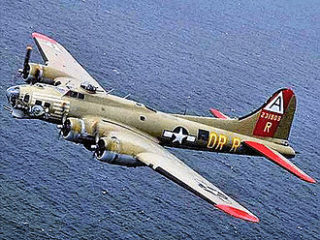
On October 2, 2019, a World War II-era B-17 flying fortress bomber departed Bradley International Airport in Connecticut for a local sightseeing flight with 10 paying tourists on board. Shortly after takeoff the pilot radioed that he was returning to the airport because of an engine problem. A witness reported an engine was sputtering and smoking. Ultimately, the pilot reported a problem with yet another of the aircraft’s engines. The airplane crashed on the airport premises and burst into flames.
Seven occupants were killed. Two persons on the ground were injured.
(This figure shows the airplane’s flightpath on Oct. 2, 2019, between 9:46 a.m., when the airplane was cleared for takeoff, and 9:51 a.m., when one of the pilots reported the airplane was at midfield. The locations when the airplane reached 400, 300, and 150 feet above ground level are also shown.)
The four-engine bomber should have been able to make it to the field with the engines that remained operational. But the landing gear was extended prematurely, and the added drag was too much for the aircraft to overcome. It hit the runway approach lights and crashed.
The aircraft was owned by the Collings Foundation. The pilot served as the Foundation’s director of maintenance. The NTSB found that two of the aircraft’s four engines failed to develop full power, and that the loss of power was due to the pilot’s inadequate maintenance. The NTSB also determined that the Collings Foundation’s safety management system was ineffective and failed to identify and mitigate numerous hazards, including those related to the pilot’s improper maintenance of the vintage aircraft.
Most folks who pay to get into an aircraft for a ride assume that if the aircraft or the operation was unsafe, the FAA would not allow it to fly. But the NTSB found that the FAA’s oversight was lacking as well. In essence, the FAA failed to protect the public from a shoddy operator.
Criminal Charges Against PG&E Will Not Help Victims of Kincade Fire
KPIX5 asks Mike Danko about the criminal charges brought against PG&E for its role in the Kincade fire. Danko explains that even if a jury renders a guilty verdict, no one at PG&E will go to jail. It’s the civil justice system, not the criminal justice system, that compensates victims for their losses.
Danko Explains What PG&E Indictment Means
Vegetation Management Lapses Subjects PG&E to Heightened Oversight
The CPUC seeks greater oversight over PG&E’s safety practices after finding that PG&E is not properly prioritizing the electrical lines that need tree trimming. KRONTV4 asks Mike Danko what it means.
KRON4 asks Mike Danko About CPUC’s latest action against PG&E
Byron Tow Plane Crash: Glider Pilot Error?
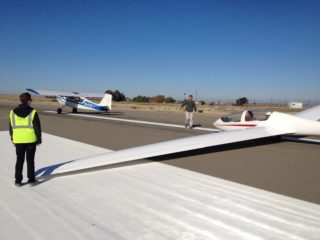
The pilot of a Bellanca 8GCBC Scout, Registration N4116Y, died when the aircraft crashed at Byron Airport on May 9th. According to a witness, the tow plane took off pulling a glider. While still at a low altitude, the glider climbed abruptly. The maneuver pulled the tail of the tow plane into the air, pointing its nose down. “The tow plane cut the cord and tried to recover but it was too late.” The tow plane crashed onto the runway and caught fire.
Accident Aircraft Prepares for Glider Tow
This particular accident profile is not uncommon. That’s why it is the responsibility of the glider pilot who is being towed to keep the tow plane in sight at all times. If the glider pilot climbs abruptly and, as a result, loses sight of the tow plane below, it’s the glider pilot’s responsibility to release the tow rope so this sort of accident does not happen.
One of the most dangerous occurrences during aerotow is allowing the glider to fly high above and losing sight of the towplane. The tension on the towline caused by the glider pulls the towplane tail up, lowering its nose. If the glider continues to rise, pulling the towplane tail higher, the tow pilot may not be able to raise the nose. Ultimately, the tow pilot may run out of up elevator authority. . . Upon losing sight of the towplane, the glider pilot must release immediately.
The tow plane belonged to the Northern California Soaring Association. According to another witness report, just before the glider zoomed up and forced down the nose of the tow plane, the glider’s canopy opened for reasons unknown.
Kobe Bryant Crash: NTSB Update Points to Improper VFR into IMC
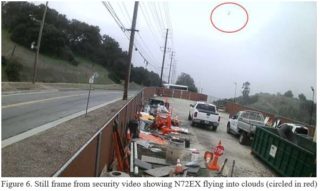
A photograph of the helicopter seems to show it entering clouds.
The pilot was on a visual flight rules (or “VFR”) flight. On a VFR flight, the pilot is supposed to control the helicopter by looking out the window rather than by looking at the helicopter’s instruments. So, on a VFR flight, the pilot must stay out of fog and clouds. Yet the photo shows Kobe’s helicopter flying into clouds (“IMC,” or “instrument meteorological conditions”), or at least flying on the ragged edge of acceptable visibility.
The pilot’s last communication is consistent with his being inside the clouds and trying to escape them.
The last communication air traffic control received from the pilot was that he was climbing to 4000 feet — well above his cruising altitude. That suggests that the pilot was attempting to get out of the foggy conditions by climbing above them.
The aircraft’s flight path was consistent with the pilot’s losing control of the helicopter while in the clouds.
The update notes that:
the aircraft was climbing along a course aligned with Highway 101. . . reached 2,300 feet msl (approximately 1,500 feet above the highway, which lies below the surrounding terrain) and began a left turn. Eight seconds later, the aircraft began descending and the left turn continued. The descent rate increased to over 4,000 feet per minute (fpm), ground speed reached 160 knots.”
Translation: the helicopter climbed, then started a turn, then suddenly went out of control and tumbled out of the sky.
Nothing was mechanically wrong with the helicopter.
The update notes that there didn’t appear to be anything wrong with the helicopter and it was producing power at impact.
In short, the crash appears to be a classic case of loss of control following improper VFR flight into IMC.
Some folks are saying that the helicopter should have had a terrain awareness warning system to let the pilot know where the hillside was. It wouldn’t have helped. The pilot crashed because he flew into IMC and lost control. Not because he hit a hillside that he could not see.
 reported an engine was sputtering and smoking. Ultimately, the pilot reported a problem with yet another of the aircraft’s engines. The airplane crashed on the airport premises and burst into flames.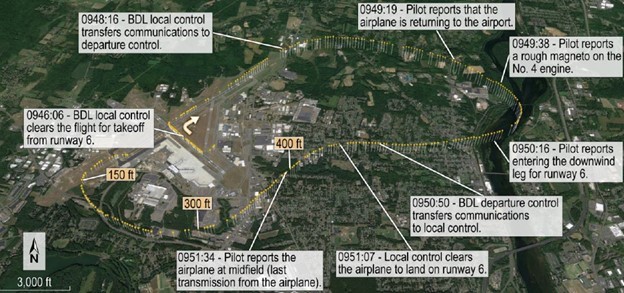

 helicopter’s instruments. So, on a VFR flight, the pilot must stay out of fog and clouds. Yet the photo shows Kobe’s helicopter flying into clouds (“IMC,” or “instrument meteorological conditions”), or at least flying on the ragged edge of acceptable visibility.