What are the steps of the litigation process in a personal injury case?

Dun Dun. The captivating world of legal dramas like “Law and Order” paints a thrilling yet unrealistic picture of the litigation process. Television shows and movies depicting the litigation process often take liberties with reality for the sake of drama, entertainment, and time constraints. Most notably, while they are undeniably entertaining, they frequently compress intricate legal procedures into a one-hour (or less) format. This often neglects the litigation process’s true complexity and potentially protracted nature.

In stark contrast to the fast-paced courtroom battles depicted on television, the reality of the litigation process can be an intricate journey through the legal system. The duration can vary significantly depending on numerous factors, such as the complexity of the case, the jurisdiction, the willingness of parties to settle, and court scheduling. While some cases are resolved swiftly, others can linger for years. The process is complicated due to procedural obstacles, difficulties in providing evidence, and tactical moves by the parties involved.

Before you begin the litigation process, you and your attorney must discuss the time frames involved in your suit and factors that may affect it. Overarching principles, including case complexity, jurisdictional variations, and court scheduling and availability, may delay a case.

Pre-Suit

Before a lawsuit is even filed, there may be a period of negotiation, investigation, and preparation. This phase can take weeks, months, or even years, depending on the complexity of the case. In some situations, the deadlines to file a case can be extended while the parties continue to ensure that a case is ripe for litigation.

Litigation

Once the complaint is filed, the defendant has the opportunity to respond. In Florida, the defendant has a limited time to so. This initial stage typically takes a few weeks to a few months, depending on court rules and the parties’ responsiveness. The Discovery phase follows the initial filing and is a critical phase where each party gathers evidence from the opposing side through depositions, interrogatories, requests for documents, and requests for admissions. This phase can be time-consuming, often lasting several months to even years, particularly in complex cases with voluminous evidence.

Throughout the litigation process, either party may file various motions, such as motions to dismiss, motions for summary judgment, or motions to compel discovery. These motions can prolong the process as they require briefing, argument, and judicial decision-making time.

As the trial date approaches, both parties engage in extensive preparation, including witness preparation, finalizing evidence, and crafting legal arguments. In most cases, the trial can range from a few days to several weeks, depending on the complexity, the number of witnesses, and the issues involved. Both parties present evidence during the trial, examine witnesses, and make legal arguments before the judge or jury.

While the litigation process takes time, there are methods that attorneys can use to advance the case less linearly simultaneously. Parties may engage in settlement negotiations at various stages. Settlement negotiations can occur before filing a lawsuit, during discovery, or even on the eve or during of trial. If a settlement is reached, the litigation process concludes, potentially saving significant time and resources.

Post-Judgment

Following trial, there may be post-trial motions, such as motions for a new trial or motions to set aside the verdict. Additionally, the losing party may appeal the decision, which can extend the litigation process by another year or more, depending on the appellate court’s docket and the complexity of the issues raised on appeal. This process is also costly to the client and is often covered by a separate provision of their retainer contract.

If a judgment is obtained, the prevailing party may need to take further action to enforce the judgment, such as pursuing garnishment, liens, or other legal remedies. This enforcement phase can add additional time and complexity to the process.

Timing is Everything

In summary, the duration of the litigation process is highly variable and dependent on numerous factors. While some cases may be resolved relatively quickly through settlement or summary judgment, others may drag on for years through various stages of litigation, including discovery, motions practice, trial, and appeals. Consequently, it is essential for parties involved in litigation to be prepared for a potentially lengthy and resource-intensive process. This includes carefully weighing costs and benefits of pursuing litigation versus alternative dispute resolution methods such as mediation or arbitration.

Dun dun. The real-life judicial processes are much more intricate and nuanced. They are also, at times, much more frustrating or boring than a predictable episode of your favorite legal drama. Justice is not clear-cut, and outcomes are uncertain. However, understanding the process and what to expect will assuage anxieties and provide realistic expectations for a case. Speak with your attorney today.

Authored by Marjorie Levine, Esq.

Attorney Marjorie Levine

The post What are the steps of the litigation process in a personal injury case? appeared first on Romano Law Group.


Dealing with an Insurance Company After an Accident

As a personal injury attorney in Florida, I’ve witnessed how dealing with insurance companies after an accident can quickly become overwhelming. While recovering from injuries and managing your life, you may also have to deal with insurance adjusters whose primary goal is to protect their company’s interests. Navigating this process without understanding the complexities of insurance claims or knowing when to involve an attorney can significantly affect the outcome of your case.

Insurance companies are businesses focused on minimizing their payouts. Although adjusters may appear friendly, they are trained to reduce the amount their company will pay. This means you must handle any communication with them cautiously.

Steps to take after an accident

Taking the proper steps immediately following an accident can set the tone for your entire claim process. Reporting the accident promptly to your insurance company is usually required by your policy but be careful about what you share in the initial report. Additionally, the at-fault driver will report the accident their insurance company but be mindful they may not.

If the at-fault driver did report the accident to their insurance, expect a call from an adjuster. If you were injured in the accident, there will likely be two adjusters assigned to the claim; one for property damage and one for bodily injury.

Insurance adjusters are trained to look for statements they can use to lower your payout. Keep your statements factual and avoid speculating. Avoid discussing fault or downplaying your injuries. Florida’s “contributory fault” rule means even small admissions can reduce your compensation.

Common Insurance Company Strategies

Be aware of common strategies insurance companies use to minimize their liability. Initial offers are often far lower than what your case is worth. Don’t accept a low offer without consulting an attorney. You are not obligated to provide a recorded statement and doing so can hurt your case.

Insurance companies may delay the process to frustrate you into accepting less. If this happens, it’s time to get legal help. Involving an attorney early can often make a huge difference.

Having an attorney on your side

If you’ve suffered severe injuries or face long-term medical treatment, an attorney is essential. Properly calculating future medical expenses, pain and suffering, and lost earning capacity requires legal expertise. When fault is contested, an attorney can help gather evidence like witnesses, accident reconstruction, and police reports to prove liability. If your claim is denied or if the insurer is using delay tactics, you need legal representation to push the process forward and hold them accountable. If you’ve been offered a settlement that doesn’t reflect the full scope of your damages (and it likely won’t), a personal injury attorney can negotiate for a better offer.

Having an attorney handle communication with insurance companies offers several advantages. Insurance companies deal with claims daily, and they use that expertise to their advantage. An experienced attorney levels the playing field by countering their tactics and negotiating for a fair settlement. An attorney understands the total value of your claim, including future medical expenses and non-economic damages like pain and suffering, ensuring you aren’t short-changed.

Dealing with an accident’s aftermath is stressful enough. An attorney can take over the communication and negotiation process, allowing you to focus on recovery.

Remember, insurance companies are not on your side. If you or a loved one has been in an accident, Romano Law Group has a team of attorneys ready to assist you.

Authored by Jessica Latour, Esq.

Attorney Jessica Latour

The post Dealing with an Insurance Company After an Accident appeared first on Romano Law Group.

Factors that Influence Compensation in a Personal Injury Settlement

Navigating the aftermath of an injury due to someone else’s negligence can be overwhelming, to say the least. In addition to the physical and emotional harm these injuries inflict, many people confront complex legal and financial challenges, especially concerning the calculation of compensation. Understanding how personal injury settlements are determined can clarify the situation and help set realistic expectations for those with a personal injury claim from the outset.

Medical Expenses

One of the most significant components of a personal injury settlement is the cost of medical care. This includes not only immediate expenses like emergency room visits and surgeries but also ongoing costs such as physical therapy, prescription medications, and any future medical treatments related to the injury.

When calculating settlements, the total amounts of past and anticipated future medical expenses are added together; it is crucial to keep thorough records of all medical bills and receipts to ensure that these costs are accurately reflected in your claim.

Out-of-Pocket Expenses

Beyond medical bills, personal injury victims often incur various out-of-pocket expenses directly related to their injury. These can include costs for transportation to medical appointments, hiring help for household tasks, purchasing medical supplies, and other incidental expenses that arise during the recovery period.

Documenting these out-of-pocket expenses is crucial for a comprehensive settlement. Keep detailed records and receipts for every expense incurred due to your injury. This ensures reimbursement for these costs as part of your settlement, helping to alleviate the financial burden caused by the injury.

Lost Wages & Loss of Future Earning Capacity

If your injury has caused you to miss work, either temporarily or permanently, lost wages can be a major part of your settlement. This includes both the actual income lost during the period you were unable to work and any future loss of earning capacity if the injury has long-term effects on your ability to work.

To substantiate your lost wages claim, you’ll need documentation such as pay stubs, tax returns, and a letter from your employer detailing the time missed and any impact on your job performance.

Physical Pain and Suffering

Compensation for physical pain and suffering aims to address the physical distress caused by the injury. Unlike medical expenses and lost wages, this element of a settlement is less tangible and can vary widely from case to case.

Factors influencing physical pain and suffering compensation include the severity of the injury, the impact on your quality of life, and the duration of your recovery. Courts and insurance companies often use multipliers or per diem methods to estimate this amount, taking into account both the intensity and the duration of your suffering.

Mental Pain and Anguish

In addition to physical pain, emotional distress caused by an injury can be compensable through a mental pain and anguish claim. This includes anxiety, depression, and other psychological impacts. To support a claim for mental pain and anguish, evidence such as therapy records, psychological evaluations, and personal testimony are critical.

Inconvenience and Loss of Enjoyment of Life

If your injury has significantly affected your ability to enjoy activities and hobbies you previously loved, you may be entitled to compensation for this loss. This is assessed based on how the injury has altered your lifestyle, abilities or lack thereof, and personal enjoyment.

Permanent Disability or Disfigurement

Adjusted compensation can help account for the long-term impact on your life when an injury results in permanent disability or disfigurement. This type of compensation is often substantial because it addresses the long-term and often irreversible changes to your physical appearance or abilities.

Insurance Policy Limits

The at-fault party’s insurance policy limits can also influence the amount of compensation you receive. Each insurance policy has a maximum coverage amount, and these limits might cap your settlement. If damages exceed policy limits, you might need to seek compensation from other sources or pursue additional legal action.

Conclusion

Understanding how to calculate personal injury settlements can help you approach your claim with more confidence and clarity. By considering factors like medical expenses, lost wages, pain and suffering, and other elements, you can better understand what to expect in terms of compensation.

Working with an experienced personal injury lawyer is essential to navigate the complexities of your case, ensure consideration of all relevant factors, and advocate for a fair settlement. With the right support, you can focus on your recovery while knowing that your legal and financial interests are in capable hands.

Authored by Mikayla T. Taylor, Esq.

Photo of Mikayla T. Taylor, Esq.

The post Factors that Influence Compensation in a Personal Injury Settlement appeared first on Romano Law Group.

Don’t Delay: Seek Medical Attention after a Florida Car Accident

Car accidents are like unexpected Florida thunderstorms—one moment, you’re cruising along, and the next, a downpour of chaos and confusion surround you. Whether it’s a fender bender on I-95 or a slip and fall at your favorite Publix, the aftermath of an accident can be disorienting. In these moments of uncertainty, one thing is crystal clear: seeking immediate medical attention after a car accident is crucial. Let’s dive into why this is not just important but essential.

First and foremost, your health and well-being are paramount. Even if you feel fine after an accident, your body might be hiding injuries that aren’t immediately apparent. Adrenaline is a crafty hormone that can mask pain and symptoms. Conditions like whiplash, concussions, or internal bleeding might not show symptoms right away but can cause serious long-term damage if left untreated.

Remember, Florida is famous for its beaches and sunshine, not its pain tolerance contests. Don’t tough it out—get checked out!

In the legal world, if it’s not documented, it didn’t happen.

Seeking medical attention after a car accident promptly creates an official record of your injuries. This documentation is critical if you decide to file a personal injury claim. Insurance companies love to downplay injuries or argue that they weren’t caused by the accident. A medical report that immediately follows the incident provides irrefutable evidence linking your injuries to the accident.

Florida operates under a no-fault insurance system, and Personal Injury Protection (PIP) insurance is mandatory. Here’s the kicker: Florida law requires that you seek medical treatment within 14 days of an accident to be eligible for PIP benefits. Miss this window, and you could be waving goodbye to coverage for your medical bills and lost wages. In the Sunshine State, the early bird catches the benefits.

Florida law expects you to mitigate damages—that means taking reasonable steps to reduce the severity of your injuries. Failing to seek prompt medical attention can be seen as negligence on your part, potentially reducing the compensation you might receive. It’s a bit like not using sunscreen at the beach and then blaming the sun for your sunburn. Be proactive, not reactive. Your future self (and your lawyer) will thank you.

Accidents are stressful

They can turn your world upside down faster than a hurricane during tourist season. Seeking immediate medical care addresses your physical health and provides peace of mind. Knowing that you’ve taken the right steps to protect yourself and your legal rights can greatly relieve the turmoil.

In addition to seeking immediate medical attention after an accident, other crucial steps are essential. What should I do immediately after a car accident?

We hope you never find yourself in this situation, but if you do, remember this: prioritize your health, document everything, and act swiftly. After all, we Floridians know the importance of being prepared for a sudden rainstorm or a sudden collision.

Authored by Jessica Latour, Esq.

Attorney Jessica Latour

The post Don’t Delay: Seek Medical Attention after a Florida Car Accident appeared first on Romano Law Group.

What is a Contingency Fee Contract?

The ways in which lawyers are paid for providing legal services can vary. Nearly always, a contract outlines the agreement between the lawyer and client regarding how the lawyer will be paid for representation. Most personal injury and accident attorneys in Florida work on a contingency fee basis. This means that clients can get legal help in their case without worrying about providing upfront costs to the attorney.

What is a contingency fee contract?

What if you’re injured due to someone else’s negligence and can’t afford a lawyer?

Contingency fee agreements allow people to obtain legal representation without the fear of being unable to afford a lawyer. These agreements allow victims of negligence to hire legal representation against people and businesses that oftentimes have big insurance companies paying defense legal fees and costs. In a sense, it is a way to even a very uneven playing field.

A contingency fee contract is an agreement between a lawyer/law firm and a client where the lawyer/law firm agrees to provide representation and legal services to a client without the client putting up any money upfront. The agreement typically provides for a fixed fee structure entitling the lawyer/law firm to payment of fees and costs upon the personal injury matter resolving at some time in the future, with the legal fee amounts set as a percentage of the recovery your lawyer obtains for you. One benefit for the client is that if the lawyer cannot recover any compensation for the client, the lawyer is not paid for their legal services.

It’s important to note that most states regulate what a client can be charged in a contingency fee contract. They also regulate the types of cases where a contingency fee contract may be used. Please check your state’s bar rules as to what that state’s guidelines allow for in a contingency fee arrangement. Most often, contingency fee contracts are the standard type of lawyer/client agreement in personal injury matters.

The difference between Fees and Costs

Importantly, those entering into a contingency fee contract should be aware that there is a difference between “fees” and “costs.” A “fee” is the money paid or due to the lawyer for the task of representing the client. A “cost”, however, is money advanced by the lawyer/law firm for services needed during the representation. Examples include taking depositions, hiring experts, and even sending a Federal Express package. Money due for those types of events during legal representation will be considered a “cost.”

In a contingency fee agreement, the lawyer/law firm can advance legal costs for the client during representation. The “costs” may also be paid back to the lawyer/law firm at the conclusion of the representation, or the lawyer/law firm may require that the client pay all of a portion of the costs as the representation is ongoing.

You must thoroughly read your contingency fee agreement to fully understand what your responsibility for “costs” will be. If the client is required to pay all or a portion of the costs as the representation is on-going, the client has an expectation that it will reimburse his or herself from the proceeds of any satisfied final judgment or settlement. If the client is responsible for paying costs at the end of representation, the client would be wise to determine whether the contingency fee agreement requires that the client still pay costs despite the lawyer/law firm not being able to obtain a positive monetary resolution.

Standard Contingency Fee Structure in Florida

In Florida, the standard contingency fee structure is as follows:

a. Before the filing of an answer or the demand for appointment of arbitrators or, if no answer is filed or no demand for appointment of arbitrators is made, the expiration of the time period provided for such action: 1. 33 1/3% of any recovery up to $1 million; plus 2. 30% of any portion of the recovery between $1 million and $2 million; plus3. 20% of any portion of the recovery exceeding $2 million.

b. After the filing of an answer or the demand for appointment of arbitrators or, if no answer is filed or no demand for appointment of arbitrators is made, the expiration of the time period provided for such action, through the entry of judgment: 1. 40% of any recovery up to $1 million; plus2. 30% of any portion of the recovery between $1 million and $2 million; plus3. 20% of any portion of the recovery exceeding $2 million.

c. If all defendants admit liability at the time of filing their answers and request a trial only on damages: 1. 33 1/3% of any recovery up to $1 million; plus 2. 20% of any portion of the recovery between $1 million and $2 million; plus3. 15% of any portion of the recovery exceeding $2 million.d. An additional 5% of any recovery after institution of any appellate proceeding or post-judgment relief or action is required for recovery on the judgment.

In cases of Medical Malpractice

If the representation concerns medical malpractice, the Florida bar provides:

…a lawyer who enters into an arrangement for, charges, or collects any fee in an action or claim for medical liability in which the compensation is dependent or contingent in whole or in part on the successful prosecution or settlement must provide the language of article I, section 26 of the Florida Constitution to the client in writing and must orally inform the client that:

  1. Unless waived, in any medical liability claim involving a contingency fee, the claimant is entitled to receive no less than 70% of the first $250,000 of all damages received by the claimant, exclusive of reasonable and customary costs, whether received by judgment, settlement, or otherwise, and regardless of the number of defendants. The claimant is entitled to 90% of all damages in excess of $250,000, exclusive of reasonable and customary costs and regardless of the number of defendants.
  2. If a lawyer chooses not to accept the representation of a client under the terms of article I, section 26 of the Florida Constitution, the lawyer must advise the client, both orally and in writing, of alternative terms, if any, under which the lawyer would accept the representation of the client, as well as the client’s right to seek representation by another lawyer willing to accept the representation under the terms of article I, section 26 of the Florida Constitution, or a lawyer willing to accept the representation on a fee basis that is not contingent.
  3. If any client desires to waive any rights under Article I, section 26 of the Florida Constitution in order to obtain a lawyer of the client’s choice, a client may do so by waiving such rights in writing, under oath, and in accordance with [the Florida Bar rules]. The lawyer must provide each client a copy of the written waiver and must afford each client a full and complete opportunity to understand the rights being waived as set forth in the waiver. A copy of the waiver, signed by each client and lawyer, must be given to each client to retain, and the lawyer must keep a copy in the lawyer’s file pertaining to the client.

Statement of Client’s Rights

As stated above, before a lawyer enters into a contingent fee contract for representation of a client in the lawyer must provide the client with a copy of a document outlining the Statement of Client’s Rights. The lawyer must afford the client a full and complete opportunity to understand each of the rights as set forth in it. A copy of the statement, signed by both the client and the lawyer, must be given to the client to retain, and the lawyer must keep a copy in the client’s file.

Please note. If the representation requires suing a sovereign entity – such as a city or municipality, the law in Florida caps a lawyer’s contingency fee at 25% of the recovery.

Other types of Fee Structures

Retainer Based Fee

Some lawyers require that their clients pay them a “retainer.” A retainer is a lump sum of money which, depending on the agreement, will either cover the full amount of representation until a certain point in the future (or the happening or non-happening of an event). It can also be a lump sum that allows the lawyer to begin representation, which will be billed at an hourly rate. The retainer may be “refundable” or “non-refundable.” If a retainer is “refundable,” any unused portion not billed against by the lawyer is paid back to the client when representation ceases. If the retainer is “non-refundable,” the money paid for representation is final, with no expectation of any part returning to the client.

Paying an hourly rate to a lawyer can add up. The retainer and hourly rate can fluctuate based on the lawyer’s analysis of the facts of the legal issue(s) presented. This includes the time the lawyer anticipates needing to spend on the matter, the novelty of the matter, and the expertise of the lawyer. Additionally, the lawyer’s need to take time away from other matters, fees customarily charged by similarly situated lawyers in the community and other considerations addressed in the state bar’s rules also play a role in determining the retainer and hourly rate.

Should you need legal assistance with a personal injury or accident case

The rules regarding contingency fees are comprehensive – and for good reason. Typically, the regulation of contingency fee agreements is a byproduct of the state bar’s consumer protection efforts.

We hope you decide to call us regarding your personal injury or accident case. Before hiring a lawyer, it’s important to discuss the fee agreement, payment expectations, and the anticipated outcomes for your case. In Florida, lawyers must provide their clients with this information in writing at the outset of seeking legal representation.

Authored by Corey Friedman

Attorney Corey Friedman

The post What is a Contingency Fee Contract? appeared first on Romano Law Group.

What role does off-tracking play in truck crashes?

Understanding the Role that Off-Tracking Plays in Tractor-Trailer and Large Commercial Motor Vehicle Crashes

Off-tracking happens when a turning vehicle’s rear wheels do not follow the same path as the front wheels. The severity of off-tracking is amplified when longer vehicles, such as box trucks, are involved. It is particularly noticeable when a truck or any vehicle-trailer combination makes a turn at lower speeds.

But Professional Truck Drivers Should Know Better.

Professional truck drivers are trained to account for off-tracking in CDL courses, handbooks, and company driver-training programs. Not all drivers of trucks, buses, or vehicles towing trailers consider off-tracking when navigating turns or curved roadways. Failing to consider off-tracking scenarios, when combined with large truck blind spots or long trailers, can result in serious accidents. Truck drivers may not realize that their vehicles or trailers have impacted others due to their sizes and weights.

The Law Requires Truck Drivers to Demonstrate Off-Tracking Knowledge & Skill

The Federal Motor Carrier Safety Regulations (FMCSR) 49 C.F.R. §383.111(a)(4) specifically outlines off-tracking as one of more than 20 general areas in which all CMV operators are required to have knowledge related to the basic control of a CMV. FMCSR 49 C.F.R. §§383.113(b)(5) and (c)(5) outline CDL applicants’ requirements to demonstrate driving skills for preventing off-tracking problems.

Common Off-Tracking Scenarios

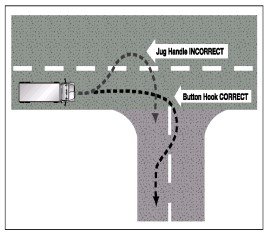
The following outlines common off-tracking scenarios that must be considered when assessing truck crashes and establishing fault in any CMV crash case. The movement of a CMV or trailer can often mislead other drivers due to off-tracking, causing altered perception. A driver’s altered perception can lead to unnecessary reactions like swerving or braking due to fear of a crash. The arrow in the photo below depicts this tractor-trailer driver’s intended path/lane of travel. An approaching or passing motorist might perceive the tractor-trailer as encroaching into another motorist’s lane during the turn.

off-tracking in semi truck

Low-Speed Off-Tracking

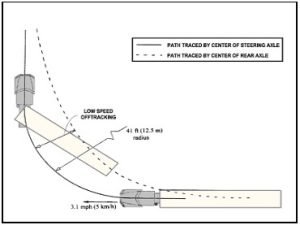
Low-speed offtracking typically occurs when a tractor-trailer or combination vehicle turns low-speed left or right. The rear axles of the truck follow a much shallower path than its front steer axles, as depicted below.

USDOT FHWA Western Uniformity Scenario Analysis Figure VI-1


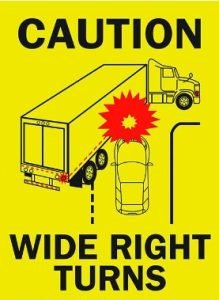
This is why the rear of many tractor-trailers and other large CMVs are equipped with caution stickers warning of “Caution: Wide Right Turns.”

The failure of professional truck drivers to account for off-tracking in low-speed turns can lead to collisions with stationary vehicles, property, or pedestrians. A conscientious CMV operator aware of off-tracking may overcompensate, leading to collisions. Overcompensating or undercompensating can lead to encroaching into another motorist’s lane or right of way. It can also lead to scenarios where the driver must stop in the roadway or dangerously attempt to reverse during natural traffic patterns and traffic flow, which can cause other vehicles to divert course and cause a chain reaction.

High-Speed Off-Tracking

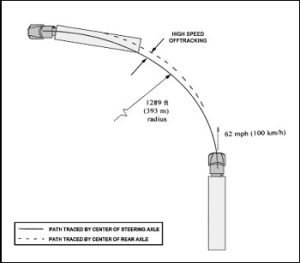
As depicted in the figure below, high-speed off-tracking occurs when the rear of a truck or a trailer being towed tends to move outward from the truck’s travel path during a turn made at higher speeds. The extent of high-speed off-tracking (i.e., the outward movement of the rear of a truck or its trailer) is a function of many factors, including the speed of the truck, the spacing between axles, the weights and loads of the truck/trailer, the radius of the turn, the geometry of the roadway, and the suspension characteristics of the truck/trailer.

USDOT FHWA Western Uniformity Scenario Analysis Figure VI-1


This type of off-tracking scenario oftentimes occurs when tractor-trailers navigate a curve at higher speeds. While the tractor itself may stay within its designated travel lane, the outboard and rear sides of the trailer will tend to drift into the outer travel lanes and encroach upon motorists who are properly within their own designated travel lanes adjacent to the tractor-trailer, oftentimes unbeknownst to the truck driver who may be maintaining his or her tractor in its designated travel lane while its trailer drifts.

Improper Maintenance of Trailers can Exacerbate Off-Tracking Scenarios

Trailer misalignment from use and wear over time can significantly increase off-tracking during turns and roadway curves. Bent axles, frames, potholes, or worn bushings can cause a trailer to go out of alignment and worsen offtracking. This may lead to negligent maintenance or repair claims related to the lack of upkeep of trailer components.

What should I do if I am injured as a result of a Truck or Tractor-Trailer?

If you’ve been in a collision with a CMV or tractor-trailer during a turn, a truck crash lawyer can help assess the cause.

Romano Law Group has a team of experienced commercial motor vehicle and truck crash lawyers, investigators, and staff. We have decades of combined experience handling truck crashes and commercial motor vehicle crash cases involving off-tracking scenarios and considerations. If you or your loved ones have been involved in a collision due to a commercial motor vehicle or tractor-trailer negotiating a turn or a roadway curve, give us a call. Romano Law Group can help by assessing all potential off-tracking considerations that may apply to the pursuit of potential legal remedies you may have.

Authored By Todd Romano

Attorney Todd Romano

The post What role does off-tracking play in truck crashes? appeared first on Romano Law Group.

The Impact of Telemedicine on Potential Misdiagnoses

In recent years, telemedicine has revolutionized healthcare delivery, providing patients with increased access to medical services, especially during the COVID-19 pandemic. As this technology continues to expand, it is essential to examine the impact of telemedicine on potential misdiagnoses.

What is Telemedicine?

Telemedicine involves the use of digital communication tools to provide clinical services remotely. This can include video consultations, remote monitoring, and mobile health applications. The convenience and accessibility of telemedicine have made it a popular choice for patients seeking medical advice and treatment without the need for in-person visits.

Challenges with Telemedicine

While telemedicine offers numerous benefits, it also presents unique challenges that can increase the risk of misdiagnoses. Some of the key factors contributing to this risk include:

Limited Physical Examination

Telemedicine consultations often lack the ability to perform comprehensive physical examinations. Physicians must rely on patient-provided information and visual assessments, which may lead to incomplete or inaccurate diagnoses.

Technical Issues

Poor internet connections, low-quality video, and technical glitches can hinder effective communication between patients and healthcare providers, potentially resulting in misunderstandings or missed symptoms.

Communication Barriers

The absence of face-to-face interaction can sometimes lead to miscommunication. Patients may struggle to accurately describe their symptoms, and providers may find it challenging to interpret non-verbal cues.

Data Security and Privacy Concerns

Ensuring the security and privacy of patient data is crucial in telemedicine. Breaches or mishandling of sensitive information can have severe consequences for both patients and providers.

What can a patient do to minimize the potential for misdiagnosis through telemedicine?

Given the potential for misdiagnoses, it is not surprising that telemedicine can lead to an increase in medical malpractice lawsuits. However, the legal landscape surrounding telemedicine-related malpractice claims is still evolving. As a patient, there are steps you can take to minimize the risk of misdiagnoses and protect your rights:

Choose Reputable Providers

Ensure that your telemedicine provider is licensed and has a good reputation. Research their credentials and read reviews from other patients.

Prepare for Consultations

Be thorough and accurate when describing your symptoms and medical history. Have a list of questions ready and make sure to clarify any doubts during the consultation.

Follow Up

If you have concerns about your diagnosis or treatment plan, do not hesitate to seek a second opinion or request an in-person visit if necessary.

Telemedicine is transforming healthcare delivery, offering unparalleled convenience and accessibility. However, it also introduces new challenges and risks, particularly regarding misdiagnoses. Both patients and providers must navigate this evolving landscape with caution and diligence. By understanding the potential pitfalls and taking proactive measures, we can harness the benefits of telemedicine while minimizing its risks.

As telemedicine continues to grow, the legal framework will likely adapt to address these new challenges. Staying informed about these developments is crucial for both healthcare providers and patients to ensure safe and effective care.

Medical Malpractice and telemedicine

If you believe you have been a victim of medical malpractice through telemedicine, consulting with an experienced medical malpractice attorney can help you understand your rights and explore your legal options. Romano Law Group is dedicated to protecting the rights of patients and ensuring that they receive the justice they deserve.

Authored by Jessica Latour, Esq.

Attorney Jessica Latour

The post The Impact of Telemedicine on Potential Misdiagnoses appeared first on Romano Law Group.
First Infant Formula Trial Returns Momentous Verdict

The first infant formula trial has concluded with a momentous verdict in favor of the victim. These lawsuits across the United States have been initiated with the goal of influencing feeding protocols for premature infants within Neonatal Intensive Care Units (NICUs) and nationwide. These legal actions stem from allegations linking premature infant formula to necrotizing enterocolitis (NEC). NEC is a potentially fatal gastrointestinal condition predominantly affecting premature infants. NEC poses significant risks to the health and well-being of this vulnerable population.

Manufacturers failed to warn consumers

The heart of these lawsuits contends that formula manufacturers failed in their duty to sufficiently warn consumers, including doctors and hospitals, about the risks associated with their products or that the formula itself was defectively designed or manufactured. This lack of transparency led to an increased likelihood of NEC in premature infants who consumed it.

The first infant formula case goes to trial

This month, a recent milestone in these cases occurred when one case against Mead Johnson proceeded to trial. Mead Johnson is the manufacturer of Enfamil products. Over a nearly four-week-long trial in St. Clair County, Plaintiff and Defendant produced neonatologist experts to battle over the science that speaks to a potential link between premature infants, cow’s milk-based infant formula, and NEC. After mere hours of deliberation, the jury returned a verdict for the Plaintiff in the amount of $60 million dollars. Despite Mead Johnson’s explicit denial of any causal relationship between their formula and NEC, as well as their assertion that scientific evidence refutes a link, the jury’s decision does not agree.

What is the significance of this verdict?

While this single verdict against one defendant manufacturer in one case may not directly impact the many pending lawsuits with similar allegations, its significance reverberates throughout the industry. The outcome serves as a poignant reminder for formula manufacturers to reassess the safety and suitability of their products. We hope it prompts reflection within the infant formula industry and fosters improvements for the formula and disclosure practices, enhancing safety and transparency for our smallest citizens.

Romano Law Group leads the way

Romano Law Group has been at the forefront of infant formula lawsuits, filing one of the first in the country. Our attorneys can help families of infants harmed by premature cow’s milk-based baby formula. In cases like this, preserving evidence is of utmost importance. Our attorneys will guide the process and answer your important questions. We will hold the manufacturers responsible for any harm that occurred to your baby.

Authored by Marjorie Levine

Attorney Marjorie Levine

The post First Infant Formula Trial Returns Momentous Verdict appeared first on Romano Law Group.
The Role of Expert Witnesses in Car Crash Claims

After a car crash, getting fair compensation for your injuries and losses is crucial. Yet, the path to a successful claim is often filled with challenges, requiring strategic planning and detailed execution. Expert witnesses are valuable allies in the pursuit of justice. They provide specialized knowledge and testimony to enhance the strength of a case. Let’s talk about the pivotal role of expert witnesses in car crash cases and how their contributions can elevate your accident claim.

Understanding the Power of Expert Testimony

Expert witnesses provide clarity and authority in car crash litigation. They bring specialized knowledge and experience that go beyond general understanding. From accident reconstruction specialists unraveling the complex nature of collision dynamics to medical professionals describing injury causation and treatment, expert witnesses play a multifaceted role in shaping the narrative of your case.

The Multi-Faceted Role of Expert Witnesses in Car Crash Claims

Expert witnesses play essential roles in car accident litigation to strengthen the credibility of your claim. Let’s explore some key areas where expert testimony can make a transformative impact:

Accident Reconstruction

The key to establishing liability in car crash claims is reconstructing the events leading up to the collision. Here, accident reconstruction experts use state-of-the-art technology and analytical methodologies to piece together the causation puzzle. By meticulously analyzing factors such as vehicle trajectories, skid marks, and road conditions, these experts provide jurors with a comprehensive understanding of how the accident unfolded, strengthening your compensation case.

Medical Expertise

Injuries suffered in car crashes can range from minor bruises to life-altering disabilities and even death. These complex cases need knowledge from those with a deep understanding of medical principles and practices. Enter medical experts whose testimony highlights the nature, extent, and prognosis of your injuries, leaving no room for doubt. From orthopedic surgeons describing the details of spinal injuries to neurologists explaining the long-term effects of traumatic brain injuries, these experts play a pivotal role in quantifying your damages and securing the compensation you rightfully deserve.

Engineering Analysis

Beyond the experts in human anatomy lies the world of mechanical engineering, where vehicle design and performance come into play. Engineering experts lend their expertise to unraveling the complexities of vehicle defects and malfunctions, shedding light on potential factors that may have contributed to a motor vehicle collision. Whether it’s a faulty braking system or a defective airbag deployment mechanism, the experts diligently explore every avenue in their pursuit of truth and accountability.

Vocational Rehabilitation

After a catastrophic injury, the ability to resume employment may be scary, if not impossible. Vocational rehabilitation experts play a crucial role, providing invaluable assistance to address the challenges associated with your inability to work. They comprehensively assess your skills and abilities, carefully examining potential career paths that align with your limitations. By facilitating this process, these experts empower you to regain a sense of independence and financial stability, thereby mitigating the adverse effects of your injuries to the fullest extent possible.

Seeking Justice for Your Car Crash

As you seek justice and compensation for your car crash claim, using the full potential of expert testimony is essential. In the complex and often adversarial arena of car crash litigation, expert witnesses emerge as powerful allies, offering clarity, credibility, and authority to your case. By leveraging their specialized knowledge and testimony, you can strengthen the foundation of your claim, sway jurors’ opinions, and secure the justice and compensation you rightfully deserve. As you embark on this journey, remember that you are not alone. With guidance and advocacy, the attorneys at Romano Law Group can navigate any challenges with confidence and determination. Together, we will pursue justice and accountability, ensuring your voice is heard and your rights are upheld.

Authored by Mikayla T. Taylor, Esq.

Photo of Mikayla T. Taylor, Esq.

The post The Role of Expert Witnesses in Car Crash Claims appeared first on Romano Law Group.