Of Counsel – Volume: 23 No. 1
The post Of Counsel – Volume: 23 No. 1 appeared first on Searcy Law.
The post Of Counsel – Volume: 23 No. 1 appeared first on Searcy Law.

Florida is home to many swimming pools as our weather allows residents to enjoy swimming for greater parts of the year than they would in other states. Unfortunately, the large number of swimming pools in our state also results in a high number of pool-related accidents. Whether a swimming pool’s owner or operator takes steps to keep the situation safe can determine whether they are liable for the damages of an injury victim. This article will discuss the numerous responsibilities of swimming pool owners.
If you own or operate a Florida swimming pool then you have a duty to take reasonable precautions so that the environment is safe for those who are permitted to swim in it. It is important to understand, however, that a pool owner must only take “reasonable” steps to keep patrons safe. If proper steps are taken, and an individual is injured, then the owner will not be liable as Florida law recognizes that accidents sometimes happen without the fault of a pool owner. If a pool owner is found to be at fault for a drowning, or some other injury, then they may be liable for medical expenses, past and future lost wages, pain and suffering, and the loss of companionship.
Lighting creates an obvious risk to anyone swimming in a pool. The owner or operator of a swimming pool should monitor weather reports and if rain or lighting is in the forecast, they likely should close or restrict access to the pool. Failing to do so could lead to liability against the owner or operator in the event of an injury.
A damaged swimming pool can easily lead to injuries. Such damage can range from a broken diving board and other equipment to broken plaster. Swimming pool owners must take steps to properly maintain the pool so that such damage is less likely to occur. If the pool is damaged, then the owner will likely have a duty to perform necessary repairs before allowing others to swim in it. Failing to maintain and repair the pool can be seen as negligent and can leave the owner responsible for a victim’s injuries.
Pool debris and unclean water can create a number of hazards for swimmers. Such debris can include bottles, other sharp objects, plastic bags (which can become caught on someone’s face), etc. Unsanitary pool water can lead to rashes, skin irritation, and even serious illness. Pool owners should have a regular schedule for cleaning and sanitizing the pool. They run the risk of injuries to others if they do not.
An emergency can happen at any moment in a swimming pool. Having nearby and accessible safety devices can mean the difference between a drowning and someone getting out of the pool safely. Life jackets and life preservers should be kept near the pool in a manner which allows for them to be thrown in at a moment’s notice. The location of the devices should also be clearly marked and visitors should be able to spot them easily. A failure to provide accessible safety devices can mean that an owner was not taking reasonable steps to keep visitors safe.
Individuals in a swimming pool should be able to see markers which clearly inform them of the levels of depth. These markings should be clear on each side of the swimming pool so that they are viewable from different angles. If, for example, an individual is swimming and gets a cramp, they may sink to the bottom. If they are in a part of the pool which is deeper than what they would have otherwise entered, due to a lack of markings, then the depths they sunk to may be found to be the owner’s fault.
If you regularly have others in your swimming pool then an important safety step can be ensuring that they have access to CPR. If a homeowner regularly has guests in their pool, then they themselves should become certified in CPR. If one operates a public pool, or a facility such as a hotel that has a pool, then it is important that someone who is trained in CPR be available during any hours where the pool is accessible.
Also, it is important that CPR certifications be kept up to date. A typical certification will only last for two years. Suppose, for example, a drowning victim is not resuscitated. Now suppose that the pool operator “knows CPR” but they have allowed their certification to lapse. This can open the door to liability on the grounds that the operator was not properly administering aid.
Any swimming pool, whether at a private residence or in a more public facility, should have a posted policy regarding the consumption of alcohol and swimming. Mixing drinks with swimming creates an inherently dangerous situation and it can lead to drowning or serious injury. The failure to post such a policy can arguably be seen as the pool’s owner consenting to people drinking while swimming
If a loved one has drowned or been injured in a swimming pool accident then it is important that you contact a lawyer immediately. Our office is dedicated to protecting the rights of victims. We assist with such matters, including those that have resulted in wrongful death. We may be reached by telephone at 561-285-4670. Also, you may contact us online to schedule an initial consultation with a Florida swimming pool accident attorney. We look forward to speaking with you.
The post The Dangers of Swimming Pool Accidents in Florida and How to Stay Safe appeared first on Searcy Law.
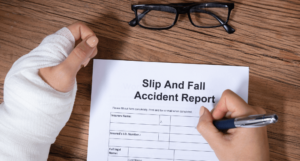
An individual can sustain serious and life-altering injuries when they slip or fall on another person’s property. These injuries can range from broken bones to head trauma to spinal cord damage. Depending on the circumstances, a property owner may be liable for damages sustained by someone who has fallen on the premises. Understanding when a property owner may be liable can assist with the victim’s selection of a personal injury lawyer. This article is written to provide information on the topic of what to know about property owner liability in Florida.
Florida is like other states in the country in that it imposes a duty on property owners to take reasonable steps to ensure that the premises are safe for those who enter their area. The key to this standard is that the owner’s obligation is to simply take “reasonable” steps to keep the property safe; Florida law understands that accidents do happen and it is not possible for a premises owner to ensure that no one ever falls on the property. Whether the precautions taken by a property owner were reasonable will always depend on the facts and the context of the situation. If a property owner is found to have breached their duty, and a fall victim was injured as a result, then the property owner may be liable for their medical bills, their pain and suffering, past and future lost wages, and even punitive damages in rare and extreme situations.
Determinations of what steps a property owner must take will depend on the nature of the property. The standard which a retail store will be held to, for example, will be different than that of a private home owner. A retail establishment will typically be required to inspect its aisles on a regular basis for tripping hazards or spills. The establishment will also be required to take immediate action to rectify a dangerous situation as soon as it is discovered by an inspection or reported by a patron. A private home owner, by contrast, will typically not be required to inspect their entire property at regularly timed intervals. Furthermore, they typically will not be required to take immediate action to prevent a problem. While a homeowner must take reasonable steps to keep their property safe, it must be remembered that what is “reasonable” will depend on the situation.
Whether or not a property owner was negligent in the safekeeping of their area will be established by relevant records and documentation. Documentation which can show that precautions were, or were not, taken can include maintenance records, repair receipts, a business entity’s policy manuals, etc. Property owners should maintain such documentation to show that they were in fact maintaining the premises. Such documentation will typically be requested during the discovery process. A failure to produce such documentation can be inferred as proof that the property owner was negligent in the safekeeping of the premises.
Consider the following example. A shopper enters a Florida retail store and subsequently slips in a puddle of water in one of the aisles. The shopper suffers serious spine damage and may well be partially paralyzed. During discovery, the victim requests the company’s policy manuals and all documentation showing that safety policies were filed. The manual states that the aisles are to be inspected once an hour for any hazards and that immediate steps should be taken to rectify any problems. The manual also states that a log is to be kept showing that this hourly maintenance is being performed. The store owner, however, is unable to produce the maintenance logs. This may well lead a jury to believe that the floor was not being inspected as required by store policy. The owner could very well face liability which they may have avoided if they had kept proper records.
If an individual is injured due to slipping and falling on another’s premises then the property owner will often allege that the individual was at fault. While property owners must take steps to keep their premises safe, individuals also have an obligation to watch out for their own safety. If a victim’s own negligence contributes to the fall then any compensation will be reduced by an amount equal to their share of fault for the accident. If a victim is found to have been at least fifty-one percent responsible for the fall then they will recover nothing.
An example of the foregoing would be a store patron who slips in a puddle of water and suffers injuries. Security footage shows that the puddle had been there for some time and that the store took no action to correct it. The footage also shows, however, that the patron was texting on their cell phone while walking and was not paying attention to where they were going. Now suppose that the jury finds that the victim suffered $100,000 in damages, but was also twenty percent responsible for the accident. The victim would recover $80,000 ($100,000 – twenty percent). While this example demonstrates how comparative fault operates, it must be remembered that the outcome of any case will depend on the facts of the situation.
If you were injured during a fall on someone else’s property then it is important that you contact a lawyer as soon as possible. Counsel will take immediate steps to ensure that important evidence is preserved. Also, you will only have a limited amount of time in which you may file a lawsuit. Our firm understands the need for urgency and we will give your case the attention it deserves. Call us at 561-285-4314 to speak with a Florida premises liability attorney or contact us online today.
The post The Risks of Slip and Fall Accidents in Florida: What Property Owners Need to Know appeared first on Searcy Law.
Being injured by another’s negligence carries the risk of serious harm. A personal injury victim can be forced to miss time from work, to undergo extensive medical treatment, and to suffer emotional distress. Anyone who has suffered such an injury should immediately take action so that their rights are fully protected. This article will discuss some of the most common types of personal injury cases in Florida and how they can be prevented.
Car accidents remain one of the most common ways in which an individual’s negligence results in harm to another. All drivers have a duty to exercise reasonable care when operating a vehicle. If another driver has breached this obligation, and has caused you to be in an auto wreck, then you have the right to seek compensation. Common examples of such cases include wrecks caused by speeding, illegal changes, distracted driving, etc. Avoiding such conduct, and paying attention to the road, is the best way for a driver to avoid injuring another. Unfortunately, many fail to do so.
Truck accidents can involve serious injuries to a defendant. They may even result in wrongful death due to the fact that an individual’s car is no match for an oncoming semi truck. Trucking accident cases can quickly become complicated as they often involve numerous defendants. These defendants can include the driver of the semi, the owner of the vehicle, third-party management companies, and other entities. It is important that all possible defendants be named or you may run the risk of not receiving the full amount of compensation to which you are entitled.
Truck accidents can sometimes be avoided through the trucking company’s proper hiring and supervision of drivers. Their failure to exercise proper hiring practices or supervision tend to be one of the leading causes of truck accident litigation.
Florida’s beautiful weather makes it likely that people will ride their motorcycles for more of the year than they would in a colder climate. However, this increased use of motorcycles can also lead to increased accidents. In such cases, it is common for victims to suffer head trauma, even if they are wearing a helmet. Examples of such harm can include everything ranging from a concussion to a traumatic brain injury.
Drivers can avoid injuring a motorcycle rider by paying attention before changing lanes and obeying traffic laws. Their failure to do so is what often leads to litigation.
A pedestrian is likely to suffer serious injuries if they are hit by an oncoming car. Such accidents can occur in a crosswalk, in a parking lot, or when an individual is walking across the street in an undesignated crossing area. Such accidents are often caused by a driver failing to pay attention to traffic signals and stop signs. These types of cases may also stem from a driver speeding, driving their car while distracted, etc. Injuries sustained in a pedestrian accident often include brain damage, spinal damage, broken bones, and even wrongful death.
The fact that our state is a peninsula means that we have a large boating population. This also means that we have a disproportionate number of boating accidents. Anyone who operates a boat off of our shores must take reasonable steps to ensure that they are doing so in a safe manner. This can include not operating the boat in a reckless manner, operating it at a reasonable speed, and not being intoxicated while driving the boat. It is not uncommon for boating accidents to result in a wrongful death as a victim may very well drown. While many boating accidents could be prevented by operating the vehicle in a safe manner, such incidents remain common.
We trust doctors and medical professionals to follow the highest standards when caring for our health. Unfortunately, these professionals are people and are capable of making a mistake. When the malpractice of a doctor, a nurse, or a hospital causes harm to a patient then that victim will have the right to seek compensation. Examples of medical malpractice can include failing to administer care in a timely manner, misdiagnosing a patient, prescribing the wrong medication, and, in extreme cases, performing the wrong surgery. Medical malpractice cases are highly complicated and no two cases are the same.
Medical malpractice can be reduced, if not avoided, through the exercising of proper internal procedures by doctors and medical staff. When a lawsuit is necessary, it can often be traced to a failure to follow such procedures.
Every property owner or manager is responsible for making their premises safe for those they allow on the property. This includes commercial businesses such as retail stores and restaurants, who must make the locations safe for their patrons. It also includes private homeowners, who must ensure that their residence does not pose a danger to anyone whom they invite into their home. If a property owner fails to take reasonable steps to make the premises safe then a victim may recover compensation. Cases resulting from a fall can result in serious harm to the victim. Such harm may include a traumatic brain injury, spinal cord damage, etc.
While regularly maintaining a property can help a property owner to avoid such cases, their failure to do so is what leads to litigation.
If you have been the victim of another’s negligence then it is important that you contact a lawyer as soon as possible. You only have a limited amount of time in which to file a lawsuit and immediate steps must be taken to protect your interests. We are devoted to protecting the rights of individuals and we look forward to being of assistance. Call us today at 561-285-8745 or contact us online to speak with a Florida personal injury attorney.
The post The Most Common Types of Personal Injuries in Florida and How to Prevent Them appeared first on Searcy Law.

Few things can be as shocking as being injured by a product which you thought was safe. You may not know what steps to take in the immediate aftermath of being injured by a defective product. Taking the appropriate actions immediately can help preserve your right to compensation. In this article we will discuss what Florida residents should do if they have been injured by a defective product.
There are several steps to take after you have suffered a product defect related injury. These include:
We will discuss each of these steps in turn.
It is important to seek immediate medical care after any injury. This includes injuries caused by a defective product. There are multiple reasons why you should get to the doctor immediately after such an incident. The first is the fact that, if you do not seek immediate medical care, the defense will often claim that your injuries were not caused by the product defect. They will often claim, instead, that you must have been injured by some event which occurred in between the time of the defect and your visit to the hospital. You can stop such an argument by seeking immediate care. The second reason to seek immediate care is that what may seem like a minor injury may in fact worsen over time. You can mitigate your injuries by getting to the hospital or clinic as soon as possible.
It is strongly suggested that you seek care even if you believe that the defective product did not, in fact, injure you. This is due to the fact that certain injuries may result in delayed symptoms. If, for example, a defect causes you to suffer a blow to the head then you may initially believe that you are fine and do not need care. You may, however, have suffered head trauma which will not show immediate symptoms. It is always best to err on the side of caution and to seek immediate care.
You should document what has happened immediately after you or a loved one are harmed by a defective product. Such documentation should include taking any necessary photographs, recording any necessary video, and making a detailed written account of what transpired. Another important step is to preserve the defective product to the extent possible and to begin organizing any other records relevant to the incident. These records can include receipts from when you purchased the item (both paper receipts and any email confirmations which you may have), bank records showing that the purchase was made from your account, and any documentation you have related to your use of the product. Such documentation may include correspondence you have had with the manufacturer’s customer service department, etc.
It is also necessary to keep ongoing records as the case progresses. This should include keeping a daily journal in which you chronicle your level of pain, time spent going to medical appointments, etc.
It is common for people to post their instant reaction to an event on their favorite social media site. It must be understood, however, that such information is viewable by others. Anything you say or post on social media will likely surface as evidence in your matter. Not posting any type of reaction or discussion of the situation is, therefore, strongly recommended.
It is also recommended that you limit your social media use as a general matter while your case is pending. Photos and comments can be taken out of context and they may come back to hurt your case. Suppose, for example, that you are seriously injured but you post photos online which make it appear that your injuries are not as severe as you claim. Such photos would most likely end up in the hands of the insurance adjusters. By refraining from social media use, in general, you reduce the risk of information you post being taken out of context.
You should contact an attorney immediately after you have sought medical care as there are several steps which counsel will take to protect your interests. These include immediately beginning to identify all of the potential defendants in the matter. As we discussed in our article on understanding Florida’s product liability laws, there will likely be several defendants in such matters. It is necessary to identify each of them so that you do not run the risk of receiving less than full compensation. Counsel will then deal with the defendant’s insurance carriers directly so that you may focus on your health. Your lawyer will stay in regular contact with you and will advise you on how to proceed as the matter moves forward. It is vital that you heed their advice.
It is also crucial that you be honest and transparent with your lawyer. Remember that they are your advocate and that they are working to get you the largest possible settlement. If you were using the product in a way that was against the manufacturer’s guidelines, for example, your counsel must be made aware. Anything which you do not tell your attorney now is likely to be unearthed in discovery and this can hurt your case later on.
If you have been injured by a defective product then this is a stressful time in your life. Our firm is dedicated to ensuring that you move your situation forward. We pride ourselves on providing the highest level of service and we look forward to speaking with you. Call us at 561-285-8745 or contact us online to speak with a Florida product liability attorney.
The post What to Do If You Have Been Injured by a Defective Product in Florida appeared first on Searcy Law.

Earlier this year, the US Center for Disease Control and Prevention (“CDC”) spotted an outbreak of a rare bacterial infection in 11 (now 16) different states, associated with multiple different infection types, particularly eye infections. Following epidemiology and laboratory evidence, the CDC was able to link these infections to the use of EzriCare Artificial Tears and found that Patient outcomes included permanent vision loss resulting from ocular infection, hospitalization, and death of one patient with bloodstream infection.
The Food and Drug Administration (“FDA”) followed by immediately warning consumers and health practitioners of a bacterial contamination involving EzriCare Artificial Tears and Delsam Pharma’s Artificial Tears as they were manufactured by the same pharmaceutical company, Global Pharma Healthcare Private Limited, located in India.
The FDA also added a subsequent warning involving yet another over-the-counter product manufactured by Global Pharma Healthcare Private Limited, Delsam Pharma’s Artificial Eye Ointment, also due to potential contamination with the same bacterial strain. As of April 7, 2023, the FDA has identified 68 patients of a new strain of Pseudomonas aeruginosa in 16 states, including three patients dying, four others having had surgical removal of the eyeball, and eight patients having lost vision in at least one of their eyes. Some have had to undergo corneal transplants.
Both recalled over-the-counter artificial tears have been found to carry this harmful and potentially deadly bacteria, which has proven to be resistant to most antibiotics. To make matters worse, scientists have known for decades that when this bacteria is introduced into the eye, it can have devastating effects of infection including corneal ulcers that spread rapidly, which can become necrotic causing blindness and may even necessitate the surgical removal of the entire eyeball. While the Pseudomonas aeruginosa bacteria have been around for years and may have previously responded to ordinary therapy, this particular strain, identified as part of the Center for Disease Control’s (“CDC”) investigation, has never been reported in the United States prior to this outbreak. This strain is particularly dangerous because it has evolved to increase its drug resistance over time and as reported by the CDC, appears to resist common antibiotics such as cefepime, ceftazidime, piperacillin-tazobactam, aztreonam, carbapenems, ceftazidime-avibactam, ceftolozane-tazobactam, fluoroquinolones, polymyxins, amikacin, gentamicin, and tobramycin. This particular bacterial strain has been detected in opened bottles of EzriCare drops collected from infected patients.
Due to the alarming reports of cases, FDA officials are also testing unopened bottles of the drops and eye ointments manufactured by the same company. All imports of these products have also been stopped by the FDA.
Just last week, the Food and Drug Administration released its inspection report of Global Pharma’s plant in India where it was believed that the contamination occurred. The inspection of the Indian facility took place in late February through early March 2023. Among the most notable problems identified, the report sets forth:
Global Pharma products were shipped to the U.S. between December 2020 and April 2022. In summary, these preliminary findings noted serious deficiencies in the formulation of the company’s products, particularly of their eye drop and eye ointment products which did not contain preservatives to prevent microbial contamination, and deficiencies in cleaning, sterilizing, testing, and quality control.
As a result, it is not surprising the FDA’s preliminary findings raise serious questions about this company’s sterilization practices and their knowing disregard for the safety of U.S. consumers.
While preservation-free artificial tears are an important treatment for individuals who suffer from chronic dry eyes and who rely on their use several times per day, if these products are not properly packaged, then they are more prone to bacterial contamination. This is why it is common for these products to be packed for single-use and not in multiple-use bottles.
Companies in this industry control the risks of bacterial contamination, yet the Ezricare and Delsam Pharma’s Artificial Tears that have been recalled were packaged in multiple-use bottles and not in single-use disposable containers. Dr. Vicente Diaz, the chief of ophthalmology at Yale Health Plan in Connecticut, specializing in infectious diseases, recently shared his concerns with the New York Times. Dr. Diaz discussed how this over-the-counter preservative-free eye drop formulation could be allowed to go on the market without more scrutiny, concluding that this was “like the perfect storm.”
While it is early to rule out other factors that may have led to this multistate outbreak of a drug-resistant bacteria, the FDA inspection report documenting issues with cleaning, sanitizing, decontaminating, and sterilizing – in addition to other failures in maintaining good manufacturing processes – at Global Pharma’s India facility surely warrants additional investigation. More information on the FDA’s preliminary findings will likely come out soon as the agency wraps up its investigation and issues a formal report and warning letter to the company. Regardless, though, it seems clear the manufacturing process did not place sufficient importance on sterile manufacturing practices or on the decision to package multiple containers.
This recent bacteria outbreak in a pharmaceutical product highlights regulatory gaps in controlling imports of overseas medications and the impact on U.S. consumers. The FDA has confirmed prior to their recent inspection and despite FDA previous warnings of unsanitary conditions to other companies, the FDA had not inspected this facility since the company first began exporting their products into the United States. While the FDA is required to conduct a pre-approval inspection of plants that manufacture prescription drugs, there is no such mandate for those that make over-the-counter medicines like artificial tears. Given the importance of sanitary production because of the nature of the product, we should be able to expect manufacturers like Global Pharma should pay close attention to sanitary, decontamination and sterilizing standards that could have prevented this terrible bacterial outbreak. The need for compliance testing of drug manufacturing facilities should be a universal standard and our regulatory agencies need to make testing of these facilities a priority if they intend to enter the U.S. market.
The CDC has asked users of these eye products to immediately stop using EzriCare Artificial Tears or Delsam Pharma’s Artificial Tears or eye ointment and to seek medical care if having signs or symptoms of eye infection, including:
Our lawyers have been pioneers in several nationwide eye product cases and have experience fighting eyedrop manufacturers whose products contain defective components that cause infections. We have litigated cases involving contaminated products and eye solutions with component defects that defeated their ability to protect the eye from infections. We are ready to use our experience to help those injured by these contaminated products.
If you would like to discuss the facts of your use of this product, contact mass tort attorneys Cal Warriner, Katie Kiziah, or Victoria Mesa-Estrada at Searcy Denney today at (800) 780-8607.
The post FDA Reports Sterilization Issues in EzriCare Factory: Bacterial Contamination in Artificial Tears Products appeared first on Searcy Law.

Defective products can cause serious injuries or even wrongful death. Such situations may involve a product which injures someone immediately. They may also involve products which harm people over time due to toxic exposure. These types of cases present some of the most complex issues in personal injury law. This is why we are providing this guide on product liability in the state of Florida. If you or a family member are in need of assistance then it is important that you contact an attorney.
This guide will cover multiple topics. These include:
Each of these issues will be discussed in turn.
A product is “defectively designed” if it was built in the way which the designer intended and is unreasonably dangerous. This can involve situations in which the designer was well aware of the risks and simply ignored them. It can also include situations in which the designer failed to take reasonable steps to ensure that the product would not be unreasonably dangerous. In Florida, products are considered “unreasonably dangerous” if they create an unsafe situation when being used in a way which the average reasonable consumer would use them.
Products are considered to have been defectively manufactured if a manufacturing process error creates a flaw that would not have existed in the designer’s original design. If the risk created by the faulty manufacturing results in harm to a consumer, who was using the product in the way that it was intended to be used, then the manufacturer faces liability.
Defective marketing and inadequate warnings are two situations which involve a product being presented to the public in a way which makes the consumer unaware of potential risks. If a product’s marketing leads the public to believe that it is safe for a particular use, then liability may ensue when an individual is injured while using the product in that way. If, on the other hand, a company knows about risks with its products but fails to adequately disclose them, an injured consumer may have recourse if they were using the product as intended.
It is crucial to identify all of the possible defendants in a product liability case. Failing to do so can result in a victim not receiving the full amount of compensation to which they are entitled. Who to hold liable for a victim’s injuries will vary greatly from situation to situation. As a general matter, each of the theories of liability discussed above may involve multiple defendants. Consider the following examples:
Again, the identification of defendants in such matters are highly complicated and will vary on a case by case basis.
The damages in a product liability case can include compensation for past and future medical expenses, past and future lost wages, as well as pain and suffering. It may also be possible to obtain punitive damages if it is shown, by clear and convincing evidence, that the defendant’s acts were intentional or that they stemmed from gross negligence. Examples of intentional conduct can include cases brought under the “defective design” theory, in which the company knew a design was dangerous but produced the product anyway.
Damages awarded to a Plaintiff will be subject to Florida’s comparative fault laws. Under Florida law, which was revised in 2023, a victim may not recover damages if they were more than fifty percent at fault for an accident. This would mean that if a product was defective, but the victim was also negligent as to how they used the product, then the victim’s compensation may be reduced or eliminated.
Florida’s statute of limitations for negligence cases was reduced to two years in 2023. This would mean that, in most injury cases, a victim must bring suit within two years of an accident. A victim’s statute of limitations will not begin to run until they should have reasonably been aware of the harm. When you consider that product defect cases may involve situations in which exposure to the product created health problems over time, then it may be some time before the statute of limitations begins to run. The time to bring an action, however, will remain limited under Florida’s statute of repose.
If you have been injured by an unsafe or defective product then it is important that you take immediate steps to protect your rights. Our firm is dedicated to protecting the rights of people over those of corporations. We take pride in the service we provide and we look forward to speaking with you. Call us at 561-285-8745 or contact us online to speak with a Florida product liability attorney.
The post Understanding Product Liability Laws in Florida: A Comprehensive Guide appeared first on Searcy Law.

The process one faces after a car accident can be daunting. It will typically begin with you receiving telephone calls from insurance adjusters almost immediately and can only become more confusing if you do not have experienced representation. Knowing what to expect from the process, however, can help to make the situation seem more under control and it can also assist you with selecting a personal injury attorney. So that you have more information about what to expect, we are providing this guide on how to file a car accident claim in Florida.
The immediate step to take after a car accident is to seek immediate medical care. Not doing so can create a situation in which the defense attempts to claim that your injuries were caused by an event which occurred in between the accident and the time you sought care. Also, as discussed below, obtaining immediate care will be important for claims you make against your personal injury protection (PIP) coverage. If you are offered an ambulance ride to the hospital after an accident then it is important to accept it. If you are not offered an accident ride, then proceed directly to the hospital by other means.
Retaining an attorney is the next step to take after obtaining medical care. It is common for the defendant’s insurance carrier to contact a victim immediately after a car accident. These calls may even come as early as the next day. The insurance adjuster will often attempt to reach a “quick” settlement and will also often claim that you do not need an attorney to represent you. Remember, however, that these adjusters work for the insurance company. Their goal is to protect the bottom line of their employer and it is not to ensure that your interests are protected. While these adjusters protect the interests of large corporations, an attorney will protect your rights.
Florida is a no-fault state in regards to personal injury cases. Under this legal system, all registered vehicles must carry personal injury protection (PIP) coverage of at least $10,000. When a driver is injured by the negligence of another then they must first submit a claim against their PIP coverage. If the PIP coverage is not enough to compensate the victim for their losses, then they may bring an action against the negligent party or parties. Your attorney will assist you in dealing with your PIP carrier.
A victim will not be able to bring a claim against their PIP coverage if they do not treat their injuries within no more than two weeks of the accident.
One of the first steps your attorney will take is identifying all of the possible defendants in the case. While most car accident cases will only involve the at-fault driver, if the case involves a commercial vehicle then it may be necessary to bring an action against multiple parties. An example of this can be a delivery driver who causes an accident while performing his or her normal work-related duties. Under such a scenario it may be possible to hold the driver as well as the company they work for liable for negligence. Also, the employer may be liable for the negligent hiring or supervision of their employee. The issue of what causes of action can be brought against each of the various defendants will depend on the specific facts of the case. Not identifying all of the possible defendants can result in you not receiving the full amount of compensation to which you are entitled.
Once your chances for long-term recovery are known then your attorney will submit a demand for payment to the insurance carrier(s). This will be a written letter in which your attorney states the amount you are requesting for lost wages, medical expenses, pain and suffering, as well as your future losses. It will be supported with copies of medical bills, paystubs, and other information which support your calculations.
It is important that your demand letter not be submitted before you are reasonably sure of your long-term prognosis. Submitting this demand before you are reasonably sure about your long-term recovery can result in you accepting a “lowball” offer. You may find later that your injuries are more severe than initially thought and that your settlement did not fully compensate you for your losses.
Your attorney will make every effort to settle your case after the demand letter has been sent. This will involve extensive back and forth negotiations with the insurance adjusters. You should not be immediately discouraged if an insurance adjuster states that they are denying your claim or if they offer a low amount. It is common for adjusters to outright deny liability or to make inadequate offers early in the process. As negotiations progress, the adjusters will often make better offers to avoid the threat of litigation.
If a settlement cannot be reached then it will be necessary to file a lawsuit. Such a suit must be filed within two years or you will otherwise lose your rights to recover damages under Florida’s statute of limitations. Settlement negotiations will continue after the filing of a lawsuit and the matter may be settled any time before the conclusion of a trial.
If you or a loved one have been in a wreck then it is important that you contact a personal injury lawyer as soon as possible. Counsel will deal with the defendant’s insurance adjusters directly. This will allow you to focus on the important business of your recovery. Our firm strives to provide the highest level of service to each and every customer we serve. Contact us online to speak with a Florida car accident attorney or call us at 561-285-8745 today.
The post How to File a Car Accident Claim in Florida: A Step-by-Step Guide appeared first on Searcy Law.

The process of filing a truck accident claim in the state of Florida differs from many other states. This is due to the fact that Florida is one of few “no fault injury” states which requires a victim to first submit a claim against their personal injury protection (PIP) insurance. Also, our state puts strict time frames in place as to your need to seek medical treatment. Contacting an attorney immediately following a trucking accident is the best way to ensure that you properly navigate the system. We will be using this article to discuss the legal process of filing a truck accident claim in our state.
Florida requires all vehicles with a current Florida registration to carry personal injury protection insurance of at least $10,000. After a trucking accident, the victim is required to first submit a claim to their own insurance. If your damages are in excess of what is covered by your PIP, then you may bring an action against the parties responsible for the accident. Given that most trucking accident cases result in serious injuries and substantial property damage, claims against the negligent parties will often be necessary. It is important to note that, under Florida law, you must treat for your injuries within two weeks of an accident or you will otherwise be ineligible for payment from your PIP coverage.
An initial step in a truck accident case is to identify all of the possible defendants. This is due to the fact that any wreck involving a commercial vehicle will differ from a typical car accident case. While typical car accidents only involve one defendant (the negligent driver), trucking accidents can involve several. These defendant(s) can include the driver of the truck, the owner of the truck, management companies hired by the owner to hire and train the driver, as well as other potential entities. There will be overlap in some of the causes of action which can be brought against various defendants, while other causes of action will be unique to one party. An example of this is the fact that the truck driver and the truck owner can both be held liable for the driver’s negligence. The owner, however, can also be held liable for the negligent hiring and supervision of the driver.
Steps which your attorney will take to identify all of the possible defendants can include checking motor vehicle records, verifying business information through the Secretary of State, etc. Also, if a lawsuit is filed then it is possible to name “fictitious parties” so that additional defendants may be added later after the discovery process has begun.
A victim will begin treating for their injuries shortly after the accident. Once their long-term medical prognosis is more clear then a settlement demand will be sent to the insurance carrier of the defendant(s). This demand is a breakdown of the amount which the victim is requesting as a settlement, as well as their basis for calculating that amount. The demand will be supported by medical bills, wage statements, and other evidence which show how their damages are being tabulated.
It is important that a settlement demand not be sent before a victim’s long-term prognosis and chances for recovery are more clear. Accepting an early settlement can result in the victim receiving far less than what they would otherwise be entitled to. An example of this would be a victim who has suffered serious neck and back injuries. They are aware that they will need multiple surgeries over a one year period but they personally believe that they will fully recover their mobility. The victim submits a settlement demand based on this belief and resolves the matter. Unfortunately, the victim does not make a full recovery and will now have difficulty walking for the rest of their life. The fact that the case has been settled means that the victim received far less compensation than what they should have been entitled to. This could have been avoided by waiting to settle until a time when their chances of recovery were more clearly known.
A truck accident victim’s attorney will commence negotiations with the insurance company of each defendant after a demand for payment has been sent. Given that the victim in such a case has likely suffered serious injuries, these negotiations can take some time. The insurance carriers will often dispute the amount of the victim’s damages. They will typically base their dispute on differing expert opinions, claims that the victim’s injuries were pre-existing, and claims of comparative fault. If a settlement is reached then the case will be concluded. If a settlement is not reached, within two years of the accident, then it will be necessary to file a lawsuit in order to preserve the statute of limitations. The filing of a lawsuit does not mean that settlement negotiations come to an end; the attorneys for each side will continue negotiations while the case proceeds through the litigation process.
If you or a loved one have been involved in a wreck then it is important that you retain a lawyer as soon as possible. As explained above, the process of bringing a claim can be lengthy and if a lawsuit must be filed then you only have two years to do so. We are experienced in handling such matters and we provide the highest level of service to all of our clients. Contact us online or at 561-285-8745 to speak with a Florida truck accident attorney.
The post The Legal Process for Filing a Truck Accident Claim in Florida appeared first on Searcy Law.