The Human-in-the-Loop Playbook: Integrating AI With Your PI Firm Without Losing Staff Buy-In

Plaintiff firms often hit a ceiling because of operations, not casework. Strong verdicts hide weak systems, until Why the firms winning with legal AI are not the ones with the most tools, but the ones who brought their teams along.

Every trial lawyer I talk to is being pitched an AI tool right now. Intake bots, document drafting platforms, demand letter generators, etc. Technology has become incredibly useful in the last eighteen months. The pitches have gotten more forceful in terms of not being left behind.  What I notice is the gap between firms buying AI and firms benefiting from AI. The buyers are everywhere. Beneficiaries are more rare.

Kyle Wright put it plainly on a recent episode of the Trial Lawyer View podcast: “I’ve wasted money on different products that just didn’t end up working for us.” He runs a busy plaintiff practice and knows what he is talking about. His mistake was not buying the wrong software. His mistake was buying first and figuring out how his team would use it second.  That order of operations is what separates the firms scaling with AI from the ones writing off the spend.

Why most law firm AI rollouts stall

There are four common failure patterns that are developing among personal injury practices:

First, the shop-and-drop mistake. A firm leader attends a conference, watches a vendor demo, signs a contract, and announces the tool to staff in a Monday email. The people expected to use it had no say in the selection. They have every reason to ignore it.

Second, the replacement fear. Paralegals and intake staff read the marketing copy on AI legal tech and hear one message: you are next. Even when the firm’s intent is to augment the work, the message lands as a threat. Adoption dies before it starts.

Third, the workflow mismatch. The tool was built for a generic firm. Your firm is not generic. The software demands a process your team does not use on a schedule that does not match how your cases move through the firm. The renewal comes due, and no one will admit they stopped using it months ago.

Fourth, no feedback loop. Leadership assumes the tool is working because no one is complaining. Staff are not complaining because no one asked. Six months in, the firm has paid for a product nobody is using.

What human-in-the-loop actually means

The phrase gets thrown around loosely. Here is the working definition I use with our clients at Synergy: Human-in-the-loop means AI handles the volume work and humans verify and decide at every consequential checkpoint. The software does the initial heavy lift. A person reviews before it goes to a client. The model flags a possible Medicare conditional payment. A trained subrogation specialist confirms the existence and validity before action. The system with a human in the loop produces a verified claim summary from the lien holder.

This matters for two reasons that operate at the same time:

The first is quality control. AI makes confident errors. It hallucinates case citations, transposes numbers, and pulls the wrong client’s name from the system more often than the vendor demos suggest. A reviewing human is your protection against the version of those errors that end up in front of a judge or a client.

The second is staff engagement. People stay invested in their jobs when the work routes through them at points where judgment matters. The minute you push humans out of the decision points; you have told them their judgment is optional. They will respond accordingly.

The buy-in process experts recommend

The firms succeeding with AI follow a recognizable sequence. None of it is complicated.

Bring staff into the evaluation before you buy. Sit your case managers, paralegals, and intake leads in on the demos. Ask them what would save them time. Ask them what they would refuse to give up.

Explain what their role will look like after the tool goes live. Be specific. “Your morning will start with reviewing the system’s intake summaries instead of transcribing the calls yourself. That gives you back two hours a day to focus on case strategy and client communication.” That sentence does more for adoption than any training session.

Pilot with a small group. Two or three people, one workflow, sixty days. Iterate based on what they tell you. Then expand.

Celebrate the wins as team wins. When the tool cuts demand letter drafting time in half, the firm announcement should name the paralegals who refined the prompts and the intake staff who cleaned the source data. Technology did not save the firm time. Your people did, with help from technology.

What to automate and what to keep human

The high-value targets for automation in a PI practice are clear, repetitive administrative tasks that take time away from high level legal work or client interactions. Intake call transcription and summary. Medical record review and chronology building. Document population. Routine status correspondence to clients. Initial demand letter drafts. Discovery response drafts. Deposition summaries. Lien identification and verification.  Each of those tasks is a tax on staff time that pulls them away from work requiring legal judgment/human input.  The work that stays with humans is also clear. Client communication on substantive issues. Legal strategy. Negotiation. Quality review of any AI-generated document before it leaves the firm.

There is a third category worth pulling out separately. Some administrative work is too specialized for general-purpose AI and too time-consuming for in-house staff to do well. Lien identification, verification, and resolution are the clearest example I deal with daily. Medicare conditional payments. Medicare Advantage and Part D recovery. ERISA plan subrogation. Hospital and provider liens. State Medicaid recovery. Each one has its own statutory framework, its own portal, its own negotiation posture.

When firms try to handle that work internally, even with AI assistance, two things happen. Cases sit at the disbursement stage for weeks while staff chase down lien holders. And the firm leaves money on the table because the people negotiating are not specialists in the rules. Outsourcing that work to a team built for it is not a cost. It is a release of staff hours back to the legal work that moves cases forward. Pair that with the right technology stack, and the math gets favorable quickly.

Build for continuous improvement, not perfection

Technology rollouts in law firms are treated as projects with end dates. That framing is the problem.  Create feedback channels staff will actually use. A shared document where anyone flags what is broken, what is missing, what is slowing them down. A standing fifteen-minute item on the weekly team meeting. Nothing elaborate. The point is that staff know their input goes somewhere.

Run quarterly reviews of every AI tool you have licensed. What was the intent. What is the current usage. What needs to change. Cancel what is not working without making it a referendum on the people who pushed for it. Keep what works and double down.

As an example, an AZ firm I respect for their operational discipline, treats their FileVine stack as a permanent work in progress. They refine constantly. New automations, new triggers, new fields, retired workflows. The mindset is that the system gets better every month because someone is paying attention. That is the model.

The real question for firm leaders

The firms that win with AI over the next three years will not be the ones with the most subscriptions. They will be the ones with the cleanest implementation. Selection discipline, staff buy-in, continuous refinement. Boring, repeatable practices.

Staff buy-in is the line between a tool that compounds value and a tool that becomes a line item nobody defends at renewal. Technology is not the bottleneck anymore. The implementation is.

So, the question worth sitting with this week. Are you bringing your team into the technology decisions that affect their work, or are you telling them what is coming and hoping for the best?

The firms scaling are doing the former. The ones still struggling with adoption are doing the latter.

Why Synergy is the Answer to Help You Scale

Synergy exists to help firms confront the operational realities being driven by technology and scaling pressure. By removing administrative burdens related to lien identification, verification and resolution, from your staff, we help you strengthen your practice’s capacity for high-value legal work and sustainable growth.

🔗 Want more insights like this?

If you’re a personal injury lawyer ready to scale, streamline, and step into your role as CEO, let’s talk. Join the Peak Practice Community, and learn how Synergy can help you eliminate settlement bottlenecks, resolve complex liens, and maximize recoveries.  Learn more here: https://partnerwithsynergy.com/peak-practice/

If you want to grow and scale your law firm more effectively, consider partnering with Synergy for lien resolution.  Learn more at: https://partnerwithsynergy.com/liens/

$16.25 Million Settlement in Negligent Security Case Involving Fatal Shooting in Florida Short-Term Rental Community

The Haggard Law Firm Secures $16.25 Million Settlement in Negligent Security Case Involving Fatal Shooting in Florida Short-Term Rental Community


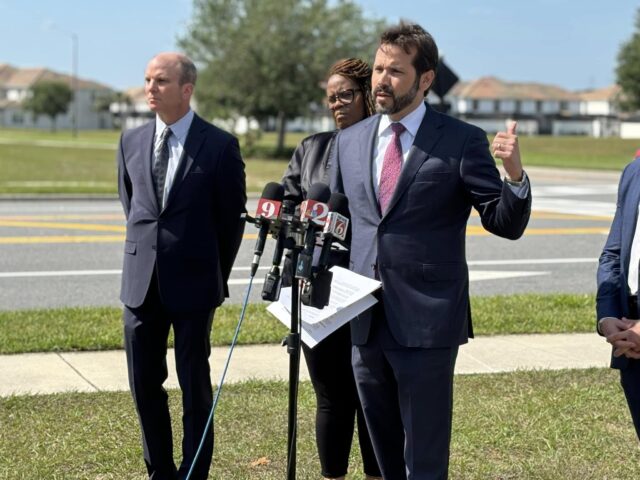
Attorneys Pedro Echarte and Michael Haggard of The Haggard Law Firm, together with co-counsel Joey Rafaeli and Erik Feingold, secured a global settlement totaling $16.25 Million, along with additional confidential settlements, on behalf of the family of Jeremiah Brown.

Brown was vacationing in Osceola County, Florida, when he was fatally shot during a carjacking at the ChampionsGate community, a large development known for its short-term rental properties and sub-communities.

The case alleged that multiple entities failed to provide adequate security despite a history of criminal activity within the community.

The negligent security case at one of Central Florida’s largest short-term rental communities, raises important questions about safety standards, security protocols, and accountability within residential developments that cater to tourists and vacation renters, including the platforms that allow them to operate.

Fatal Shooting at ChampionsGate Vacation Rental Community

In July 2022, Jeremiah Brown traveled to Central Florida with his girlfriend, her children, and friends for a vacation stay at an Airbnb property located within the ChampionsGate community.

Brown was outside the short-term rental property when he was confronted by the assailants, who attempted to carjack him at gunpoint. He was shot during the attack and later died from his injuries.

Brown’s death left behind his surviving parents, who pursued a wrongful death claim seeking justice for his death from the entities involved in the operation of the community, including its security.

Investigation Revealed History of Crime and Security Failures

The litigation uncovered evidence that ChampionsGate had experienced numerous prior criminal incidents before Brown’s death, including numerous crimes where tourists (like Brown) were specifically targeted. In addition, evidence was uncovered that many of the prior crimes involved some of the same individuals that attached Brown on the night in question.

According to allegations developed during the case:

  • Access-control gates serving the community were reportedly broken at the time of the incident.
  • Surveillance camera coverage throughout the property was limited and inadequate.
  • Security staffing levels were insufficient for a community of its size and nature.
  • Security personnel on duty allegedly failed to perform services in accordance with accepted industry standards.
  • The homeowners’ associations, management companies, and security providers allegedly failed to implement reasonable measures to deter foreseeable criminal activity.

The Haggard Law Firm attorneys argued that these failures contributed to an environment that allowed violent crime to occur despite a known history of criminal activity within the community.

$16.25 Million in Reportable Settlements

The Haggard Law Firm obtained $16,250,000 in settlements from the following defendants:

  • ChampionsGate Master Association, Inc.
  • The Retreat at ChampionsGate Community Association, Inc.
  • Ramco Protective of Orlando, Inc.
  • Orlando Short Term, LLC
  • ICON Management Services, Inc.

The firm also secured additional and separate confidential settlements with:

  • Lennar Homes, LLC
  • Airbnb, Inc.
  • Bright Liberty
  • Greenroad Holdings, LLC
A Significant Florida Negligent Security and Wrongful Death Case

The case highlights the legal responsibilities of property owners, homeowners associations, security companies, vacation rental operators, and management entities to address known security risks and take reasonable steps to protect residents and guests.

The settlements reflect the complex nature of the litigation, involving multiple defendants and a combination of policy-limit settlements, extra-contractual and bad-faith settlements, and negotiated resolutions.

For families impacted by violent crime on commercial, residential, or vacation rental properties, negligent security litigation can provide a pathway to uncover failures, promote safer practices, and seek accountability when preventable tragedies occur.

About The Haggard Law Firm

For more than 50 years, The Haggard Law Firm has represented victims and families in complex cases involving wrongful death, negligent security, catastrophic injury, drowning incidents, sex abuse cases, and crime victim litigation throughout Florida and across the United States.

Summer Fun Interrupted: Understanding Premises Liability and Slip-and-Fall Injuries

Early summer is the perfect time to enjoy outdoor shopping centers, luxury resorts, and crowded theme parks. However, the combination of wet surfaces, highly trafficked walkways, and negligent property management can quickly turn a leisurely outing into a devastating personal injury. Slip-and-fall accidents are incredibly common during the summer months and can result in severe trauma, ranging from complex bone fractures to debilitating spinal cord and brain injuries.

In Florida, property owners and commercial operators have a strict legal obligation to maintain a reasonably safe environment for all guests. If a hotel fails to repair a broken pool ladder, or a property manager ignores a slippery hazard on a walkway, they can be held directly liable for the resulting injuries. To protect your legal rights, it is imperative to report the incident to management immediately and demand a formal written incident report before leaving the premises.

Gathering critical evidence is highly time-sensitive. Take extensive photographs of the exact hazardous condition before the staff has a chance to clean it up or repair the defect. Collect the names and phone numbers of anyone who witnessed your fall. Most importantly, consult with a medical professional right away to establish a clear medical record of your injuries.

Navigating a premises liability claim requires proving that the property owner knew, or logically should have known, about the dangerous condition. We meticulously investigate the accident site, secure vital surveillance footage before it is erased, and handle all aggressive negotiations with corporate insurance defense teams. Because there are strict legal deadlines for filing these claims, retaining elevated and dedicated legal counsel early in the process ensures your case is built on an unshakable foundation.

The post Summer Fun Interrupted: Understanding Premises Liability and Slip-and-Fall Injuries appeared first on The Injury Advocates.

Trucking Accidents: How to stay safe and avoid tragedy

In our practice, we see too many avoidable and tragic trucking accidents involving serious injury and many times fatalities. Sharing the road with large trucks and commercial vehicles is unavoidable. Florida has over 275,000 miles of road and they have become a dangerous place.  Trucks with heavy loads and distracted drivers are weapons loaded and aimed at each of us on the highway.

According to the National Highway Traffic Safety Administration (NHTSA), in 2020:

  • The number of large trucks involved in fatal crashes was 4,965
  • The number of large trucks involved in injury crashes was 146,930

What is a commercial motor vehicle?

A commercial motor vehicle is used in commerce to transport property or passengers and has specific weight criteria or was designed to transport a specific number of passengers or hazardous loads. More often than not, these look like semi-trucks, 18-wheelers, or passenger buses. The rules and regulations for these vehicles are must stricter than those for cars and pickup trucks. By definition, a commercial motor vehicle is used in interstate transportation and:

  • A gross combination weight rating or gross combination weight of 26,001 pounds or more, including the towed unit with a gross vehicle weight rating or gross vehicle weight of more than 10,000 pounds, whichever is greater
  • A gross vehicle weight rating or gross vehicle weight of 26,001 pounds or more, whichever is greater
  • A design to transport 16 or more passengers (including the driver)
  • A vehicle, of any size, used to transport materials that are found to be hazardous

A commercial motor vehicle is regulated by the Federal Motor Carrier Safety Administration with standards that require safe operation, training, and inspections in order to prevent disaster. Businesses that place commercial motor vehicles on the road have a duty to other drivers to ensure their trucks and truck drivers are operating in a reasonably prudent manner. Tragically, when a trucking company does not comply with the Federal Motor Carrier Safety Regulations, innocent people on the road become victims.

Common trucking accidents:

Trucking accidents are common in Florida with our expansive highway systems and large population. Some of the most common types of truck crashes include:

  • Distracted truck drivers
  • Improperly secured load
  • Brake failure
  • Overloaded trailers
  • Tire blowout
  • Maintenance failure
  • Equipment failure
  • Truck drivers that do not qualify to drive.

Understanding the common dangers of being on the road with trucks allows you to stay vigilant. However, trucking companies also need to do their part. Truck crashes result in fatalities and serious injuries because the size and force of a truck are much greater than that of a passenger vehicle on the road. The weight of a truck and loaded trailer, in combination with the speed it is traveling when moving down the highway, explain why crashes involving trucks often turn deadly. It is also easy to understand why the Federal government has created regulations that the trucking companies must follow – because rules keep drivers safe. Trucking companies must do their part to ensure that their drivers are trained and that their trucks are maintained and safe to be on the road.

How to drive safely while on the road with trucks:

There are ways you can drive which will keep you safer on the road with trucks. Remain alert and vigilant at all times. And follow these tips, courtesy of  https://www.flhsmv.gov/safety-center/driving-safety/share-the-road/

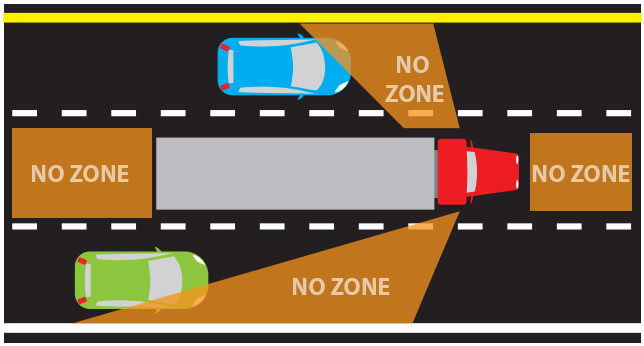
  • Motorists are encouraged to stay out of the “No Zone” areas. Commercial motor vehicles have large blind spots in front, behind, and on both sides of the vehicle; this is known as the “No Zone.” Even though large vehicles have several rear-view mirrors, other vehicles will be hidden from view if within the “No Zone” or blind spot.

No Zone

  • Do not tailgate; you’ll be in the rear blind spot and may collide with the truck if it stops unexpectedly.
  • If you are stopped behind a truck on an upgrade, leave space in case the truck drifts back when it starts to move. Also, keep to the left in your lane so the driver can see that you’re stopped behind the truck.
  • Do not use high beam headlights when you are following a truck at night. Bright lights will blind the driver when they reflect off the truck’s large side mirrors.
  • When you meet a truck coming from the opposite direction, keep to the right to avoid a sideswipe crash.
  • Commercial motor vehicles often need to swing wide to the left in order make a right turn. Do not drive between the commercial vehicle and the curb—they will not be able to see you.
  • Never cross behind a truck that is preparing to back up or is in the process of doing so. Remember, the size of most trucks and trailers completely hide objects behind them from view.
  • Pass trucks on the left side for maximum visibility. Avoid cutting in too soon when passing a truck. Large vehicles cannot stop as quickly as other vehicles. Never linger besides a large truck or bus.
  • When a truck passes you, keep to the right side of your lane. Do not speed up while the truck is passing you.

What to do immediately if you are involved in a trucking accident:

After a trucking accident, it is critical that you reach out to an attorney immediately to preserve evidence in your case. Your attorney will do what is necessary to investigate the scene, preserve evidence and collect data from the truck’s black box. A black box or data event recorder is located inside the truck and it stores and retains information from the moments before the crash. We can use that information to learn what the truck and the truck driver did or didn’t do in the moments leading up to the crash.

As technology grows, the amount of information available in a truck’s data event recorder is expanding and sheds light on what happened and why it happened. Experts can determine which sensors were triggered, if the brakes were applied, and how fast the truck was going at the time of impact. Engineers can even use this data to build an accident reconstruction video or diagram and determine what happened. Evidence is likely to be destroyed or mishandled if there is any delay in hiring an attorney that specializes in trucking cases.

Romano Law Group has a team of attorneys who are experienced in handling complex trucking cases. Our attorneys do a full investigation into the cause of the crash, go to the scene to collect physical evidence, collect photos or videos, and most importantly, inspect the truck and vehicles involved with an engineering expert, who can download the black box from the truck.


The post Trucking Accidents: How to stay safe and avoid tragedy appeared first on Romano Law Group.

Making Waves Safely: Your Legal Rights After a Watercraft or Boating Accident

Our extensive coastlines and inland lakes make boating and jet skiing quintessential early summer activities. Unfortunately, as the waterways become increasingly crowded with seasonal enthusiasts, they also become significantly more dangerous. Severe boating accidents frequently occur due to a combination of operator inexperience, distracted navigation, reckless speeding, or individuals choosing to operate a vessel under the influence of alcohol.

When a beautiful sunny day on the water ends in a catastrophic watercraft injury, the physical, emotional, and financial toll can be entirely overwhelming for victims and their families. Watercraft and boating injuries often involve highly complex liability issues that differ from standard motor vehicle crashes. Depending on exactly where the accident occurred, your specific case might fall under state personal injury regulations or complex federal maritime laws.

If you are involved in a boating collision, you must treat it with the same urgency as a severe car accident. Ensure that everyone receives immediate emergency medical care, notify the Florida Fish and Wildlife Conservation Commission (FWC) or local marine patrol, and exchange complete information with the other boaters. Documenting the structural damage to the vessels and noting the weather and water conditions is essential for building a compelling and undeniable case.

Never rely on the at-fault boat owner’s insurance provider to automatically or fairly cover your medical expenses and ongoing recovery. Insurance companies routinely attempt to minimize payouts, particularly in cases involving recreational activities. Partnering with a highly organized and aggressive legal team ensures that your legal rights are fiercely protected from day one. We understand the specific legal deadlines and meticulous investigative requirements necessary to hold negligent operators fully accountable for their actions.

The post Making Waves Safely: Your Legal Rights After a Watercraft or Boating Accident appeared first on The Injury Advocates.

Understanding Medicaid Liens: Federal Protections Every Personal Injury Professional Should Know

How the federal anti-lien statute, three Supreme Court rulings, and the pro-rata methodology shape state Medicaid recovery in personal injury cases. 

You might ask yourself a simple question when a state Medicaid agency sends a recovery letter for the full amount the program paid on a client’s behalf. How much of that demand does federal law actually allow Medicaid to recover? The answer is the framework that governs every Medicaid lien negotiation. It rests on a federal mandate, a federal limit, and Supreme Court decisions that have shaped what state agencies and their recovery contractors can collect from an injury victim’s recovery. 

This blog post walks through that framework. The federal mandate, the federal protections that limit it, Ahlborn, and Wos. The goal is a working understanding of what state Medicaid can claim and what remains protected for the injury victim. 

The federal mandate to seek third-party recovery 

When a state participates in the joint federal-state Medicaid program, it accepts an obligation under Title XIX of the Social Security Act to seek reimbursement from liable third parties for injury-related medical expenditures paid on a beneficiary’s behalf. The governing language is at 42 U.S.C. § 1396a(a)(25)(H), which provides that to the extent the state has paid for medical assistance for which a third party has a legal liability to pay, the state is considered to have acquired the rights of the individual to payment by any other party for those health care items or services. 

The same section requires the state to take all reasonable measures to ascertain third-party liability and to seek recovery when expected reimbursement exceeds the cost of pursuing it. The companion provision at 42 U.S.C. § 1396k(a) requires Medicaid beneficiaries to assign their rights to medical payment recoveries to the state as a condition of eligibility. 

State Medicaid agencies meet this requirement with state-law third-party liability statutes that authorize recovery from settlements, judgments, and awards. Many of these statutes are aggressive in their drafting. They were written to give the state the maximum reach federal law would allow. 

The federal limit: the anti-lien and anti-recovery statutes 

The same Medicaid Act that mandates third-party recovery places hard limits on it. Two provisions are key. The federal anti-lien statute at 42 U.S.C. § 1396p(a)(1) provides that no lien may be imposed against the property of any individual prior to his death on account of medical assistance paid. The federal anti-recovery statute at 42 U.S.C. § 1396p(b)(1) provides that no adjustment or recovery of any medical assistance correctly paid on behalf of an individual under the state plan may be made, subject to specifically enumerated exceptions. 

The interaction between the third-party recovery mandate and the anti-lien provisions has driven most Medicaid lien litigation of the past two decades. State statutes that read the mandate broadly have sometimes reached non-medical portions of a settlement. The anti-lien statute, read on its own terms, protects those portions as the injury victim’s property. 

The Supreme Court has held that the third-party recovery provisions create a narrow exception to the anti-lien rule. That exception is the only basis on which a state may reach a beneficiary’s settlement.  

The Ahlborn Ruling 

The Supreme Court first applied the anti-lien provisions to a state Medicaid recovery in Arkansas Department of Health and Human Services v. Ahlborn, 547 U.S. 268 (2006). Heidi Ahlborn was nineteen when a 1996 car accident left her with a catastrophic brain injury. Arkansas Medicaid paid $215,645.30 for her injury-related care. She later settled her tort case for $550,000 with no allocation between categories of damages. 

Arkansas asserted a lien for the full $215,645.30. Ahlborn sued for a declaratory judgment. The parties stipulated that her total claim was reasonably valued at $3,040,708.18 and that the settlement represented one-sixth of that amount. They further stipulated that, if Ahlborn’s reading of federal law was correct, the state’s recovery would be limited to $35,581.47. 

Writing for a unanimous Court, Justice Stevens held that the federal third-party liability provisions authorize recovery only from the portion of a settlement that represents payment for medical care. The remainder, including amounts for pain and suffering and lost wages, falls under the protection of the anti-lien statute. As the Court put it, the exception carved out by §§ 1396a(a)(25) and 1396k(a) is limited to payments for medical care, and beyond that, the anti-lien provision applies. 

Ahlborn gave practitioners the first clear federal rule for arguing a reduction: the ratio of the settlement to the full value of the claim, applied to the lien, produces the reduction. 

The pro-rata methodology 

The Court did not prescribe a single formula for allocating medical and non-medical damages in an unallocated settlement. In a footnote, however, it endorsed the parties’ approach in Ahlborn itself, noting that the effect of the stipulation was the same as if a trial judge had found that total damages were $3,040,708.12 and that the settlement reflected a one-sixth recovery. 

The California Supreme Court applied the same approach in Bolanos v. Superior Court, 87 Cal. Rptr. 3d 744 (2008). The court explained that the ratio of the settlement to the total claim, applied to the amount paid by Medicaid, produces the figure the state may recover. Practitioners now refer to this as the pro-rata methodology. It reduces a Medicaid lien based on the equitable principle that the beneficiary did not recover the full measure of damages. 

The pro-rata formula has limits. A state Medicaid agency, or the recovery contractor acting for it, is not obligated to accept the practitioner’s valuation of the total claim. State statutes often establish procedures for substantiating that valuation, and some require the practitioner to put forward evidence of comparable verdicts, settlements, or expert valuations. The work of building a defensible pro-rata reduction starts at intake and continues through settlement. 

The Wos reinforcement 

State statutes after Ahlborn varied widely. North Carolina’s statute set a one-third default allocation to medical expenses from any settlement, without any mechanism for the beneficiary to challenge it. In Wos v. E.M.A., 568 U.S. 627 (2013), the Supreme Court struck the statute down as inconsistent with Ahlborn and the anti-lien provision. 

The Court rejected the argument that a fixed-percentage default could substitute for an allocation. If a state arbitrarily may designate one-third of any recovery as payment for medical expenses, the Court reasoned, there is no logical reason why it could not designate half, three-quarters, or all of a tort recovery the same way. A statute that does not provide a procedure for determining the actual medical portion runs afoul of the federal anti-lien provision. 

Wos also clarified the effect of a judicial finding or stipulation on allocation. When there has been a judicial finding or approval of an allocation between medical and non-medical damages, in the form of either a jury verdict, court decree, or stipulation binding on all parties, that is the end of the matter. A binding allocation forecloses the state from claiming more. 

Where Synergy fits 

Synergy resolves Medicaid liens for personal injury firms across all fifty states. The Synergy team includes attorneys and lien specialists who apply the federal framework, state procedural rules, and the pro-rata methodology to the demands sent by state agencies and their recovery contractors.  

If you have an open file where the Medicaid lien hasn’t been reduced, send it over. Synergy will do a free reduction analysis. 

Send Us Your Case for a FREE Reduction Analysis


Click here

Medicare Conditional Payment Resolution: Best Practices for Personal Injury Legal Professionals

Medicare conditional payment resolution is one of the most important compliance steps in a personal injury settlement. When Medicare has paid injury-related medical expenses, those payments are made conditionally and may be subject to recovery after a settlement, judgment, award, or other payment.

For personal injury firms, this is not just an administrative task. Missteps can expose both the firm and client to avoidable reimbursement disputes, delayed disbursement, potential double-damages exposure under the Medicare Secondary Payer Act, and broader malpractice concerns. When handled correctly, however, the process protects the client’s recovery, preserves available reductions, and helps the firm close the case with confidence.

This blog post walks through best practices for resolving Medicare conditional payments, the procedural rules you must follow, and the common avoidable mistakes that can create unnecessary risks.

Why Medicare Conditional Payments Demand Your Complete Attention

Medicare conditional payment resolution is not a back-office formality. It is a statutory reimbursement obligation backed by direct federal recovery rights. Under the Medicare Secondary Payer Act, Medicare may make conditional payments for injury-related medical treatment when a primary payer has not paid promptly, but those payments are subject to recovery once there is a settlement, judgment, award, or other payment.

CMS holds subrogation rights against any entity required or responsible to pay for medical services covered by Medicare. And CMS holds an independent cause of action against any entity receiving payment from a primary plan. Personal injury lawyers fall within the second category. CMS has sued attorneys directly, and federal courts have allowed the government to recover double damages from counsel personally.

The risk is not theoretical. In the U.S. v. Harris decision, the plaintiff attorney settled a Medicare beneficiary’s claim for $25,000. Medicare had made conditional payments of $22,549.67 and demanded $10,253.59 from the settlement. Counsel disbursed the funds without paying Medicare. The court rejected counsel’s personal-liability defense and entered summary judgment against him personally for $11,367.78 plus interest. The decision remains a cautionary reminder that once settlement funds are in counsel’s hands, Medicare conditional payment compliance cannot be treated as someone else’s responsibility.

For plaintiff firms, the takeaway is simple: every case involving a Medicare beneficiary should be treated as a compliance file from intake through final disbursement. Confirm Medicare entitlement early, identify injury-related conditional payments, dispute unrelated charges, secure the Final Demand, and document each step before funds are released. Done correctly, the process protects the client’s net recovery, preserves available reductions, and shields the firm from avoidable regulatory and malpractice exposure.

The Resolution Workflow Step by Step

The substantive work is straightforward. The risk comes from missed deadlines, incomplete audits, premature disbursement, and poor documentation. A compliant workflow should begin at intake and continue through final repayment, not start after the settlement check arrives. Procedural discipline is what separates compliant firms from the ones now writing checks to the U.S. Treasury.

Open the BCRC File at Intake

The Benefits Coordination and Recovery Contractor (BCRC) handle initial conditional payment processing. Report your client’s case to BCRC at intake, well before settlement discussions begin. Early reporting allows you to track conditional payments as treatment continues and helps prevent last-minute surprises when the demand arrives.

Audit the Conditional Payment Letter

The conditional payment letter (CPL) is preliminary. Treat the CPL as a starting point, not a final number. Review every line item. Flag charges unrelated to the underlying injury, duplicate billing, treatment for pre-existing conditions, incorrect dates of service and any charges that do not belong in the recovery claim. Submit relatedness disputes with supporting documentation before settlement whenever possible, without limit, so amount is firmer before the Final Demand process begins.

Use the MSPRP to Manage the File

The Medicare Secondary Payer Recovery Portal, or MSPRP, should be part of the firm’s standard workflow. Through the portal, authorized users can obtain updated conditional payment amounts, request a current CPL, dispute unrelated claims, submit settlement information, upload documentation, request waiver or compromise review, and make electronic payments. The portal also allows users to request a final conditional payment amount when a case is approaching settlement.

Notify Medicare of the Settlement

Once the case settles, report the settlement, judgment, award, or other payment to Medicare promptly through the MSPRP or by sending the required documentation to the BCRC. Medicare uses that information to calculate and issue the Final Demand. This step is critical because additional injury-related claims may have been paid since the last CPL was issued.

Wait for the Final Demand Before Disbursing

This is the single most important rule protecting the firm. A conditional payment letter does not bind Medicare. It is an interim snapshot of the claims identified to date. Only the Final Demand letter binds Medicare to a specific repayment amount. Disbursing settlement proceeds based on a CPL creates unnecessary exposure to the firm if Medicare later identifies additional claims or issues a higher demand.

Pay the Final Demand Within 60 Days

Once Medicare issues the Final Demand, you have 60 days to pay before interest begins to accrue at over 10 percent. Unpaid amounts go to the U.S. Treasury for enforcement action. Firms should calendar the deadline immediately, confirm payment before closing the file and retain documentation showing that the Final Demand was satisfied.

The Repayment Formula and Procurement Cost Reduction

Medicare’s repayment amount is not negotiated from scratch. It is calculated under the federal formula set out in 42 C.F.R. § 411.37, which requires Medicare to account for the cost of procuring the settlement when attorney fees and litigation expenses were incurred to obtain the recovery. If Medicare’s conditional payments are less than the settlement amount, Medicare reduces its recovery by its proportionate share of procurement costs. If Medicare’s conditional payments equal or exceed the settlement amount, Medicare’s recovery is generally the total settlement minus the total procurement costs.

That formula is helpful but limited. The automatic procurement cost reduction does not account for comparative negligence, causation disputes, policy limits, damage caps, contested liability, or the fact that the client may be receiving only a fraction of the case’s full value. In low-recovery cases with high conditional payments, this can produce a harsh result: after attorney fees and litigation costs are deducted, Medicare may claim the remainder of the settlement proceeds.

That is where attorneys need to slow down. Many firms treat the final demand as the end of the road, but it is often just the end of the automatic calculation. Other options may need to be explored, especially in low recovery cases, where Medicare’s demand consumes the client’s remaining net recovery. The firm should evaluate whether one of the three post-demand reduction paths may apply: appeal, compromise, or waiver.

Three Reduction Options: Appeal, Compromise, or Waiver

Once the final demand arrives, you may have three reduction options beyond the procurement cost reduction. These options are not interchangeable, and each has a different purpose and set of trade-offs.

Appeal

An appeal is appropriate when the demand is wrong. Use this path when Medicare is seeking reimbursement for unrelated treatment, duplicate charges, incorrect dates of service, payments outside the injury period, or charges that should not be included in the recovery claim. An appeal challenges the validity or amount of the demand itself. The Medicare appeals process runs four levels deep before reaching a federal judge: redetermination by the contractor, reconsideration by a Qualified Independent Contractor, hearing before an Administrative Law Judge, and review by the Medicare Appeals Council. Federal court access requires exhaustion of all four levels.

Appeals can be lengthy. Interest may also continue to accrue while the appeal is pending if the Final Demand remains unpaid. For that reason, firms should carefully evaluate whether appeal is the correct path and whether payment should be made while the dispute proceeds.

Compromise or Waiver Post-Payment

A compromise is appropriate when the demand may be technically valid, but the recovery result is unreasonable under the circumstances. This is especially important in limited-fund cases, disputed-liability cases, or policy-limits settlements where Medicare’s recovery would leave little or nothing for the injured client. Paying the Final Demand and then requesting compromise stops the interest clock. If the request is granted, Medicare refunds the approved amount paid, typically though counsel, for the benefit of the beneficiary.

A waiver is appropriate when recovery is unfair or creates hardship for the beneficiary. CMS states that the right to request a waiver is separate from the right to appeal the Final Demand, and both may be requested at the same time. If waiver is requested, the BCRC may require the beneficiary to complete the SSA-632 Request for Waiver form with income, asset, expense, and hardship information.

The practical takeaway is simple: do not assume the Final Demand is the final answer. Pay attention to the demand deadline, protect against interest, and evaluate reduction options immediately. CMS states that interest accrues from the date of the demand letter and continues to accrue if an appeal or waiver is requested, so timing and strategy matter. A successful waiver request returns part or all of the paid demand to the beneficiary. The compromise approach is faster and less risky than appeal because interest stops running the moment payment clears.

Two Mistakes Costing Firms Real Money

The Department of Justice (DOJ) has pursued plaintiff attorneys and law firms for failures in Medicare conditional payment resolution. Two patterns appear repeatedly treating a preliminary number as final and trying to challenge Medicare’s demand outside the required federal process.

Mistake One: Relying on the Conditional Payment Letter

A Maryland personal injury law firm represented a Medicare beneficiary in a medical malpractice case. The firm received a conditional payment letter showing $14,990 owed. The case settled for $1,150,000, and the firm relied on the $14,990 figure when calculating disbursement. Sixty days after settlement notification, Medicare issued a Final Demand for $330,000. The firm filed an administrative appeal, lost, faced a U.S. Attorney’s collection letter, and ultimately tendered the matter to the firm’s malpractice carrier. The carrier settled with the government for $250,000.

The DOJ press release reminded attorneys not to disburse settlement proceeds until receipt of a Final Demand from Medicare. A Conditional Payment Letter is not the final repayment amount. It is a snapshot. Medicare may identify additional related payments after settlement information is submitted, and the final demand may be materially different from the earlier CPL. The practical takeaway is simple: do not treat the CPL as the disbursement number.

Mistake Two: Using the Wrong Resolution Mechanism

A Houston law firm represented a personal injury plaintiff in a motor vehicle accident case. Counsel properly reported the case to BCRC and notified Medicare of the $70,000 settlement. BCRC issued an Initial Determination claiming $46,244.74 in required reimbursement. The firm disagreed with the demand. Instead of pursuing appeal, compromise, or waiver through the proper Medicare channels, the firm took the dispute to Texas state court. The U.S. Attorney filed suit on behalf of CMS against the firm and the managing partner for the unpaid amount plus interest, fees, and costs. The issue was that it challenged Medicare’s recovery in the wrong forum. Medicare conditional payment disputes must proceed through the administrative process established under the Medicare Act and federal regulations, with federal court review only after administrative remedies are exhausted.

Both cases share a root cause: procedural mistakes. The Medicare resolution process is technical, deadline-driven and unforgiving. A firm can do most of the file correctly and still create exposure by disbursing too early, relying on the wrong number, missing the repayment deadline, or pursuing the wrong reduction path. The safest practice is to treat every Medicare file as a compliance file: verify the claim, audit the charges, wait for the final demand, calendar the deadline, and use the proper Medicare appeal, compromise, or waiver process when the demand is wrong or the recovery result is unfair. Skipping steps creates personal liability with no available remedy.

Partner With Synergy for Medicare Conditional Payment Resolution

Synergy resolves Medicare conditional payments for personal injury firms in all 50 states. Our team handles BCRC reporting, conditional payment audits, Final Demand verification, and post-payment compromise and waiver requests. Every case includes aggressive relatedness disputing to reduce the final amount paid. Visit partnerwithsynergy.2appleton.com/ to see how we protect your clients' net recoveries and your firm from MSP exposure.

Written by: Teresa Kenyon | Vice President of Lien Resolution at Synergy & Jasmine Patel | Medicare Lien Resolution Specialist

How 1024(b)(4) Requests Can Transform Your ERISA Lien Negotiations

If you’re negotiating ERISA liens without leveraging 1024(b)(4) requests, you’re leaving one of your most powerful tools on the table. 

This federal statute creates a direct obligation for plan administrators to provide documents, and it comes with real penalties when they fail to comply. Used correctly, these penalties become negotiating leverage that can significantly reduce the liens your clients pay. 

Here’s everything you need to know to use 1024(b)(4) requests effectively. 

What Is a 1024(b)(4) Request? 

Under 29 U.S.C. § 1024(b)(4), an ERISA plan administrator must provide, upon written request by a participant or beneficiary, copies of specific plan documents. These include: 

  • The Summary Plan Description (SPD) 
  • Any Summary of Material Modifications (SMM) 
  • The Annual Report (Form 5500) 
  • The formal Plan Document (Master Plan Document) 
  • Any applicable Trust Agreement 
  • Any Collective Bargaining Agreement (if the plan is subject to one) 
  • The Insurance Contract (for fully insured plans) 

The plan administrator has 30 days from receipt of the request to provide the documents. 

The Penalty Provision: Your Leverage 

Here’s where it gets interesting. If the plan administrator fails to comply within 30 days, 29 U.S.C. § 1132(c)(1)(B) establishes a discretionary penalty of up to $110 per day for each day of non-compliance. 

This penalty is adjusted for inflation under 29 C.F.R. § 2575.502c-1, so always verify the current amount. 

How the numbers add up: 

  • 30 days late: up to $3,300 
  • 60 days late: up to $6,600 
  • 90 days late: up to $9,900 
  • 180 days late: up to $19,800 
  • 1 year late: up to $40,150 

Courts have imposed these penalties. Man courts have awarded six figures in penalties! These aren’t theoretical numbers. 

Why This Matters for Lien Negotiations 

The 1024(b)(4) request serves two strategic purposes: 

First, you need the documents. ERISA reimbursement claims live or die by plan language. Under McCutchen and Sereboff, a plan may enforce reimbursement only to the extent those rights are clearly stated in the plan’s written terms. You can’t evaluate the strength of their claim, or identify weaknesses to exploit, without the actual plan documents. 

Second, non-compliance creates leverage. Plan administrators frequently fail to respond within 30 days. When they don’t comply, penalties begin accruing. Even if you never file suit, the threat of these penalties gives you a bargaining chip in negotiations. 

Recovery vendors know this math. When you can demonstrate that $15,000 or $20,000 in penalties has accrued, they’re often willing to reduce the lien to avoid the risk. 

Step-by-Step: Making an Effective 1024(b)(4) Request 

Step 1: Identify the Plan Administrator 

The statutory obligation runs to the Plan Administrator, not to the TPA, insurance carrier, or recovery vendor. The Plan Administrator is typically the employer or an employer-designated committee. You can find this information in the SPD or by asking the client’s HR department. 

Critical point: Do not send your request to Rawlings, Conduent, or other recovery vendors. They are not the Plan Administrator and have no statutory obligation to respond. 

Step 2: Draft and Send the Request 

Your request should: 

  • Identify your client as a plan participant or beneficiary 
  • Cite 29 U.S.C. § 1024(b)(4) specifically 
  • List each document you’re requesting 
  • Note the 30-day compliance deadline 
  • Reference the penalty provision at 29 U.S.C. § 1132(c)(1)(B) 

Send via certified mail with return receipt requested. This creates proof of the delivery date, which is essential for calculating penalties. 

Step 3: Track the Deadline 

The 30-day clock starts when the Plan Administrator receives your request. Log the delivery date immediately when you receive the return receipt. Set a calendar reminder for day 30. 

Step 4: Document Non-Compliance 

If day 30 passes without a response, document it. Send a follow-up letter noting the non-compliance, the date penalties began accruing, and the current penalty amount. Keep a running calculation of accrued penalties. 

Step 5: Use the Leverage 

When you negotiate the lien, cite the accrued penalties explicitly. For example: “The Plan Administrator has been non-compliant with the 1024(b)(4) request for 90 days. Discretionary penalties of up to $9,900 have accrued. We believe a substantial lien reduction is appropriate given this exposure.” 

Dealing with Vendor Resistance 

Recovery vendors often try to obstruct 1024(b)(4) requests. Common tactics include: 

Claiming you can’t contact the Plan Administrator directly. This is incorrect. Nothing in ERISA restricts a participant’s statutory right to request documents from the Plan Administrator. 

Disclaiming possession of the documents. This is revealing. A vendor demanding reimbursement while admitting it doesn’t have the plan documents is effectively conceding it doesn’t know if it has a valid claim. 

Providing incomplete documents. Request all documents listed in the statute. If you receive only an SPD excerpt or a summary, follow up requesting the complete Master Plan Document. 

Timing: When to Send the Request 

Send your 1024(b)(4) request as early as possible, ideally as soon as you learn a reimbursement claim exists. The earlier you send it: 

  • The sooner you’ll have documents to analyze 
  • The more time for penalties to accrue before settlement 
  • The more leverage you’ll have when negotiations begin 

Don’t wait until settlement is imminent. By then, you’ve lost valuable time. 

The Bottom Line 

1024(b)(4) requests are not procedural housekeeping. They are a strategic weapon in ERISA lien negotiations. Used correctly, they: 

  • Give you the documents you need to evaluate the claim 
  • Create independent leverage through penalty exposure 
  • Force vendors to take your negotiations seriously 

At Synergy, we send 1024(b)(4) requests on every ERISA lien we handle. It’s step one in our process because it’s foundational to everything that follows. 

Download the The 1024(b)(4) Request Playbook

Schedule a Free Case Review


Click here

CHAD DUDLEY/SEVEN DISCIPLINES: THE OPERATIONAL GAP RESHAPING PERSONAL INJURY LAW FIRMS.

What is the biggest competitive risk for personal injury firms?  Does it live in the courtroom?  A bad jury.  A weak expert.  A judge with a defense bent.  The answer is that the real risk sits inside the firm, in the way work gets done after a case comes in the door. And the gap between firms with operational discipline and firms without one is widening every quarter.

In a recent Trial Lawyer View by Synergy podcast conversation, Chad Dudley of Dudley DeBosier Injury Lawyers laid out the case with no wasted words. Dudley built his own PI firm. He has consulted with hundreds of others. He wrote Seven Disciplines for Successful Firms. Last year, he launched Orion Legal MSO, a managed services organization backed by Uplift Investors. His thesis is direct. The biggest problems in a personal injury firm are rarely legal problems. They are operational ones. And as MSO models scale and private equity flows into the plaintiff personal injury law firm space, firms without operational maturity will have a much harder time keeping pace.

Here is why this matters right now, and what disciplined firms do differently.

THE BLIND SPOT MOST FIRMS SHARE

Dudley described a phrase he hears in nearly every consulting engagement. “We already do that.” When a firm leader hears a new concept and reaches for those four words, the conversation ends. The improvement ends with it.

The point is uncomfortable. Almost every firm does the basics. Few execute them at high intensity, consistently, over years. The firms pulling away are not running a secret playbook. They are running the obvious playbook with rigor.

Three areas where the gap shows up fastest:

Vision and alignment. Most firms default to “bigger, better, more.” Without a sharper definition, every new marketing channel, practice area, and case type becomes a yes. The team fragments. Hires with mismatched values stay too long. Top performers absorb the cost. Firms with real clarity attract aligned people and repel the rest.

Intake as a strategic function. Intake is the first interaction every client has with your firm. Dudley argues the firms with the strongest results have a partner or senior leader obsessed with intake daily. Most firms treat intake like a clerical layer, staff it from the bottom, and assume things are working. They miss big cases. They miss patterns. They lose signups they never knew they had a shot at.

Case allocation. Ask any firm if they send their best cases to their best attorneys. Every leader says yes. Few have a real ranking system. Dudley shared a five tier model where a tier five attorney has earned three first chair jury verdicts above a million dollars in the past five years. Without this clarity, eight figure cases get buried under tier two caseloads.

WHAT DISCIPLINED FIRMS MEASURE

Reporting is where most firms swing between two failure modes. Either they have almost no data, or they have so much data no one looks at any of it.  Dudley recommends starting with a fixed set of monthly scoreboard reports:

  • The P&L
  • A KPI tracker
  • Attorney fee production
  • An intake report
  • An HR report
  • A marketing report

These reports run a firm. Everything else is diagnostic, pulled when a number on the scoreboard goes red. The point is not the specific reports. The point is the discipline of separating scoreboard from diagnostic, naming the cadence for each, and assigning an owner to each one.

WHY THIS IS BECOMING URGENT

The MSO wave is real and moving fast. Orion Legal is one of several managed services organizations forming around contingency practices. The structure is straightforward. The law firm stays one hundred percent attorney owned. Non legal employees move under the MSO. Centralized teams handle marketing, finance, technology, talent, and back office work across multiple firms. Private equity funds the infrastructure.

For the firms inside the model, the math is appealing. Better benefits. Stronger tech investment. Senior leadership in functions a single firm would never afford on its own. Operational support designed to improve case outcomes and client experience.

For the firms outside, the math is harder to ignore. A small firm competing against an MSO backed competitor down the street is competing against a different cost structure, a different technology stack, and a different recruiting pipeline. Dudley was blunt about the consequence. The standard of client service across the industry is going to rise. Firms not investing in operational discipline now will feel the pressure first.

WHERE TO FOCUS THIS QUARTER

If the conversation lands with you, three actions are worth taking before the end of the quarter.

Write your firm vision in one paragraph. Test whether your top five team members would describe the firm the same way. If the answers diverge, your strategic alignment is weaker than you think, and every operational decision below the vision is paying the price.

Audit your last fifty closed cases. Was each one assigned to an attorney with the right skill profile for the value at stake? If the answer is no, build a tiering system this quarter. Dudley’s five tier model is a strong starting point.

Cut your reporting stack to key scoreboard reports and a defined cadence. If a report is not driving a decision, retire it or move it to the diagnostic list. Spend the time you reclaim watching the numbers moving the firm.

The firms pulling away in the next two years will not be the ones with the loudest brand or the biggest verdict. They will be the ones who treat operational discipline as core trial work. The operational side of the practice is the practice now.

🎧 Listen to the full podcast conversation on Trial Lawyer View here: https://triallawyerview.com/podcast/chad-dudley-2/

🔗 Want more insights like this?

If you’re a personal injury lawyer ready to scale, streamline, and step into your role as CEO, let’s talk. Join the Peak Practice Community, and learn how synergy. can help you eliminate settlement bottlenecks, resolve complex liens, and maximize recoveries.  Learn more here: https://partnerwithsynergy.com/peak-practice/

If you want to grow and scale your law firm more effectively, consider partnering with Synergy for lien resolution.  Learn more at: https://partnerwithsynergy.com/liens/